
Sometimes you learn what to expect out of a city before you even land in it. For me, this happened the moment I stepped into my gate at Taoyuan International Airport for my flight to Hong Kong, and was immediately surrounded by designer sweatsuits and luggage. AND it was all real. Trust me, I can tell.
I don’t think I’ve ever felt so energized flying into a place as I did Hong Kong. I was damn near giddy with excitement as we crested over the bay, watching the skyscrapers rise to meet us on our descent. The views out the plane window took my breath away…and after three months in Japan and Taiwan, the prices upon landing also took my breath away…


Hong Kong, I came to realize in my brief time there, is a deeply materialistic society, but it’s a deeply honest one too. I think it’s because materialism here seems to align more to societal and intellectual excellence than image — it’s less look at me with this bag, and more, look at what my diligence and hard work earned me. Wealth isn’t something to be coy about here, because it’s a signal towards other virtues.
Hong Kong’s glitzy international reputation is buoyed by its enormous financial successes of the late 20th century — its status as a finance hub, location as a port city, and obsession with glamour all feed into that reputation. Yet what makes Hong Kong distinctly Hong Kong is how messily this cosmopolitan landscape collides with the old world. Old bazaars, artisans working out of half-shuttered storefronts, and the ghosts of long-gone settlements interweave themselves between the skyscrapers.
Both of these worlds and the entire spectrum in between them are fully Hong Kong, and they do not cancel each other out but rather reinforce each other. I imagine that go-getter, hustler attitude the city is known for is partially due to the fact that work and housing are so cutthroat. Sink or swim, in a sense. And a deep testament to capitalism — for one to win, another must lose.
I felt a deep sense of fleeting and longing in this city, and I’m not just saying that because I love In the Mood for Love. It’s because I realized that Hong Kong lives on a timer that, depending on who you ask, has already run out. I’m referring, of course, to the 1997 British handover of the territory back to China.


I’m too young to know a Hong Kong before that time — I was born a year after the handover. But I know I felt a sense of anxiety in the pit of my stomach when I heard about the 2019 protests. Not because I think of China as uniquely evil (I’m American, for god’s sake), but because I was witnessing a loss of the familiar. I’m watching another piece of the old world fall away. That was the world I was born into, and it is dying to make way for something new, something that I cannot recognize or anticipate. I’m not making a value judgement here as to whether this shifting world is better or worse. I just know that I’m feeling a sense of grief, or some other intractable thing…I suppose it’s a recognition of the fact that the world is always changing, and will continue to change long after I am gone.
When I think of Hong Kongers, I find myself asking: how does a city that knows it’s on borrowed time behave? Assert itself? Embrace any kind of identity? For a city that was always bulldozing the old to make way for the new, how has Beijing’s encroaching influence changed that philosophy?
I think that when people’s identities feel threatened, they double down.
Of course, everything and everyone is on borrowed time. But when one becomes explicitly aware of it, how does that change you?
How did it change Hong Kong?
Hell if I know! I was only there for 72 hours. Here’s what I covered in that time, and I’ve put all spots covered here into a 🌏 Google Maps list if you want to follow along.
Eat & Drink
Ricey ChaChaanTeng — (Diner/Breakfast) I think I found the perfect entry-level, I-just-landed-in-HK cha chaan teng. This was actually a pivot from my original option, where I showed up at the location to find its storefront shuttered, no sign of the restaurant I meant to visit having ever existed. I found this spot a few blocks away.
A Cha Chaan Teng (茶餐廳 — literally translating to “tea restaurant”) is a distinctly Hong Kongese, no-frills diner, and is incredibly emblematic of the city’s “East Meets West” reputation. As Hong Kong’s working class gained more disposable income, chefs began modifying expensive Western-style dishes with cheap ingredients — like canned meats, evaporated milk, and instant noodles — to suit local Cantonese palates. This resourceful style of cooking later came to be known as “soy sauce Western”, which I think is cute.
Seating is usually communal, service is typically brusque, and you sit down, eat your food, and get the fuck out.
The reason I say that this was the perfect cha chaan teng for a first timer is because seating was individual, the staff were incredibly patient and kind for Hong Kong standards, and they had a wide selection of classics with generous portions to choose from on the menu — silk stocking milk tea, beef instant noodle soup, and pineapple buns. It’s a softer landing into the city’s culinary world. Just one teeny wrinkle: good luck with the website’s auto translate.


Seventh Son (Tsim Sha Tsui) — (Dim Sum) This was one of the restaurants on my 2026 shortlist. I had forgotten they had a Michelin star, and prices to reflect as such. I ordered only four things. It was absolutely phenomenal, and they robbed me blind.
Yung’s Tangerine Peel Roast Goose — (Entree-focused, solo friendly) The pig was good and the goose was incredible. I rated this a 9.8 on Beli, and I’m still thinking about this meal months later.
But to reiterate a point I made many times in my Taiwan guide — no, I don’t actually think this is the very best roast goose or crispy-skinned pig in the world. But it opened my eyes to how these things taste when they’re made on home turf, which is why it’s rated so high. If it’s also your first time trying them, the lower prices and combo bowl where you get to try both make this spot a great place to start.
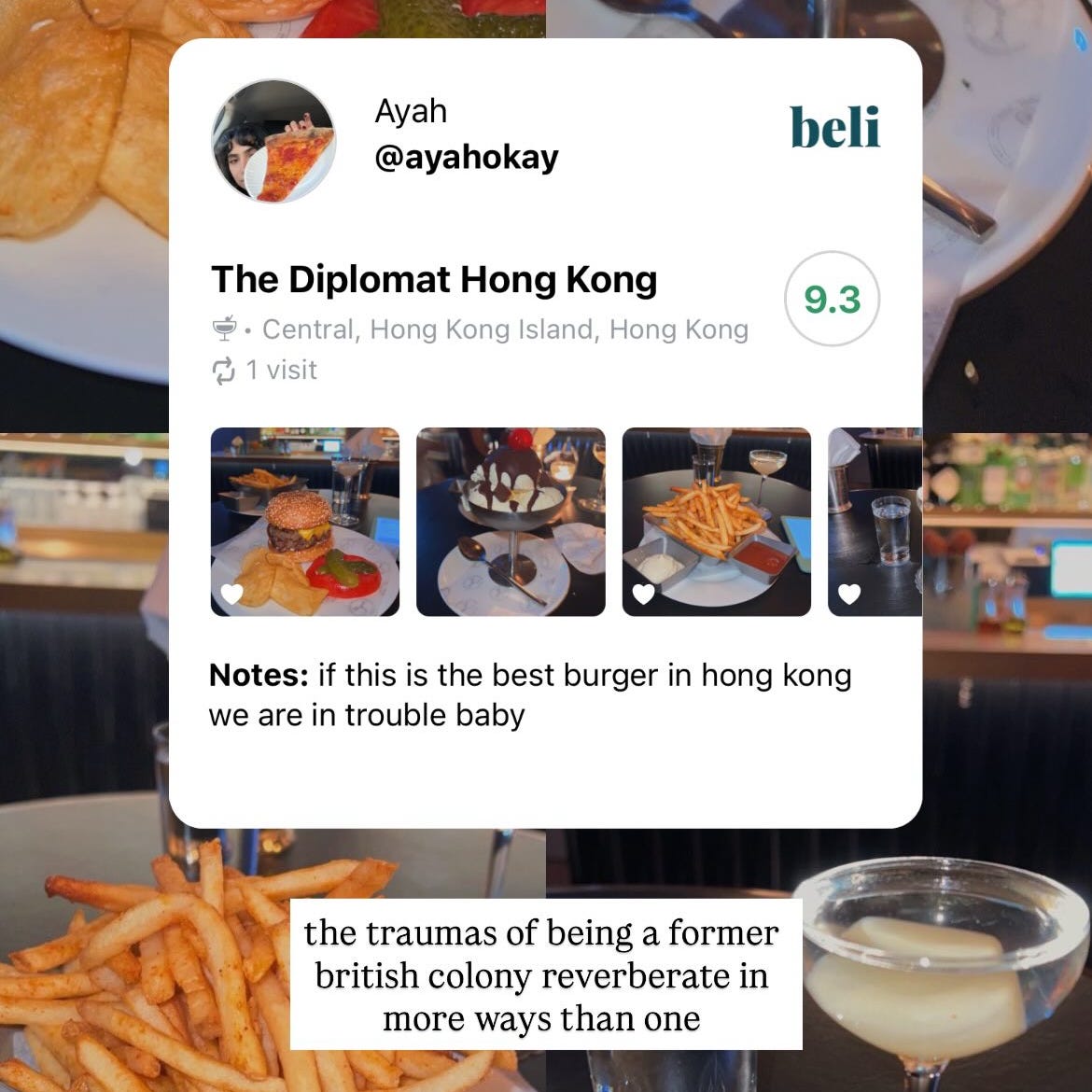
The Diplomat — (Cocktail Bar, American) Finished Giovanni’s Room here, nearly cried my eyes out, and got a compensatory free sundae for my emotional theatrics. Thank you, James Baldwin.
The burger was average, but the drinks were great. Their mini spicy gimlet was my favorite.
Kam Wah Cafe & Cake Shop — (Bakery, Breakfast/Lunch ChaChaanTeng) Loud. Messy. Sticky tables. And the pineapple bun, which is what I came for, was a thousand times better than the one I had at Ricey ChaChaanTeng a few days before (and that one was still pretty fucking good).
Bar Leone — (Cocktail Bar, Italian) I was excited for that glitzy #1 spot on the World’s 50 Best Bars list, and also leery because World’s 50 Best is absolutely pay-to-play, and quite cozy with the Hong Kong tourism board to boot.
My ultimate verdict? It was on par with the best bars I went to in Tokyo — but it was in league with them, not above them. And the famous mortadella sandwich is genuinely delicious.


I was initially seated with no one around me and the bar was too busy to properly chat, which was a shame because it had been days since I’d had a proper conversation. Instead, I pulled out my Kindle and read.
The bar filled in a little more, and someone eventually got seated beside me. He…kind of looked like me, and began a conversation with our bartender much more successfully than I had been able to. I glanced over sideways, and noticed that his phone’s UI was in Spanish.
I honestly don’t remember how he initiated our conversation. I think he asked if my drink was good. Introductory cocktail opinions out of the way, he then asked where I was from.
“I’m American, but usually when people ask that they mean my ethnicity.” (This is a constant conversation starter in Sinosphere Southeast Asia – especially HK and Singapore, which are more racially diverse). “I’m Kurdish-Iraqi and Syrian.”
“Me too!”
“Cool—wait, what?”
I stared at him incredulously. The moment he said it, I saw it, and watched this presumably Latino man morph into one of my cousins in the blink of an eye. Turns out he was both — nationally Argentinian, but ethnically a Syrian Jew.
Upon learning I was American, he shared that he and his girlfriend were considering moving to New York for a spell. I encouraged him to make the leap, then asked if they’d ever consider leaving Argentina permanently.
“No way. It’s home, and all of my family is there. I’d miss it way too much.”
I smiled at him in the moment, and in retrospect felt absolutely gutted.
“What’s that?” He asked, gesturing to my Kindle.
“I was reading a book,” I said, sliding it back into my purse now that I’d successfully secured a conversation.
“Do you usually bring books to bars?”
“Sometimes. You never have? I recommend it.”
“No,” he said with a chuckle, “I wouldn’t go to a bar to read.”
“It’s nice when you’re alone.”
“Well, I’m not usually going to bars alone.”
Turns out that beyond our shared ancestry, we didn’t have much in common at all. He asked how I felt about my president. I stated plainly that I hated him, which he reacted to with muted surprise, not sharing a personal position but that many people in Argentina, and their president, loved him. At one point I charged onto my Yankee Soapbox to air out my guilt about North America’s colonial extraction of the Central and South, and this inadvertently offended him.
Still, we hung out for the rest of the evening. And conversation never really felt awkward — we didn’t run out of things to talk about — but I couldn’t help feeling bemused by the fact that there was this person who had so little in common with me, and that we would never really understand each other.
The bartender, considerably warmer towards me now that I was chatting with his conversational partner, gave us a list of other bars to try. I had my own recommendations from bartenders I’d met in Tokyo, so we tried those first. My top choice had a two-hour wait. So did the next place. And the next, until we ended up at…
Bar Montana — Not a recommendation, but I have some things to say.
We landed at Bar Montana, which our bartender at Leone had recommended to us. To be honest, I found it a bit unremarkable at the time, and largely forgot about it.
Four months later I visited a famous Barcelona bar known as Sips, and had a fantastic experience there. I enjoyed my drinks, the service was amazing, and I thought the space looked really cool.
Afterwards, a friend I made in Singapore messaged me to compare notes – they’d just finished studying abroad in Barcelona, and had also visited Sips. As we shared our impressions, they asked if I’d seen the reports of East Asian customers experiencing discrimination there. I hadn’t – checking the Google reviews, I was shocked by what I found.
From what I could tell, the allegations of discrimination had gone largely unaddressed, while the bar continued to win international accolades. Where’s that purported diversity in your votership, 50 Best…?
I dug deeper. Turns out the co-owner of Sips Barcelona is also a co-owner of Montana, which absolutely baffled me. You own a bar in Hong Kong, and you’re letting overt racism towards East Asians fly at one of your establishments? At the very least, you could address what’s going on rather than ignore it.
Europe still harbors a lot of nasty attitudes towards people of color. And while I’ve dealt with my fair share of racist experiences in East Asia and America, I think I dodge a lot of it over in Europe because I can pass as Italian or Spanish.
But having experienced it firsthand, I can tell you just how much that overt hostility can leave you feeling gaslit and reeling (was it all in my head?) – and expose the hyper vigilance you’re always running in the background when entering spaces as a minority. It’s not just “oh, I met an asshole.” You often leave the experience questioning whether you’d done something wrong, or if it even happened at all.
I’m not claiming that every employee at Sips is racist or that the bar has an overt policy of discrimination. But this has been going on for a while without any meaningful corrections from its management, and that’s just as ugly. I won’t be visiting any more bars by Simone Caporale unless something is done to concretely address the issue at his establishment.
If hospitality is a practiced art, can a place really claim excellence if it doesn’t extend that practice equally?
Silk. (The Peak) — ($, Bubble Tea) Yayyyy I love teaaaaaa!! Their drinks are a great pre-walk caffeine boost before doing the peak circle walk. They’ve got an online ticketing system for their drinks that’s slightly inaccurate, so unless the queue is insanely long, I’d recommend just sticking around to wait for your drink.
Kam’s Roast Goose — (R, Restaurant) A pretty well-known Canto spot that apparently serves some of the best roast goose in the city. Their garlic peanut cucumber salad and suckling pig look pretty fantastic too.
Savory Project — (R, Cocktail Bar) Recommended to me by the incredible Keith Motsi at Tokyo’s VIRTÙ, and I adore savory cocktails so it immediately made my shortlist. This is my top priority bar to hit the next time I’m in Hong Kong.
Explore
Tsim Sha Tsui felt like something out of a dream. I remember walking down the waterfront, seeing the neon buildings glow against the water, and just feeling…dazzled. I felt so happy to be alive, and standing there.
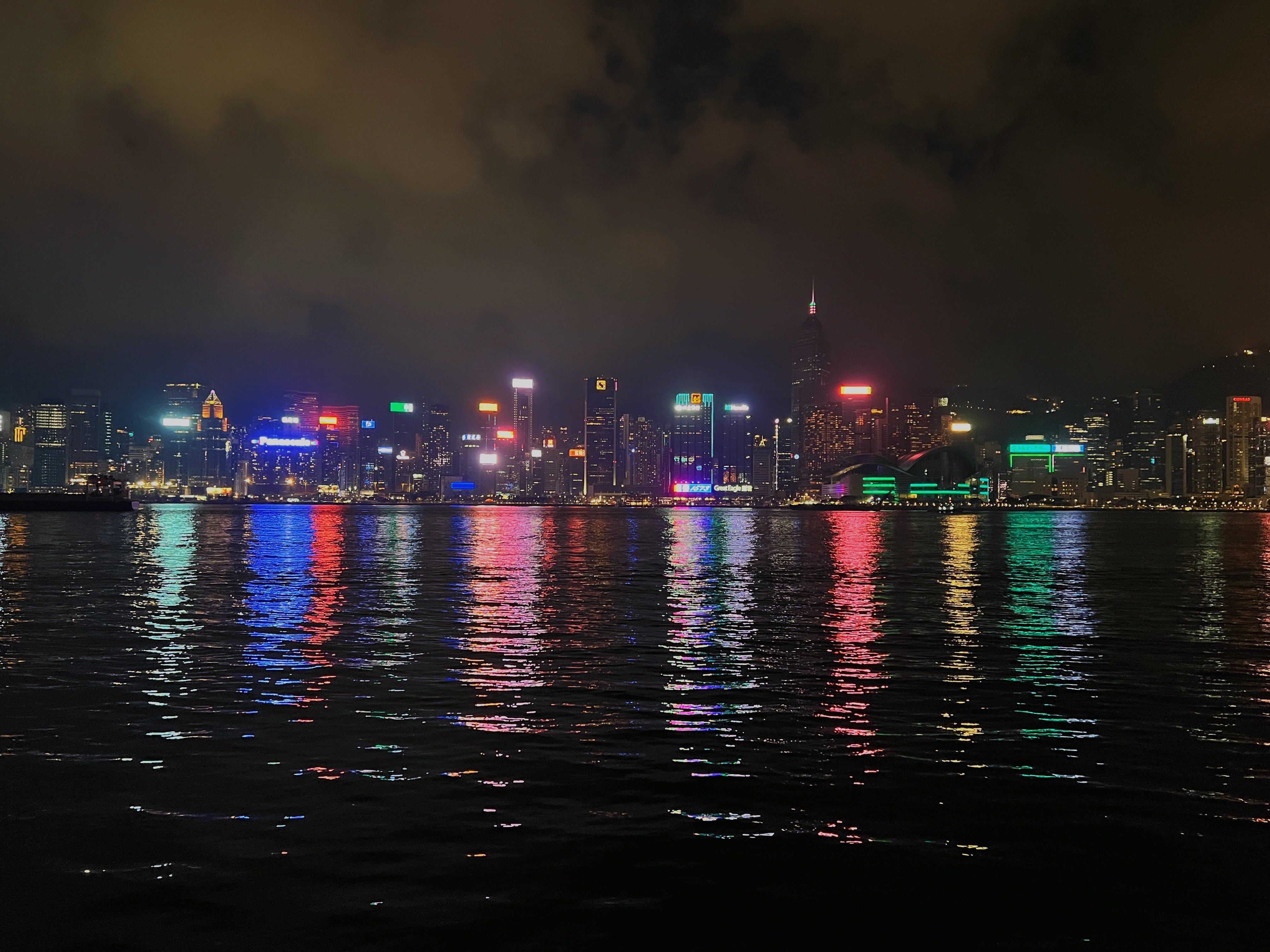
My hotel was located in the area too, and I honestly expected it to feel a bit dated given how old Hong Kong is. But as I stepped into my room and clicked the door shut behind me, the curtains began to rise by themselves — revealing endless columns of glass and steel glowing against the night below me. Here I had my first intimation that Hong Kong, like Tokyo, is a city that keeps bulldozing and reinventing itself over and over again. And a slight feeling of trepidation as I tried to remember how much I’d paid for this room.
What struck me about this pleasant surprise and admiration in retrospect was how much of what dazzled me about Hong Kong was the product of its capitalist successes. After many uncomfortable conversations with people from Latin America and Southeast Asia on this trip, I kind of get why people from the global south sometimes scoff at American leftists — we can be awfully presumptuous, reaping benefits from the capitalist metropole while lecturing the consequences of that system back at the people who suffered them. Like, damn, I’d call myself a clueless yank too.
A lot of the solo traveling I’ve done was to try and find some place I’d like to live more than Chicago. I spent two years traveling only within America, visiting different cities and trying to find one that spoke to me — enjoying them all, but never really identifying one I’d want to live in. In Asia, I was experiencing the total opposite — I loved everywhere I went, and could see myself happily building a life in any of them.
Of course, the one with the highest cost of living ended up being the one that appealed to me most. (This is why I am so good at identifying designer brands. I am a bloodhound for luxury. See obligatory self interrogation above). But beyond my predilection towards the finer things, there were a few other reasons I liked Hong Kong a lot.


After 3 months of Japan and some time in Taiwan, arriving in Hong Kong reminded me of what being in an international city — as in, seeing diverse crowds — felt like. That, alone, was a huge breath of fresh air.
The other was the sheer density. If there’s one other thing that this trip confirmed for me, it’s that I’m an incredibly cosmopolitan person. I need a big city — even Chicago feels too small for me. I gravitate towards the New Yorks, Londons, Tokyos, and, well, Hong Kongs of the world.
The next was proximity. Hong Kong is on a coast, and obviously has a bustling, well-connected airport (see the infamous 500+ numbered gates at HKG). Plus, being in southeastern China, it’s a relatively short flight to both East and Southeast Asia.
The last, of course, was the food. Holy shit, Cantonese food is incredible. I’d have roast goose and pig once a week for the rest of my life if I could. Which would probably abbreviate that life quite a bit. But I would die satisfied.
Victoria Peak Circle Walk is, I think, the activity that made me go wow. There is no city like this one. The walk was surprisingly idyllic for such a dense city, and walking among such lush greenery to see steel and orange and gray skyscrapers juxtaposed between the hilly forest and the coast is really something to behold. As a final heads-up, there’s nearly a mile during the circle walk without restrooms, so keep that in mind before you head out.


The timer that Hong Kong runs on began around Kowloon, which originally functioned as a military outpost. After the 1898 convention that leased the New Territories to Britain for 99 years, China claimed the outpost, Britain controlled everything around it, and after the British fully pushed Chinese officials out, they didn’t bother governing it.
In trickled families, refugees, squatters, drug dens, dumpling and fishball factories, and an alarming number of unlicensed dentists. Eventually, this seven acre military base transformed into a shantytown, accumulating more than 30,000 people, with its own rules, practices, and traditions. A stateless place in the middle of a rapidly changing city, where people constructed lives in the face of an uncertain future.
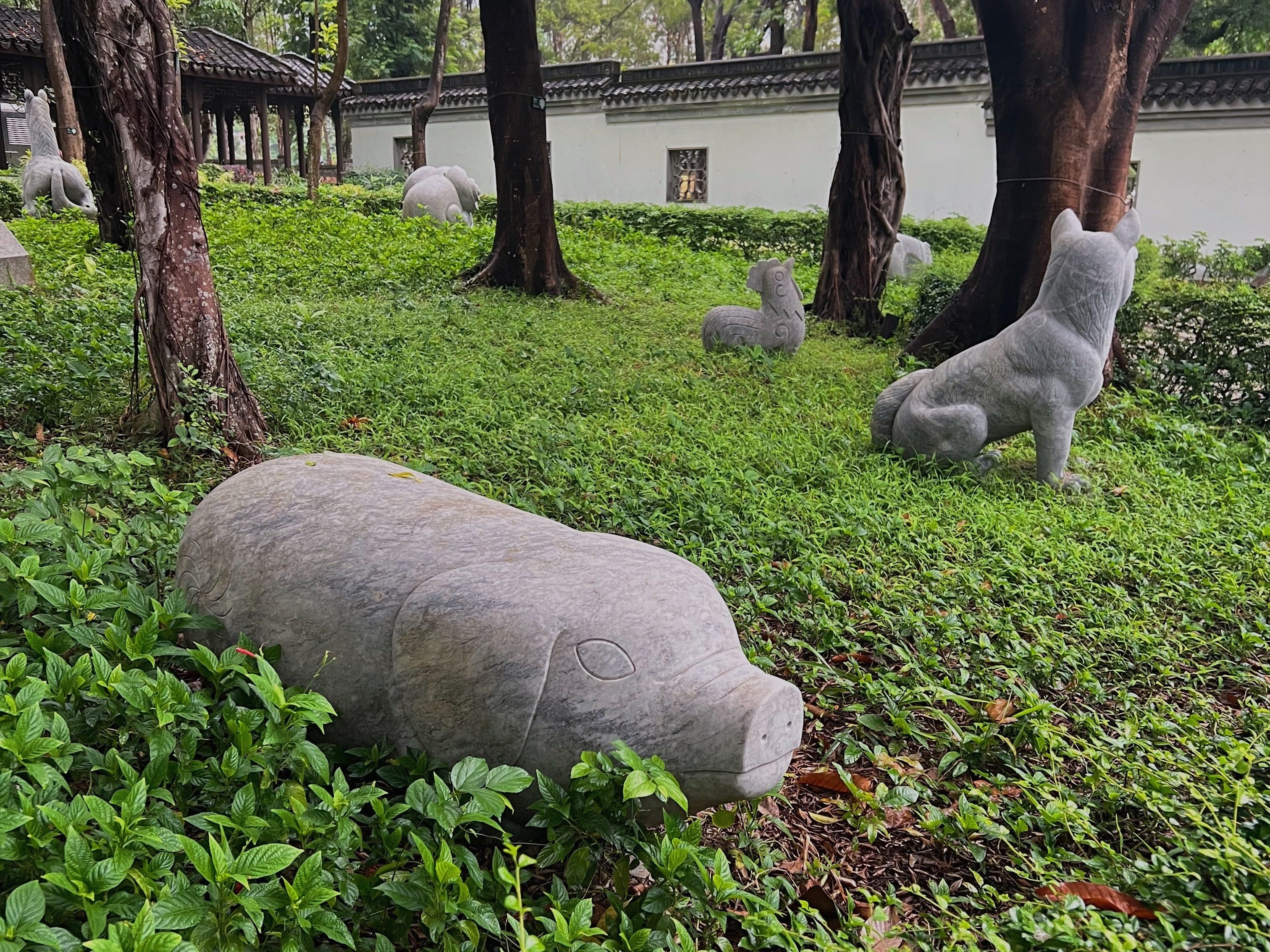
The Walled City stood as perhaps the most brazen exception to Hong Kong’s relentless march towards modernity — until it, too, got taken down in 1994. It was transformed into a manicured park and garden by ‘95, which was where I stood today, walking amongst admittedly cute stone carvings of the Chinese zodiac animals.
For decades, competing claims to authority helped create the conditions under which this extraordinary settlement emerged. Eventually, the two governments reached an agreement on its future.
And the settlement disappeared.
Fear and Loathing in Macau
“LADY! YOU’RE NOT GOING TO ZHUHAI! THIS WAY!!!”
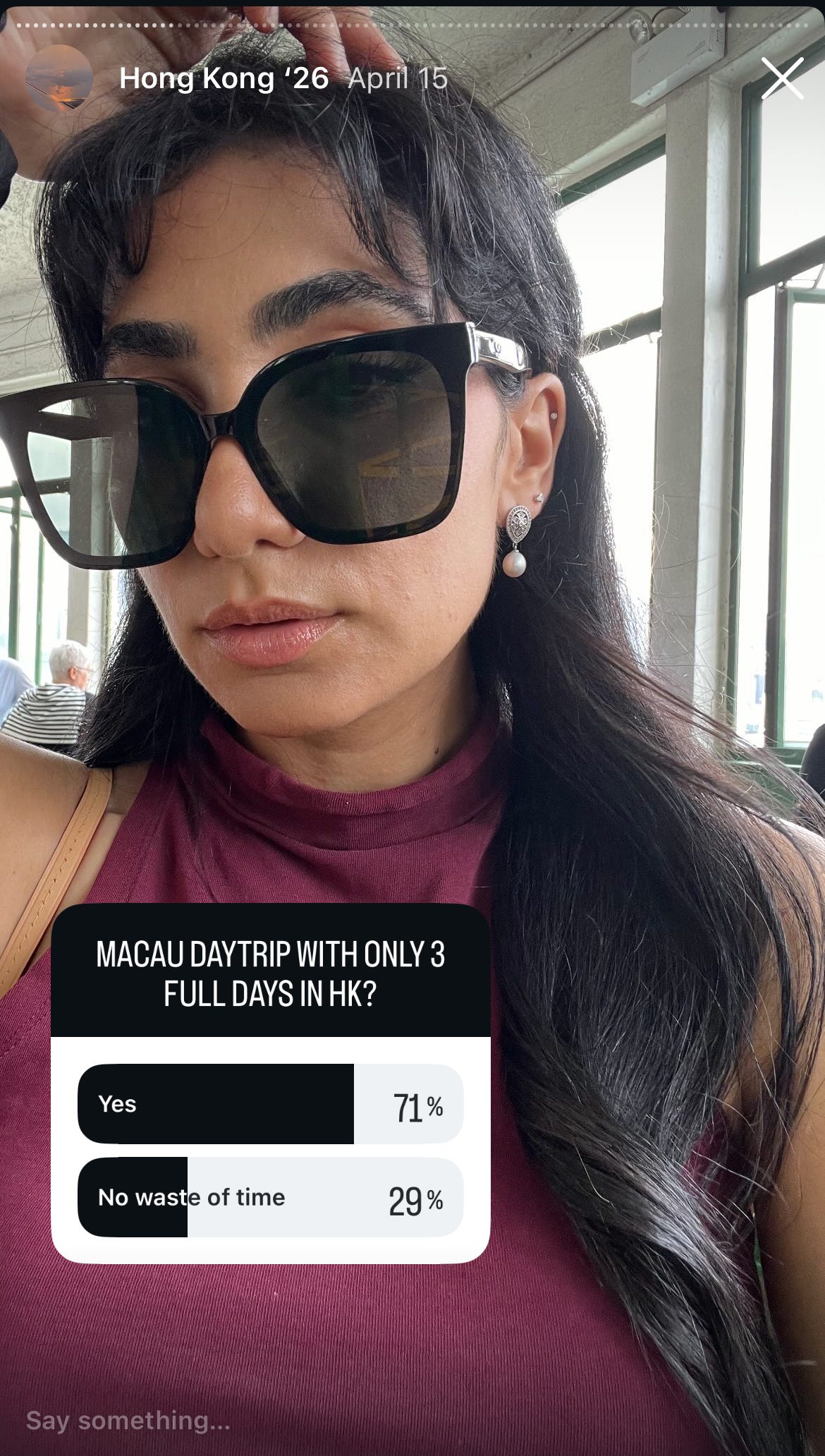
Hong Kongers may have a reputation for being rude, but much like New Yorkers, they’ll still help you out in a pinch. I summarily did a wide turn around and ran at full tilt towards the other side of the ferry terminal, yelling a breathless thank you to my fellow passenger — who had already gone back to what she was doing — as I zoomed past. I just barely made the ferry to Macau, and, panting in my seat, watched my cell service gradually deplete as we left the port. Twenty minutes later, I got this message:
T-Mobile: Welcome to China! Your plan includes coverage that gives you unlimited data On Us now at faster speeds up to 256Kbps…
Another twenty minutes passed, and this followed:
T-Mobile: Welcome to China (Macao Special Administrative Region)! Your plan includes coverage that gives you unlimited data On Us now at faster speeds up to 256Kbps…
And then I stepped off the boat and saw Portuguese everywhere.


I did not, unfortunately, go on any drug-fueled benders across Macau (next time, god willing). BUT I LOVEDDDDDDDDD MACAU. I LOVE MACAUUUUUU!!!!
Hold on, I have another title for this section. I couldn’t decide between them.
Fallout: New Macau (異塵餘生:新澳門)
MACAU!!!!!!!!!!!
For anyone to understand why I loved Macau, they must first understand why I love Vegas.
This is the necessary psychic bedrock behind what enthralled me about this city. But of course, Macau is vastly different from My American City of Hubris. For one, it is a Special Administrative Region (SAR). For two, Macau holds the funniest colonial arrangement I’ve ever heard of in the world. Actually, it is the only funny colonial arrangement in the world, because colonization is never funny, but in this specific instance I promise you it is really, really funny.


The Portuguese arrived in the 1500s, tried to force their way into China’s trading networks, and promptly got their asses handed to them by the Ming navy. As Portuguese colonists were famously bad at respecting the word “no”, they came back for round two, and China beat the shit out of them again. China then took the weapons they captured from the Portuguese, reverse engineered them, and began mass producing them.
After several humiliating defeats, the Europeans eventually decided to try asking nicely (translator’s note: attempt to bribe local officials). Officials were receptive to the offer, but there was a small wrinkle — the emperor would never approve. Thankfully, both parties came up with a solution that would keep everyone happy — payment would happen under the table, and any permanent Portuguese existence in Macau could be…omitted from any official documentation that went to Beijing.
By 1557, the Portuguese were finally permitted to settle in Macau in exchange for an annual rent of 500 taels of silver. So Portugal’s grand colonial foothold in China — which also happened to be the first colonial outpost in all of East and Southeast Asia — was, essentially, an illegal sublease. Think of it as operating an Airbnb out of the apartment you’re renting.
Somehow, this arrangement born from bribery and turning a blind eye limped along until 1999, when Portugal finally handed Macau back to China after 442 years (making it also the last European holding in East/SE Asia). And now they’ve got a Venetian.
Macau is ridiculous. It’s absurd. It makes me tear up with joy. It’s corrupt, money hungry, and culinarily orgasmic. I have a deep love for its greed, its materialism, and its yearly bar and restaurant awards ceremonies, which I will be attending one day (god willing). I LOVE MATERIALISM. I LOVE GAMBLING. I LOVE BROWN NOSING. AND I LOVE HUMAN GREED AND DEPRAVITY!!!!! 🥳🥳🥳
You see, all of these things give me material. What could I write about in a beautiful and just society? I’d have to start inventing problems. I love places that cut out the middleman and hand me literary fodder.
I have nothing to recommend to you in Macau beyond my undying conceptual love for it. You’re going to want to visit the north side of the city, and the south, to get a taste of both the historic Portuguese architecture and the Cotai Strip. Go skip around and enjoy their urban density and pastel facades/de nata.


I’m not sad, I’m just reading Baldwin
I waited outside The Diplomat just before open, commending my loneliness for at least being vibes-based as I watched the city’s soft lights glow in the rain.
I went here because, as American, I craved burger. And I’d heard they had “the best one in the city”. I would be the judge of that, appointing myself arbiter of whether Hong Kongers knew a good burger. Basically, I was temperature-testing the city’s worldly foodiness as well. It hadn’t disappointed me yet, but the metric so far had been mostly Cantonese food, so, like, duh.
I was the first one in, largely because Tokyo queues had traumatized me, and tucked myself into a little corner table. Usually I like to sit at the bar and chat with strangers, but I was nearly done with a book, and wanted to finish it in peace.
I really enjoyed Giovanni’s Room. Not nearly as much as Baldwin’s inaugural Go Tell It On The Mountain, which is among my favorite books of all time — but what distinguished his second novel to me was how much I recognized myself in its protagonist, David. For anyone who’s read the book, that’s a rather alarming thing to admit. I think what’s even more alarming was how blind I was to the severity of his behavior until I read other people’s impressions of the book.
David is a deeply hollow man — listless, unmoored. He’s terrified of becoming the older men he despises, and yet is blind to how he mirrors them. He monitors himself obsessively to prevent this, but that maddening inward refraction is so deeply saturated in shame that he can scarcely see himself clearly enough to change.
David can barely look beyond his own suffering long enough to reckon with anyone else’s, and this is what makes him capable of unbearable cruelty towards the people closest to him. He’s been empty for so long that when something good finally arrives, he kills it himself.
David desperately wants to be loved, but is so depleted by his own self-loathing that he can’t reconcile what it might ask of him in return. Get asked to open up, and he’s spent. Aggravated. Annoyed. Every attempt at closeness feels like extraction, and the maddening part is that you can’t differentiate what is from what isn’t. You’re a live wire, simultaneously dead and raw. Someone touches you, and everyone gets burnt.
As I approached the end of the book, absolutely engrossed and turning the pages as quickly as I could, my server reappeared with a sundae and placed it in front of me. I laughed a bit, and thanked them profusely. Of course, I can’t tell you why they chose to give me free food — it sometimes happens when you dine alone — but I entertained the idea of it being due to my escalating — and presumably visible — distress. The mental image of trying to comfort me with a sundae, something usually self-administered in the comfort of one’s home after a bad breakup, but this time in a frosted bowl on a stem at a swanky bar, seemed so funny to me. Don’t worry, I’m not sad. I’m just reading Baldwin.
The sundae was good.