
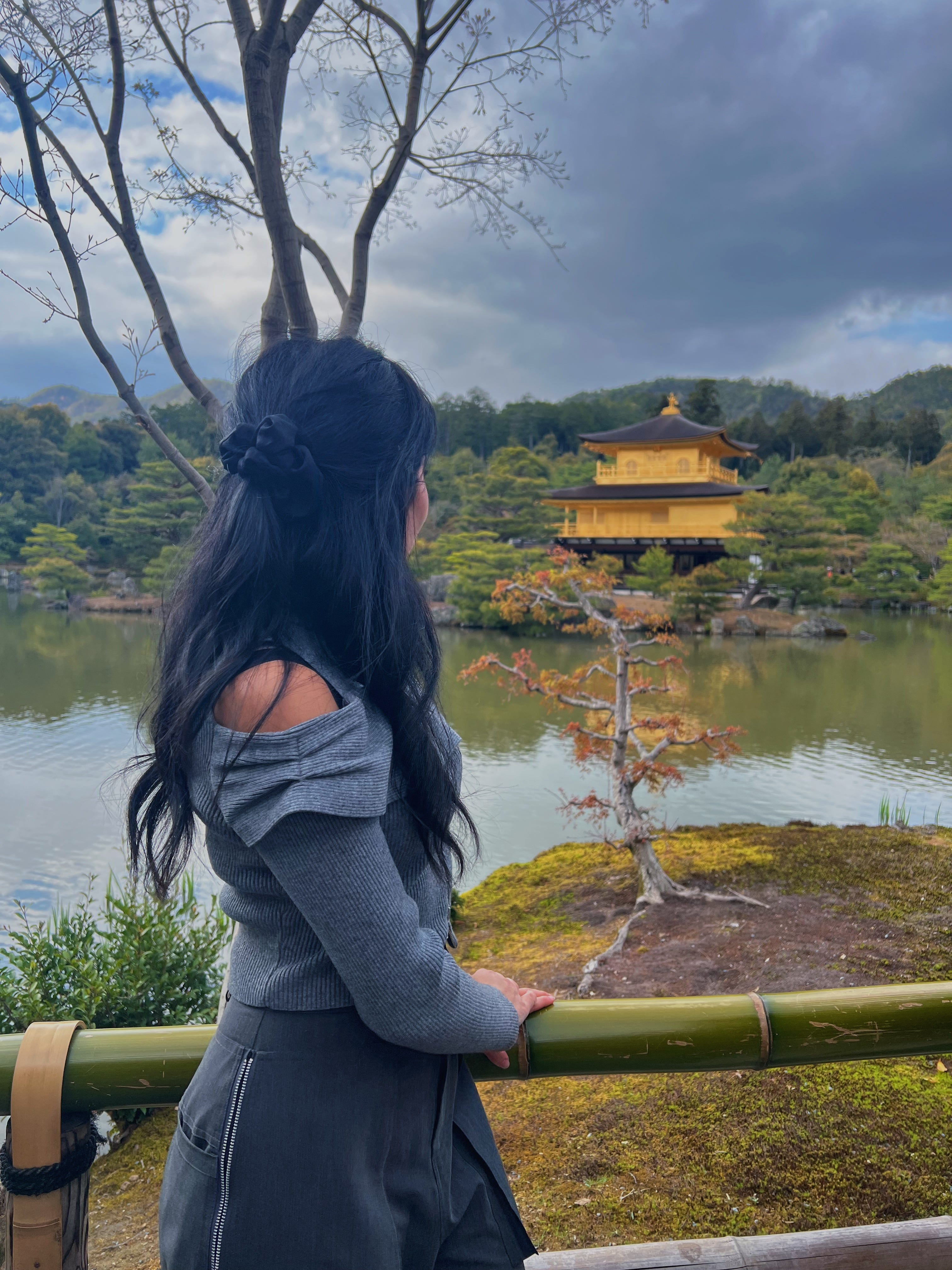
I spent a little over two months living in Tokyo before setting off on a two-week trip through the rest of Japan, starting in Fukuoka and traveling north toward Kyoto in an attempt to follow the cherry blossoms as they bloomed (largely successfully!).
I ate oysters beside the sea, wandered through Buddhist hell, stood atop volcanoes, visited a confectionery that’s been around more than a millennium, and saw enough temples that I think I now have Buddhist and Shintoist canon pre-installed into my brain (and then I spent four more months in Asia).
This isn’t meant to be an exhaustive Japan guide, nor an objective one. Frankly, it functions a little more like a trip diary, and it’s what I’d actually send a friend: places I loved, things I ate, practical advice I wish I’d had, things I’d skip or do differently, and an ever-growing list of things I missed and intend to return for.
I’ll be including places I didn’t get to go as reference for myself when I’m in Japan again — feel free to use them too, just know that I can’t personally endorse them. They’ll be marked with an (R), which is shorthand for researched or recommended.
I’ve put every recommendation shared here into a 🌏 Google Maps list for easier planning. And if you’re looking for Tokyo advice, that city has its own separate — and truthfully, much more emotionally loaded — guide.

Now let’s recap everywhere else I went.
Kamakura & Enoshima
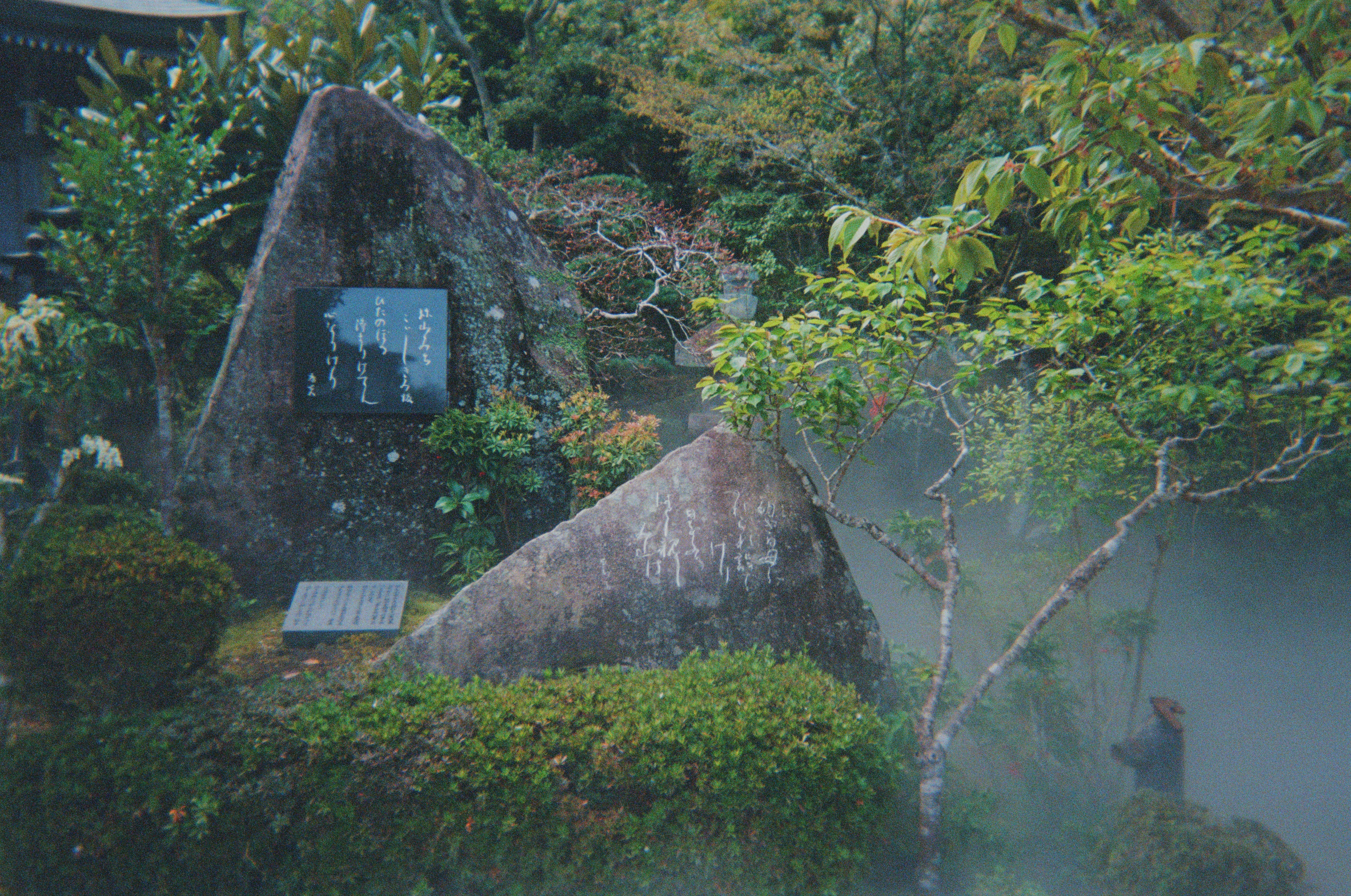
We’re starting with my favorite day trip out of Tokyo before getting into the south-to-north circuit. If you’re spending more than a few days in the city — especially without anything more scenic or nature-focused on the itinerary — I really recommend making this trip.
Kamakura is about an hour out from Tokyo, and feels worlds away from its concrete jungle. People sometimes call it a “mini Kyoto,” and I get the temptation to compare them: both were once capitals of Japan and are packed with shrines and temples. But it’s kind of a false equivalency, like calling Chicago a mini New York. Kyoto is old, scholarly, and proud, while Kamakura is a beach town with an abundance of temples. Both are great, but they don’t offer the same thing.
Ideally, I’d give Kamakura and Enoshima a day each. If you’re combining them, start early: they’re only about twenty minutes apart by train, but Kamakura largely shuts down after 5pm.
I would get to Kamakura first and hit the most popular temples early to avoid big crowds. You can have lunch in Kamakura or Enoshima, and I’ll give recommendations for both, but Kamakura has a greater variety of dining options, so keep that in mind.
Most temples in Kamakura only accept cash for entry — make sure to bring yen with you.
Transport
There are a few pass options available while exploring Kamakura and Enoshima.
The Enoshima-Kamakura Freepass offers unlimited rides on both towns’ local lines, and includes round-trip discounted tickets from Shinjuku. There are even discounts on a few popular temples and attractions included. I think this one is worth the sequeeze.
You can pair it with a Limited Express Romancecar ticket, though I don’t really think it’s necessary for the relatively short trip from Enoshima.
You can also take a regular old commuter train, like the JR Yokosuka line from Tokyo Station or the JR Shonan-Shinjuku line from Shinjuku or Shibuya. It works just like any other subway line in Tokyo – you can use your Suica/PASMO/IC card.
Direct trains reach Kamakura in around one hour, but check the destination carefully: trains bound for Zushi go direct to Kamakura without needing a transfer, while those bound for Odawara or Kozu require one – usually at Ofuna or Totsuka.
It’s not the end of the world if you don’t catch a direct train, as transfers are generally speedy and hassle-free — just be mindful of when the station you need to change trains at is coming up.
Expect to pay around ¥1,000 from central Tokyo for a one-way ticket.
Between Kamakura & Enoshima
Take the Enoden line, which runs directly between the two towns. The journey takes around 20 minutes and costs ¥260 each way. It’s a really beautiful, scenic ride – when traveling from Kamakura toward Enoshima, sit on the left side of the train for the best ocean views.
If you plan on stopping at several places along the line along the way, the Noriorikun one-day pass provides unlimited Enoden rides for ¥800.
Attractions
Kamakura
The Great Buddha at Kotoku-in Temple: Grand and serene, the second-tallest bronze Buddha in Japan has been standing out in the open air since the 15th century. This is one of Kamakura’s most popular spots, so I definitely recommend checking it out first to avoid the crowds.
Hase-dera Temple: Probably the most beautiful temple grounds I visited in Kamakura, and a short walk from Kotoku-in and the Great Buddha. The grounds are large and impeccably maintained, there are koi ponds and a cave to explore, and there are stunning panoramic views of the city and coastline from the observation deck, which is a short walk up some stone stairs.
Kamakura Yuigahama Beach: I don’t even really need to recommend this because you’ll just end up stumbling upon it yourself, but it’s a really lovely, scenic, and clean beach to walk on. You’ll be in the company of plenty of surfers and paddleboarders if that’s your scene, too.
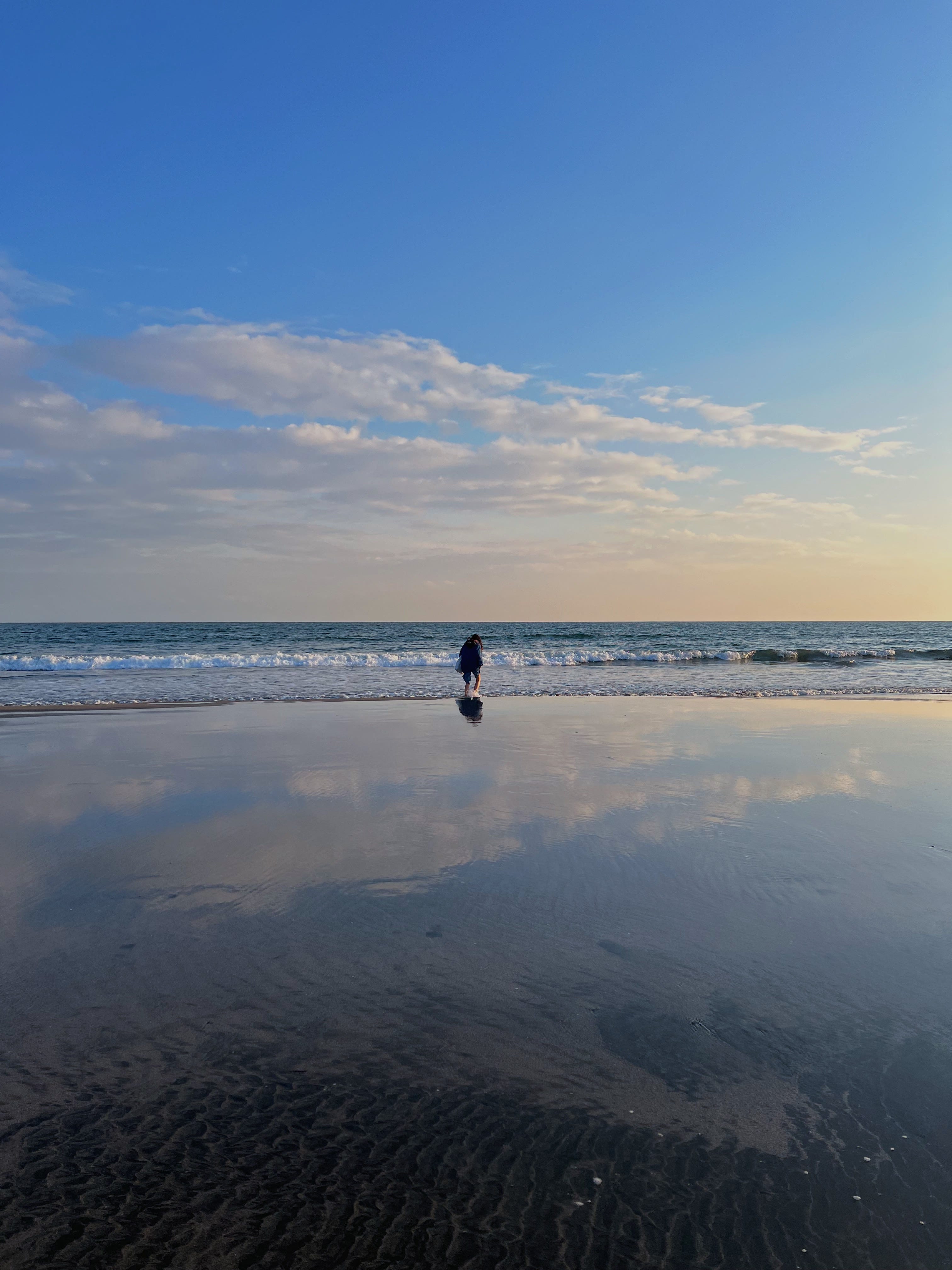
If you’re very used to beaches, I can’t imagine this one taking your breath away, but it’s a nice break from Tokyo’s concrete jungle nonetheless.
Goryo Shrine: A great spot for photos, especially when hydrangeas are in bloom – and the cute Enoden train passes by just outside of the temple grounds.


Komachi Street: I’d honestly call this skippable if it wasn’t right next to Kamakura station – it’s worth a stroll through, being so close. Pretty touristy, and an okay spot to pick up any last-minute souvenirs. It does largely shut down after 5 as well.
Jufuku-ji Temple: A beautiful, cedar-lined stone path leads to cliffside tombs in the back of this temple. Be respectful!! A ghost possessed my camera here.
Kencho-ji: This large temple complex has an observation deck with views of Mt.Fuji, though entrance fees are a little steep at 500 yen.
Zeniarai Benten Shrine: A small shrine on a hill where visitors wash their money in sacred spring water in the hope that it will multiply. I washed my own hands, because you are your own best investment.
Sasuke Inari Shrine: A tiny, secluded shrine in the area traditionally known as Kamakura’s hidden village — a hidden village is a remote settlement where it’s believed ninja usually resided. Lined with red torii gates and an absurd number of white fox statues. According to legend, Inari appeared to Minamoto no Yoritomo in a dream and urged him to raise an army, setting him on the path to founding Japan’s first shogunate. You can come here to pray for career advancement after Zeniarai Benten. I did not, because the thought of praying for more work gives me hives.
Enoshima
Enoshima’s forested, hilly island is its main attraction, and one you’ll be exploring on foot. The island basically functions as one giant shrine to Benzaiten, the Buddhist and Shinto goddess of everything that flows: think water, music, the arts, eloquence, and good fortune.
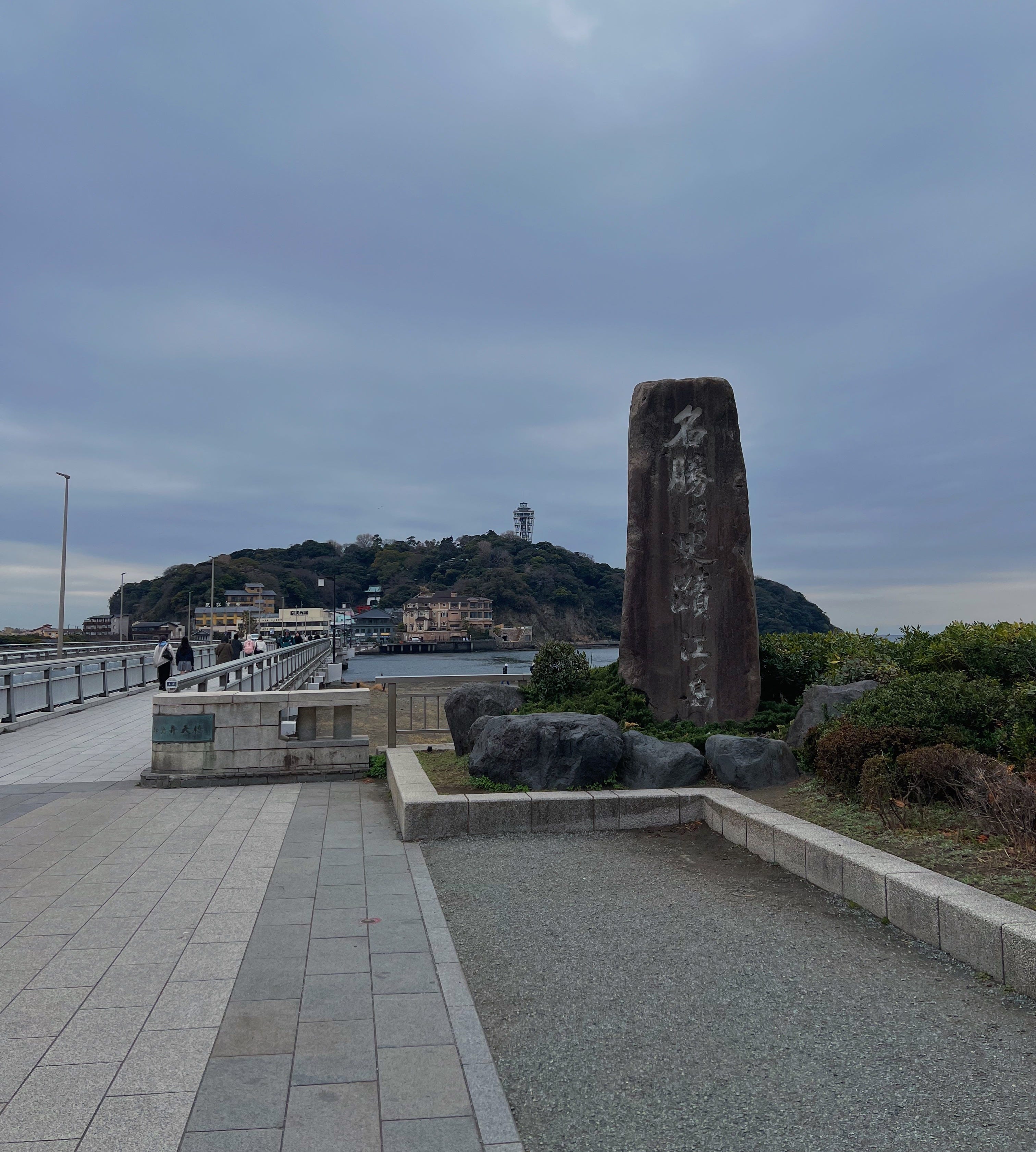
Benzaiten — more colloquially known as Benten — is derived from the Hindu goddess Saraswati, who began being worshipped in Japan after Classical Chinese translations of the Golden Light Sutra made their way to the country.
The shrines here don’t just worship Benten in the abstract, but follow a specific mythology recorded in the Enoshima Engi, written by the Buddhist monk Kōkei around 1047 AD. According to legend, the villagers living around Enoshima spent over a thousand years being terrorized by a five-headed dragon known as Gozuryu, who was probably hungry or horny or both.
Sympathetic to their suffering, the goddess descended to earth, and lifted the island of Enoshima from the bay to serve as her abode. Her arrival onto the island was marked by a spectacular celestial event (probably a meteor shower?), and was immediately met by the dragon, who, like all men, fell in love at first sight, and asked her to be his wife.
She rejected his proposal, admonishing him to recognize the harm he had caused to Enoshima’s people. Ashamed or in love, the dragon vowed to reform, turning himself southward towards the island in eternal devotion to her, and transformed into a hill on the opposite shore — today known as tatsu no kuchi yama (龍の口山), or “Dragon’s Mouth Hill”.
Fans of the Legend of Zelda series will encounter a fun little surprise on the island. I won’t say any more. You’ll catch it very quickly.
Enoshima Shrine: More of a complex, consisting of three separate shrines scattered throughout the island. Seeing as Benten is a goddess of fortune, you should pray to win the lottery here, as I do at every shrine I visit. It’s also a great place to do some money laundering. (Visitors will literally wash their money in the shrine’s pond for good fortune. It’s common practice at many shrines devoted to wealth across Japan).
Enoshima Sea Candle: A lighthouse that doubles as an observation tower in the Samuel Cocking Garden. Yes, he’s British, and purchased a sizable part of Enoshima during the Meiji era. And yes, he did purchase it in his Japanese wife’s name — foreigners couldn’t legally own land at the time. Rules have changed now, because I kept hearing Japanese complain about how Taiwanese buyers are snatching up all their land, when in reality foreign buyers of every nationality combined accounted for a tiny percentage of new condo purchases in Tokyo in the past few years. And also didn’t you colonize them????
Samuel Cocking Garden: He then built a botanical garden on the grounds.


Iwaya Caves and Southern Cliffs:
My favorite part of Enoshimaaaa because I felt like an explorerrrrr! (ノ◕ヮ◕)ノ*:・゚✧
A tiny cave system that weaves into Enoshima’s southern cliffs, which are beautiful to explore in their own right — head down during low tide to sit on the rocks and watch others fish or bask in the sun, and keep an eye out for the Turtle Stone (kame-ishi – 亀石). The views from the caves are stunning, and it’s a fun little detour to poke your head into. There is an entry fee, and I believe it’s cash only, but my memory’s spotty here so double-check that yourself.
My favorite part of Enoshimaaaa because I’m a hopeless romanticccc! (ノ◕ヮ◕)ノ*:・゚✧
I actually didn’t get to see it on this trip, because I was with a group and we left before I could check it out. I will just have to return with my future beloved.
It’s a little bit hidden away — at least I believe it is, as that’s what the girl who urged me not to miss it said — on a side trail that leads to a cliff overlooking Enoshima’s oceans. Seeing as the island is devoted to the story of love and redemption between Benten and the dragon, couples will come here to write their names on padlocks to put on the fence and ring the love bell. Nobody needs to turn to stone for this one.
Nagaiso (R): A hidden rocky outcropping that draws fewer crowds than the main attractions — apparently, it’s a good spot to watch the sea. The path there can be slippery, so tread carefully.
Shonan Port Lighthouse (R): I really want to visit this next time I’m here. I figure it probably isn’t as impressive as the Sea Candle in the gardens, but I like that it’s a little hidden away.
Eat
Kamakura
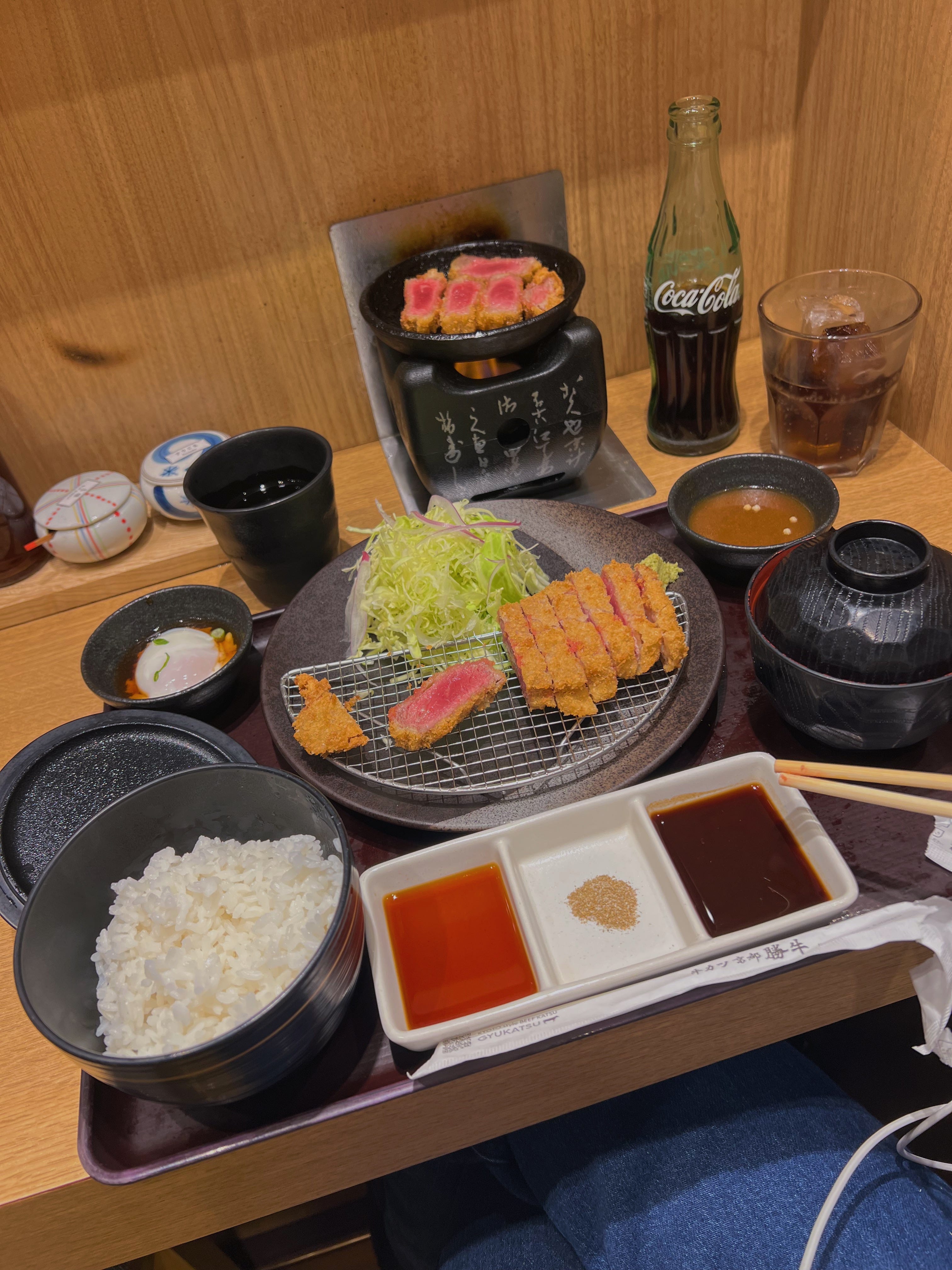
Gyukatsu Kyoto Katsugyu Kamakura-eki: (Restaurant) I love this gyukatsu (deep-fried steak cutlet) chain, way more than the slightly more popular Gyukatsu Motomura. Per its name, this spot serves Kyoto-style gyukatsu, while Motomura serves Tokyo-style gyukatsu. I like this one more for its variety of sauces and inclusion of an onsen egg.
This was the first of many locations I tried. It’s located right outside the west end of Kamakura station, so it’s perfect for lunch or dinner, and is open relatively late for Kamakura, closing at 8pm/20:00.
Hatoya Kamakura: (Matcha) Hatoya was the best matcha cafe that I tried in Japan, and its Kamakura branch was my favorite, for one specific reason — it carries a sea salt foam that you can’t get at other locations, and it’s divine. Get a strawberry matcha latte with the foam on top, and thank me later. Kamakura is seriously lacking in trash cans, so I wouldn’t recommend walking and sipping this — ask the shop if you can dispose of your finished drink there.
Magokoro: (Vegetarian/Vegan Restaurant) Health-conscious, beachside Kamakura has a decent number of vegetarian spots, and this rustic chic cafe has beautiful seaside views. The tempeh curry was surprisingly delicious. I wouldn’t go out of your way if you don’t have people with dietary restrictions in your group, but the dish I ordered pleasantly surprised me nonetheless.
A Cup of Journey: (R, Coffee, Light Bites) The owner speaks fluent English, and the shop converts to a wine bar in the evenings. Definitely want to check it out the next time I’m in Kamakura.
Basic: (R, Coffee, Light Bites) This cozy-looking cafe looks promising, and the cinnamon sugar toast sounds like a delicious snack. Seating is limited.
Enoshima
Kishokuya: (R, Seafood) While I didn’t get to visit it on this trip, this spot was recommended to me by a local from Tokyo. It serves what Enoshima is known for: shirasu, or whitebait.
Enoshima Pudding: (R, Dessert) It looked good while I was looking for spots to eat and had decent Beli ratings. They’ve got to-go jars of purin (the Japanese term for creme caramel/flan) and pudding soft serve ice cream.
Or go and check out the Red Lobster.
Hakone


While technically possible, I don’t think Hakone is a worthwhile daytrip from Tokyo. You should spend at least a night there, and here’s why:
Mount Fuji is rarely visible, and when it is, it’s usually only before 10am. Cloud cover swoops in fast, and it’s harder to get there that early if you’re taking a morning train. Sure, arriving in Hakone before 10am is fairly easy – but getting to a good vantage point by that time? Good luck. This brings me to my second point…
Hakone is very spread out. You could be spending 20-30 minutes on transport to get from one spot to another.
Even so, it’s a really beautiful visit — I just wouldn’t do it as a daytrip again.
Attractions
Lake Ashi and the Peace Torii Gate: I recommend doing this first, as lines for a picture get longer during the day, and you get a good view of Mount Fuji from the gate and surrounding viewpoints.
Hakone Pirate Ship Cruise: After visiting the torii gate, you can board one of Hakone’s pirate ships (yes, they’re pirate ships, I’m 20 pages into this guide and on my final pass, please don’t make me look this up I’m so tired. okay fine I’m doing it. I’m looking it up. I’M DOING IT!!!! Hakone has no historic ties to pirates, quelle surprise. Some company executives went on a Disneyland trip and it inspired them to introduce a fun attraction to Hakone. Okay, that was actually kinda cute. I’m glad I googled it.) at the nearby Motohakone port towards Togendai. This 25-minute boat ride takes you towards Owakudani, and offers amazing views of Mount Fuji on clear days.


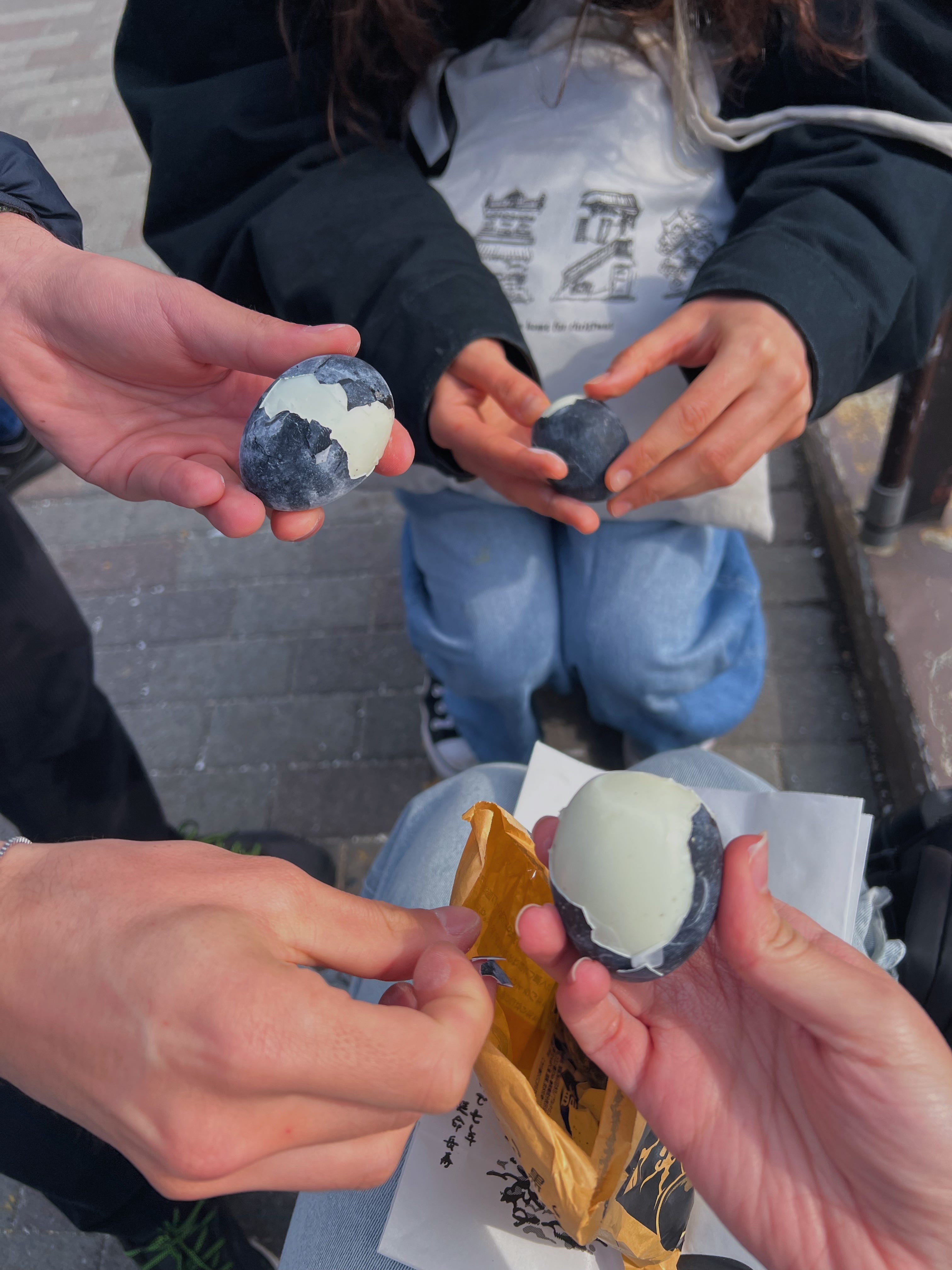
Owakudani: Easily my favorite part of the Hakone daytrip, and the Hakone ropeway from Togendai to the mountaintop is very scenic. This area formed after a volcanic eruption about three millennia ago, and you get to see sulfurous vents steaming all around you. The kuro tamago (black egg) just tastes like a regular old boiled egg, but the gimmick is cute. Local legend says eating one kuro tamago adds seven years to your life.
Hakone Open Air Museum: Continue down the ropeway route to this museum, which is then a ten-minute walk away from the station. Japan has no shortage of beautiful art installations, and in my opinion, this one is worth the visit. You can easily spend a couple of hours here, which is another point for spending at least a night in Hakone.
If you still have daylight left, I recommend wandering Gora Park and the surrounding neighborhood afterwards. There are also a few casual foot bath spas located around Gora Station, which are gonna feel like heaven after a long day of walking.
Eat


BOX BURGER 宮城野本店: One of the best burgers I’ve had in my life, much less in Japan! They do onion rings well, though nowhere I went in Asia has gotten the dips that are supposed to accompany them quite right yet. The owner is hilarious too – chat with her if you get the chance. Vegetarian and vegan options available, and they’re actually good.
Fukuoka
My first stop after Tokyo. I found Fukuoka itself a little underwhelming, but its food was surprisingly good.
To be fair, it was pouring and I was fighting off a cold for my entire stay, so the city wasn’t given a fair trial. And my original reason for visiting was to use Fukuoka as a base for exploring the wider Kyushu region anyway. I came here for scenic views and nature. I didn’t get to do much of that, so if I returned, it would probably be with that same intention rather than for the city itself.
Still, I ate very well in my brief time there! Here’s what I enjoyed.
Attractions


Canal City Mall: An enormous, slightly surreal open-air shopping and entertainment complex in Hakata, built around an artificial canal. Buildings curve around a huge central atrium, with several stories of balconies, bridges, escalators, terraces, and walkways looking down toward the water. The mall itself is far more interesting than anything you’ll actually buy there — it feels like a relic of a bygone era. The central aesthetic is late-90’s Japanese techno-futurism: a cathode-ray TV wall, rounded architecture, an abundance of greenery, terracotta-and-teal colored banding, open, liminal voids…it was surreal. Between the pangs of my head cold and the smattering of scattered spring rainshowers as I dipped in and outside, it felt like the appropriate place to be.


Tochoji Temple: Contains the largest seated wooden Buddha in Japan (they track this? Do western countries do this with statues of Jesus?), which was actually one of the less interesting parts of the temple for me. The backrooms behind the statue were strange, surreal, and slightly disturbing, which naturally means that they were my favorite part. You’re taken on a journey through Buddhist hell, leading into a pitch black, winding corridor that you have to feel your way out of, before re-emerging into the front room with the Buddha. The whole thing takes seven minutes, if that. Regardless, I left changed.
Kushida-jinja Shrine: Hakata’s hometown shrine, affectionately called O-Kushida-san by locals. It functions a bit like a local repository for Hakata’s collective superstitions: large, decorative floats, a zodiac compass hidden on the ceiling, a well associated with longevity — all of which I found quite charming.
Ohori Park: A cute park centered around a large pond within city limits. Swan boat rentals, easy promenades, tree-lined pathways — it’s nice for a stroll or reading a book.
Uminonakamichi Seaside Park: A gorgeous seaside park well outside the city whose name I struggle to spell with every attempt (got it first try this time!). This is a proper day trip: the park is enormous, and I’d strongly recommend biking it rather than walking. There are seaside views, gentle rolling hills, sprawling flower fields, rose gardens, and, inexplicably, flamingos.


It will eat up most of a day, especially with roughly an hour of travel each way, and it’s worth arriving early as queues can get long. I really enjoyed it, though, especially as a kind of conciliatory prize of natural beauty for being too sick to venture any further afield into Kyushu.
And I’d return.
Sakurai Futamigaura’s Couple Stones (R): Now we get into things I wanted to visit on this trip, but couldn’t get to. Continuing on from Enoshima, I’m now realizing that many scenic spots in Japan are couples-themed. If any lonely, brooding, impeccably dressed, and wealthy heiresses are in the market for a girl who is exactly like them but also occasionally fires off twenty profanities in a row on her Substack, I am available to re-enact any J-Drama of your choosing for our fated encounter on a Japanese coastline.
So what’s going on here is a white torii floating in the sea and framing two enormous rocks known as Meoto Iwa (夫婦岩), or the Married Couple Rocks. The torii marks the threshold between the ordinary and the divine, while the rocks themselves are bound together by a massive shimenawa rope marking them as sacred. Around the summer solstice, the sun sets directly between the two.
Takachiho Gorge (R): A famous spot with views so beautiful I simply must go and experience it myself on my next trip, even if it is famous. Volcanic basalt walls rise around the Gokase River, with waterfalls dropping directly into the gorge. I really feel like the already jaw-dropping photos I’ve seen online aren’t doing it proper justice.
Mount Aso (R): A primordial-feeling place, and its caldera is one of the largest in the world. There are photos of these enormous rolling grasslands, ponds, grazing horses and cattle, and the volcanic cone looming behind everything. To excuse a probably-reductionist comparison, it looks like something out of Breath of The Wild. And, when conditions permit, you can approach the crater.
This is close enough to Takachiho that they can be paired if you rent a car.
Yakushima (R): A subtropical, mountainous island covered in ancient forest — some of its yakusugi (屋久杉) cedars exceed a millennium in age. Rocks carpeted in moss, waterfalls pouring down mountains, deer and macaques…a good chunk of the island is UNESCO World Heritage protected for good reason. I still need to do a proper deep-dive into the hikes I’ll choose on a future trip, but Shiratani Unsuikyo Gorge is calling my name for looking gorgeous without seeming too strenuous.
Eat and Drink
NOOICE cafe: Decent Melbournian breakfast outpost that had the best soufflé pancakes I had on my Japan trip thus far — definitely a must-order if you come here. I loved that they offered mini versions of them, too. The avocado toast wasn’t anything crazy, but was a nice fix after two months of lacking western-style breakfasts. This was also when it first hit me that Australia and Cali have similarly health-conscious cultures.
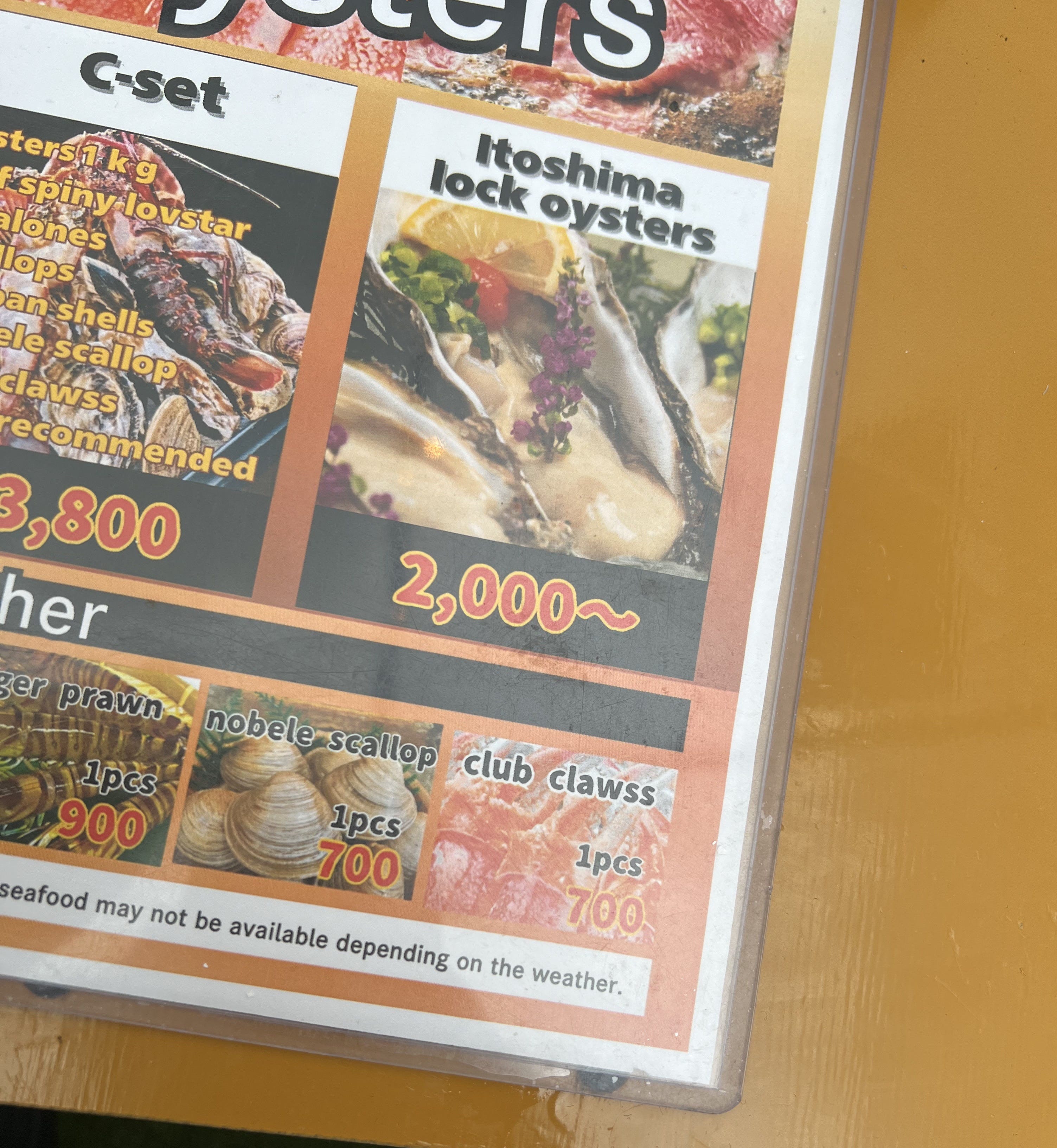
糸島海鮮牡蠣小屋OKUITO&七輪BBQビアガーデン奥糸: Woe is me and my head cold, because I would have loved to venture out to a proper seaside oyster hut, but this spot in the city managed to scratch the itch.
Every winter out on the Itoshima Peninsula, fishing ports spout these little temporary seafood shacks called kakigoya (牡蠣小屋 – literally translates to “oyster shack”). They are rustic — you sit on a wooden bench, or the floor. A pot or grill full of shellfish is slammed onto your tableside burner, and once everything’s cooked, you dig in. It sure isn’t glamorous, but it’s tasty as hell. Put on a shucking glove and get to work.


This one doubles as a beer garden, stationed just outside of a shrine, and true to its roots, primarily just serves shellfish. Also, inexplicably, french fries. This was hot, fresh, simple, and delicious. I sat beneath a tarp tent listening to the rain patter overhead while prying open piping-hot oyster shells. I really enjoyed it.
麺処一成 博多店 (Mendokoro Issei Hakata Branch): (Ramen) Some of my favorite ramen I had in Japan, serving up hybrid bowls of Hakata tonkotsu and Yokohama Iekei ramen. The bowls are very customizable — choose noodle thickness, spiciness of the broth, etc.
Sanmi (333): (Ramen) More cheap & interesting than any kind of culinary revelation. Tomato-based ramen that tastes just like sopa de estrellitas, the kind you get in a little pack at Tony’s and mix shredded Mexican cheese and cilantro into…
If I remember correctly, it’s around 300 yen a bowl. That’s less than $2 USD.
Bar Oscar: (Cocktail Bar) World’s 50 Best distinguished, lovely vibe, and staff, and crowd. Ayumi from BVLGARI Bar in Tokyo sent me here as it’s an alma mater of hers, and the bar’s creations as well as the classics were executed wonderfully. It wasn’t mindblowing in any sense, but just a good, solid cocktail bar with a cozy seating area and great hospitality.
I was a few seats down from a very buzzed salarywoman. After stumbling through a conversation with her in broken Japanese, she said something to the bartender while pointing at me. I immediately felt flustered, remembering a bad experience I had in Japan, that started exactly like this, in 2022. Then the bartender turned towards me and said, “she says you’re very beautiful.” It made me smile! :-)
Itoking Ippindori Store: (Bakery) Listen, I thought it was just an average dorayaki spot until I tried the salt cream strawberry dorayaki. That was fucking fantastic. The other ones I tried weren’t anything special, I can only recommend that.
Hiroshima & Miyajima Island
Hiroshima is the most cash-reliant city I encountered in Japan so far, so it made sense that I lost my cash wallet — the first time I’ve ever lost anything while traveling — for a day here. Womp womp!!!
Thankfully, Japan is the greatest place in the world to lose something. I recovered her the next day, debit card and all bills still intact. Plus, because I dropped it at the ferry station, it gave me an excuse to return to Miyajima. Given my record of near-perfect neuroticism, I’ve decided I subconsciously did it on purpose just so I could go back.
Truly. Miyajima was my favorite part of my entire Japan trip. Try to go on a weekday, and get there early.
Hiroshima Attractions
It feels a bit sticky to call Hiroshima’s primary draws “attractions”. These are heavy places, so please treat them with due respect.


Peace Memorial Park: A park standing in memoriam to the victims of the August 6th, 1945 nuclear bombing of the city. The emotional centerpiece of the park is the A-Bomb Dome: the skeletal remains of the former Hiroshima Prefectural Industrial Promotion Hall. It is the building closest to the hypocenter to remain standing, kept preserved eighty years later in memoriam. It is a UNESCO World Heritage site.
Include the Peace Memorial Museum in your visit.
Shukkeien Garden: A historic garden in the city, formerly comprising the estate of the Asano family. Shukkeien roughly translates to “garden of shrunken scenery” – hills are meant to mimic mountains, winding paths represent valleys, and ponds become oceans.
Like many sites in Hiroshima, the garden has a dividing line in the shape of August 1945: it sits only about a mile out from the hypocenter of the A-Bomb. Therefore, many people fleeing the initial blast perished on its grounds. There is a large gingko tree in the garden that survived the blast.
Peace Pagoda: A fairly straightforward hike up a hill with great views of the city. I heard the baseball game happening at the stadium from a mile away up here — it’s a national pastime in Japan. Online guides typically quote 45 minutes total for the hike, but it took me around twenty without rushing. Either I am very athletic (👎🏼), or the guides are slightly overshooting.
Miyajima Transport & Attractions


Transport to the island: You have two options in getting to Miyajima island.
AQUANET Hiroshima: There is a privately-operated ferry that leaves from Peace Park and takes about 45 minutes to reach the island. It costs substantially more than public transit, totaling around 2,200 yen one-way. You also have to book it ahead of time, and it doesn’t run as frequently as public transit.
Train to Miyajimaguchi + Ferry: This is the route I took, and it’s substantially cheaper than the private ferry. Take a 30-minute train ride from Hiroshima Station to Miyajimaguchi, then take a brief walk towards the ferry port and take the ten minute ride to the island.
What can I say about Miyajima? The island is compact enough that I really don’t feel compelled to send you anywhere. Just wander, and go visit the Itsukushima torii gate in the sea on low tide.
Eat and Drink
TEPPAN諒庭 (Hiroshima): Hiroshima is known for their okonomiyaki, having the most restaurants in the world dedicated to it, and their own distinctive style of making it. I didn’t branch out much food-wise beyond trying this regional specialty and eating Miyajima oysters (which were phenomenal). Honestly, I think that’s because this okonomiyaki I had on my first night was so filling it kept me full for three days…
The city’s emblematic choose-your-own style of okonomiyaki has ties to the atomic bomb. Eighty years ago, when vendors were struggling to source ingredients in the aftermath of the destruction, a “cook it how you like it” approach became increasingly popular, depending on what was available that day—which led to me today staring at the menu in a mild panic trying to figure out what to add to mine.
Yakigaki No Hayashi (Miyajima Island): Food was great. Fucking hated the vibe. Why am I getting a mini Itsukushima on my plate. It’s very touristy, but popular for good reason — it’s a solid spot to try Miyajima’s famous oysters prepared in a variety of ways. Because it sits right on the congested main tourist promenade, show up early; some preparations were already sold out by the time I got there.
Miyajima oysters are really something special — amazing raw, amazing fried. I pretty consistently dislike Pacific oysters, from Japan to the Washington coast, but these broke that rule.
tuGiiCo (Miyajima Island): Yakigaki No Hayashi was sold out of grilled oysters by the time I got there, so I came here for them instead. Loved it. I will say that grilled is probably my least favorite method of oyster prep — steamed and fried are better — but if you wanna try them, this is a great spot that’s just around the corner from Yakigaki and the main Miyajima promenade. They only sell raw oysters here in the winter season, November–March. Conversely, Yakigaki No Hayashi does not care if you contract vibrio.
Momijido Nibanya (Miyajima Island): You’ll spot Miyajima’s famous maple leaf shaped dessert known as momiji manju (もみじ饅頭) in stalls and shops all over the island. I stopped in here, and interestingly enjoyed the red bean filling more than the custard (I am a custard fiend!!). They’re simple and straightforward, but pretty good, and you can’t say you’ve stopped in Miyajima if you didn’t grab one of these somewhere.
Kyoto
Kyoto was my favorite leg of the 2022 trip. I went immediately after Japan’s borders reopened, and got to experience an empty Arashiyama and Tenryu-ji Gardens. Admittedly, massive crowds this time around soured that love-at-first-sight impression.
It isn’t the same now, dealing with tourist volumes comparable to Tokyo in a much smaller space. But like much of Japan, wander just a little bit off from the tourist circuit and it becomes breathable again.
I would probably return, but prioritize other parts of Japan over it. Again, I really, really love Kyoto (more than Tokyo, believe it or not), and I’m very aware that, as a tourist, it’s silly of me to complain about overtourism. But it is different from when I went in 2022, and I think there’s much more of Japan worth exploring beyond it.
Overtourism and digital nomading are things I’ve encountered and grappled a lot with throughout 8 months of travel, and this is not the place I am going to attempt to diagnose or solve either of them.
And I hate that, because I also believe a more mobile society is a healthier one. I want people to feel secure in their homes and welcome to travel. But if places are slowly transforming into Disneyland versions of themselves while the locals who built that character get displaced, what is the solution? Selfishly, but also in an idealistic, humanistic sense, I certainly don’t want it to be “move no longer”.
I guess what I’m ultimately trying to wrestle with is how we preserve mobility without turning it into extraction — and how we make mobility more accessible as well. I can complain all I want about occasionally feeling unwelcome on a strong passport, but plenty of people don’t get the opportunity to be tourists at all.
Attractions
For the record, nothing I post here is remotely under “hidden gem” territory. Still, here’s what I visited.


Philosopher’s Path: It’s a beautiful walk, especially under the sakura, and I suspect doubly beneath fall foliage. I stumbled upon monk here, a locally-sourced, famous pizzeria I’ve had saved for a long spell, ever since it went viral on some Netflix cooking show. (I don’t remember the one — I never watched the episode).
I stopped, studying the facade and regretting that I couldn’t secure a reservation. The owner then summarily stepped out with his son, locked the door, and walked away. I stared after them, gawking.
A woman then stopped beside me, contemplating the restaurant as her husband trailed behind. She then lifted her phone, snapped a picture, and turned to him saying: “she’s been staring at this for a minute, so it must be important.”
Tenryu-ji Gardens: UNESCO World Heritage Gardens that have been maintained for around a millennium (you’ll be hearing that a lot in Kyoto). These grounds were a large contributing factor to why I fell so in love with Kyoto back in 2022 — wandering around between flashes of rain, seeing the beautiful contrasts of the fall foliage against the bamboo groves and the water.


It was less enchanting weaving through crowds this time, but is still worth a visit, if only for the historical value. I found the surrounding temples skippable, though the Cloud Dragon Painting in the Dharma Hall is worth a look at if you have the yen to spare (it is a separate ticket from the main temple).
Eikando Zenriji Temple: Famous for its fall foliage and past as a center of learning, this is one of the larger Buddhist temples you can find scattered around Kyoto.
Its most interesting resident is the Mikaeri Amida, or “Amida Looking Back” — an unusual statue of the Buddha with his head turned over his shoulder. Legend has it that, in 1082, a monk named Eikan was circling an image of Amida and reciting prayers, when the Buddha stepped down from his pedestal and began walking ahead of him. Eikan stopped in shock. The Buddha turned around, told him to follow, and apparently remained that way. The backward glance is meant as a gesture of compassion toward those who have fallen behind.
Nanzen-ji Temple: My FAVORITE temple that I visited in Kyoto. I felt like I was in a video game. Exploring aqueducts in Assassin’s Creed, or reaching the edge of a world map in an RPG. Quite literally, in the latter case — wander behind the temple complex on a winding path past the graveyard and you stumble upon a forest clearing. The path continues onwards into the woods, and Kyoto as a city conspicuously ends beyond that. Oh my goddd it was so whimsical. If I was stupid I would’ve done some illegal urban parkouring and fallen to my death trying to climb one of the aqueducts.


And no, I don’t actually remember anything about the temple itself.
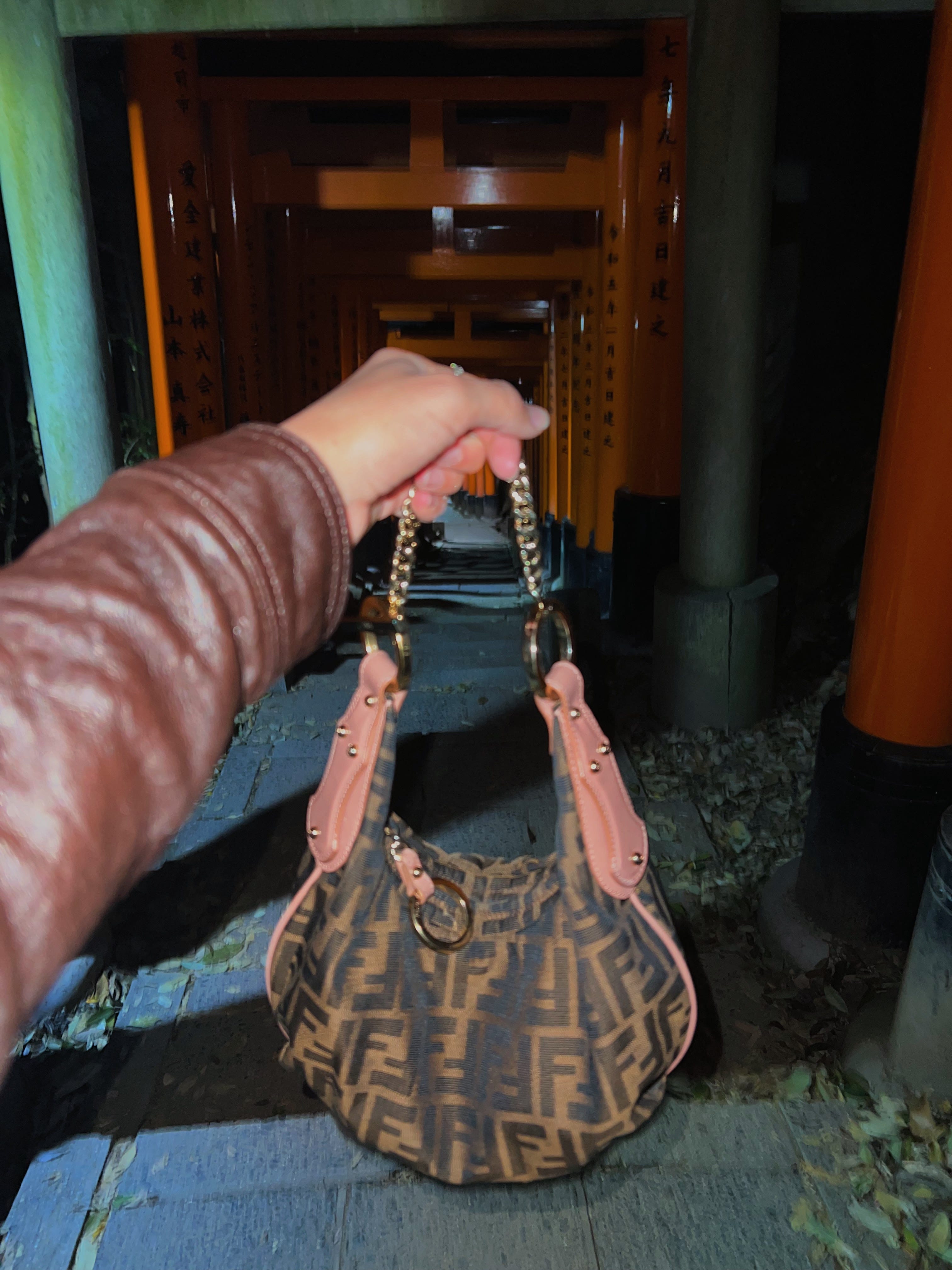
Fushimi Inari: You know this one, I don’t need to describe it to you. I hiked it late at night, 20% to avoid the crowds, and 80% to engage in battle with a wild boar, but tragically did not encounter a single one, which made me depressed.
Kinkaku-ji: Come on, you’re in Kyoto. Of course you’re going to visit the temple of gold. I will say it’s always impressive, but it was more impressive when I visited in November 2022. That’s my sleeper recommendation, which I grit my teeth over as it gains popularity year over year: autumn is the season to visit Japan.


Arashiyama: It would not be an exaggeration to call this my favorite place on earth. This was one part of Kyoto that felt most affected by large crowds, but I feel like if you get up early enough you can enjoy some peace and quiet here.
Arashiyama Monkey Park:


I went in 2022, and did not return this time as it’s a 20-minute hike up. You get, in my opinion, the best views of Kyoto and fall foliage here too. I would happily come back the next time I’m there in the fall (which is hopefully soon).
Hozugawa River Boat Ride: (R) I didn’t do this, but a Japanese friend of mine recommended it for the next time I’m in Kyoto. It isn’t exactly white water rafting, but it takes you 16 kilometers down the Hozugawa River from Kameoka into Arashiyama, winding for about two hours through a mountain gorge with some gentle rapids along the way.
Eat and Drink
Wine Bar Origin (祇園下河原 おりじん): (Wine bar) My favorite bar that I visited in five months across Asia. This spot is really, really special, and is honestly the sum of everything I look for in an establishment.

This was an Asha recommendation, a Toronto-based bartender who I met at Tokyo’s SG Club, and I just want to stress again that this is my favorite part of solo traveling — getting to talk to the people around you!!
Origin touts a really lovely selection of wines, and all of the made-to-order food is incredible. You can go here even if you don’t drink alcohol, because the food is pretty robust. I came in expecting to have one or two bites and ended up ordering damn near the entire menu, because all of it is cooked to order and it’s really fucking good.
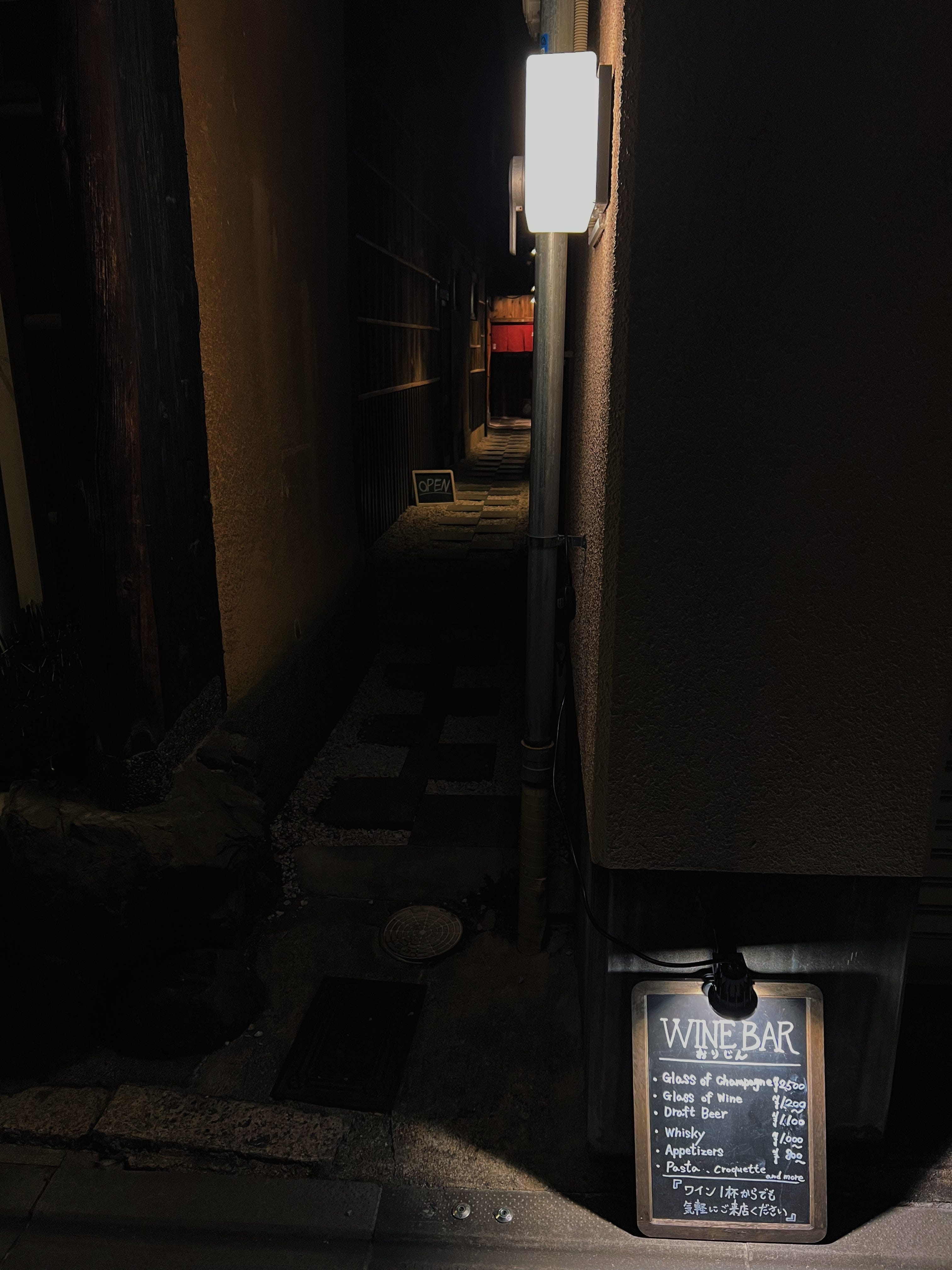
The owner, Junya, is incredibly friendly and was born and raised right in Gion. He opened the bar about six years ago inside his childhood friend’s former home, converting the ground floor into a bar space. Before opening the bar, he worked in French and Italian restaurants across Kyoto. And, as you may have guessed from the amount of information I was able to gather, he speaks excellent English. He’s a thoughtful curator, a fantastic cook, and an absolute gem.


I want to see him succeed, but I also don’t want this spot to get overrun. I shared it with you, so please, please do me a favor and don’t try to make this place go viral. I don’t really consider that gatekeeping, it’s more about preserving what makes it special. Here’s their Instagram for updated hours.
Ichimonjiya Wasuke: I took a bus across the city to visit the second-oldest restaurant in the world.


This is emblematic of what makes Kyoto, and Japan as a whole, so special to me, particularly as an American. Established in the first millennium as an outpost for pilgrims to the shrine next door, it has been run by 25 generations of the same family. One thousand and twenty-six years later, they gave me a nice seat by the window.
Like most wagashi, aburimochi is relatively simple, but pretty tasty: little skewers of mochi toasted over charcoal like marshmallows, then coated in a sweet white miso sauce.
Don’t confuse it with Kazariya across the street, which is only 400 years old. (I also find it absolutely hysterical that they’re closed on the same day. Don’t try for a Wednesday walk-in.)
% Arabica Arashiyama: (Cafe) It’s no secret that I adore %Arabica, and its Arashiyama location is one of its most scenic branches. Also, understandably, its most crowded. Prepare to wait in a very long line — on the bright side, it moves fast.


Ayuchaya Hiranoya: (Restaurant) I dream of grilled ayu, ever since I passed by a stall selling them on sticks on a Kyoto side street in 2022, and haven’t been around when they’re in season since. Help me realize that dream by trying them when you’re in Kyoto. Here I had ayu, though not grilled. One day…
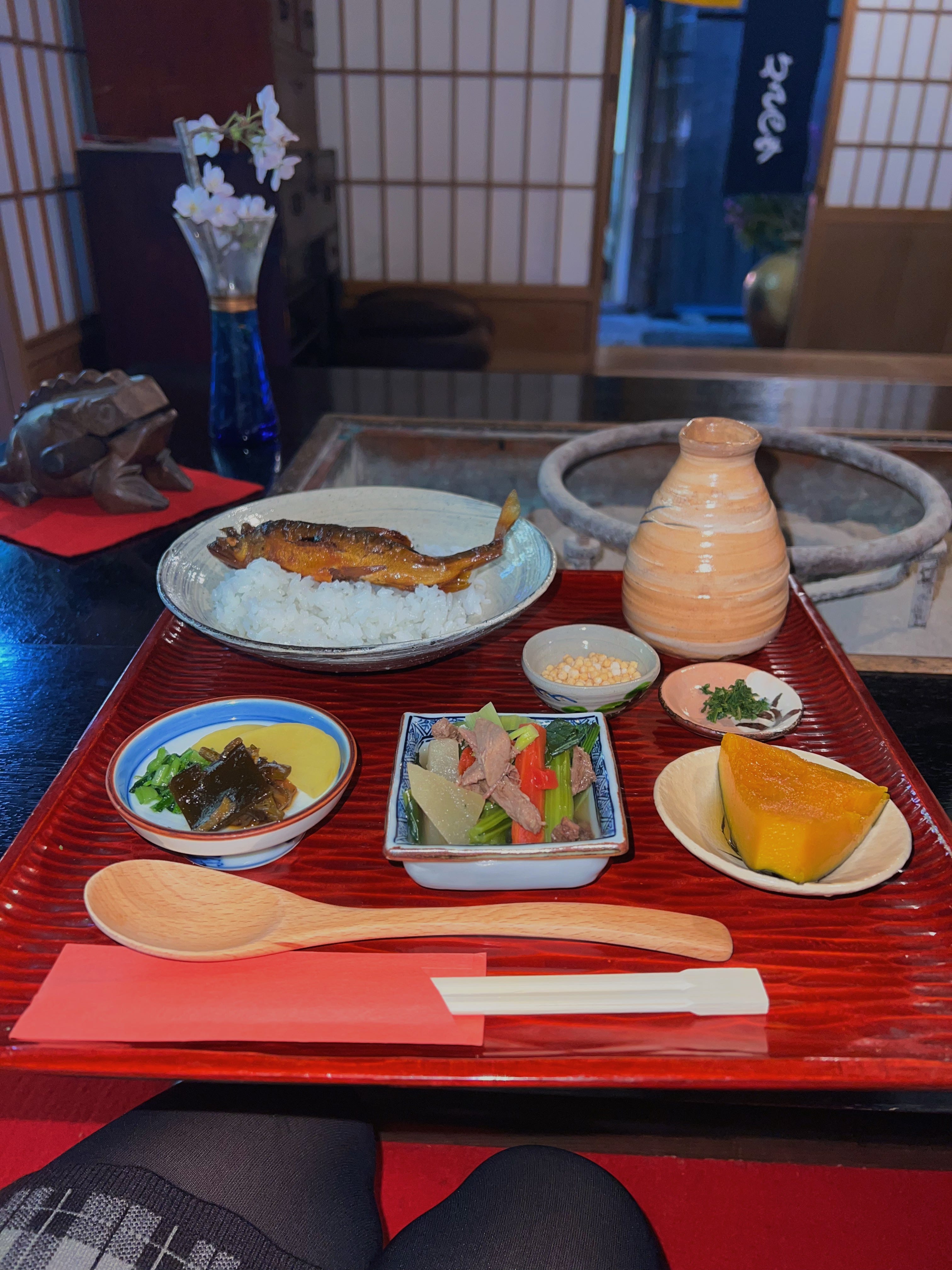
The homemade yuzu soda was delicious. When no one was looking, I poured my matcha into it, mixed them together, and downed it. It was sick and perverse of me to do, and it was delicious.
Sugari (R): (Ramen, tsukemen) Another one of Asha’s recommendations. A popular ramen and tsukemen spot tucked down a narrow alley inside a converted Kyoto machiya, known especially for its motsu – grilled offal – ramen and dipping noodles. Personally, I had enough of my motsu fill for this trip when I tried motsunabe (offal hot pot) in Fukuoka, per Manae’s recommendation.
chrome natural wine life (R): (Wine bar) A serious natural wine bar near the Kyoto Imperial Palace specializing in small producers, with thousands of bottles tucked away in its cellar and a proper food menu to accompany them. Between this and Origin, I may die of alcohol poisoning upon my return.
Record Sakaba Beatle momo (R): (Listening bar) Asha just wrote “Momo” in my notes app, and I believe this is the spot she meant. A tiny second-floor bar off Kiyamachi lined with thousands of records, where you can request songs for the owner to play while you drink. Some of their cocktails are inspired by songs.
It’s only around twenty seats and apparently fills up, so I’d try to reserve ahead.
Kyoyamato (京大和) (R, **): (Restaurant) A Fujii and Mike rec, the two of whom I met at VIRTÚ in Tokyo. A kyo-kaiseki restaurant tucked into the Higashiyama hills on the same grounds as the Park Hyatt Kyoto, Kyoyamato serves seasonal meals in private rooms overlooking its gardens. The restaurant itself dates back to 1877, while the site has a much longer and stranger history: the land previously long belonged to Buddhist temples, and rooms on the property later hosted clandestine meetings between figures involved in the movement that helped bring down the Tokugawa shogunate.
I love intrigue and Michelin stars!!!
Future Destinations
Recommended by friends, stuff I may check out next time.
Oita (R): Located near Fukuoka, Manae recommended this for visiting hot springs — and it actually has the highest volume of onsen water in the country!
Naoshima (R): One of Japan’s famous “art islands” in the Seto Inland Sea. The island is essentially an ongoing experiment in integrating contemporary art and architecture into the landscape itself. Tadao Ando designed several of its major museums, including Chichu Art Museum, which is built mostly underground so as not to interrupt the surrounding scenery and houses permanent works by Monet, James Turrell, and Walter De Maria.
The part that appeals to me most is the Art House Project: abandoned and former homes scattered through the old Honmura neighborhood were transformed into individual installations, so viewing the art means wandering through an actual residential village rather than moving from gallery to gallery inside one enormous museum. There are seven of them, now.
Teshima (R): Naoshima’s quieter, greener neighboring art island, which I’d ideally pair together over a few days rather than frantically trying to ferry between everything in one. Teshima is still largely rural—think mountains, rice terraces, and little fishing communities—and its art installations are scattered throughout that landscape.
The main draw for me is Teshima Art Museum, which barely resembles a museum at all, similarly to Naoshima’s Art House Project. A low, water-drop-shaped concrete shell designed by Ryue Nishizawa houses Rei Naito’s installation, which lets water, wind, sunlight, rain, birds, and bugs become part of the work.
Ise Grand Shrine (R): One of the holiest places in Shinto, and way bigger than the name “shrine” suggests: Ise Jingu is actually a complex of 125 shrines centered around two main sanctuaries. Manae explicitly referred to this as a “power spot”.
The thing that fascinates me most is that the main shrine buildings are deliberately rebuilt from scratch every twenty years in a tradition called Shikinen Sengu. This has been repeated for roughly 1,300 years: an adjacent site waits beside the existing sanctuary, a new one is constructed in the same ancient architectural form, and the deity is ceremonially transferred into it. The next major transfer ceremony is in 2033.
There’s something wonderfully Japanese to me about preserving something for thirteen centuries by continually destroying and remaking it — that’s the same theme I kept feeling across the entire country, and named outright in my Tokyo guide: permanence through renewal; something enduring precisely because it’s been torn down and rebuilt, over and over and over again.
Useful Japanese for tourists
I picked up some survival phrases while I was in the country, paired with a little bit of study. The language is very phonetic, so what you see is usually exactly how it’s pronounced. I’ve included phonetic guidance for terms I think may need a bit of extra help.
Note for my novice learners who can read kana: When –は (ha) is used as a topic particle, it’s pronounced and romanized as “wa”.
Basic Phrases
Excuse me: Sumimasen (すみません)
I put it first because it’s probably the one you’ll be using the most. It’s a catch-all “excuse me” – for apologizing, moving past people, or getting someone’s attention.
Thank you: Arigatō gozaimasu (ありがとうございます)
Thank you (very much). To put it more casually, just say arigatō / ありがとう, but being more formal here isn’t weird.
Yes: Hai (はい)
No: Iie (eee-eh) (いいえ)
A direct “no” is considered a bit forward and potentially rude in Japanese – if you are visibly foreign they likely won’t take offense, but also try not to say it too bluntly.
Hello: Konnichiwa (こんにちは)
Literally translates to “good afternoon”. You can use this generally to say hello, but if you want to upgrade…
Good morning: Ohayō Gozaimasu (おはようございます)
Good evening: Konbanwa (こんばんは)
I’m fine / It’s alright: Daijōbu desu (だいじょうぶです)
Can be used literally to say you’re okay, or as a polite refusal of something (like being offered a plastic bag at a shop).
Please: Onegaishimasu (おねがいします )
Apologies, I don’t understand Japanese: Sumimasen, Nihongo-ga wakarimasen. (すみません、にほんごがわかりません。)
Is English okay?: Eigo demo daijōbu desu ka? (えいごでもだいじょうぶですか。)
Where is the restroom?: Otoire-wa doko desu-ka? (おトイレはどこですか。)
Help!: Tasukete! (たすけて!)
For emergency situations.
Phrases you might hear
Welcome!: Irasshaimase (いらっしゃいませ)
You’ll hear this constantly when entering restaurants and shops. You don’t need to respond, but I always did because I am cute.
Wait just a moment: Chotto matte (mah-tteh) (ちょっとまって)
Do you need a bag?: Fukuro-wa irimasu-ka? (ふくろはいりますか)
Respond:
Yes, please: Hai, onegaishimasu (はい、おねがいします)
I’m fine: Daijōbu desu (だいじょうぶです )
Polite refusal
At restaurants
Menu, please: Sumimasen, menyū-o onegaishimasu. (すみません、メニューをおねがいします)
Do you have an English menu?: Eigo-no menyū-wa arimasu-ka? (えいごのメニューはありますか。)
This, please: Kore-o kudasai (koh-reh-oh kuu-da-sai) (これをください)
You can say this while pointing at a menu item.
How many people?: Nanmei-sama desu ka? (なんめいさまですか。)
I am alone: Hitori desu (ひとりです)
For seating at a restaurant.
We are two people: Futari desu (ふたりです)
For seating at a restaurant.
The “f” sound in Japanese is a little closer to an “h”. Think somewhere between “fu–” and “hu–”.
I have a reservation: Yoyaku shiteimasu (よやくしています)
For here or to go?: Tennai desu-ka? Omochikaeri desu-ka? (てんないですか?おもちかえりですか。)
For here: Tennai-de (てんないで)
To go: Mochikaeri-de (もちかえりで)
Cheers!: Kanpai! (かんぱい!)
For toasting drinks.
Bon appetit: Itadakimasu (いただきます)
The phrase literally translates to “I humbly receive”, but contextually means “Let’s eat” or “Bon appetit”.
Check, please: Okaikei-o onegaishimasu (おかいけいをおねがいします)
Thank you for the meal: Gochisōsama deshita (ごちそうさまでした)
Said as you’re leaving/after the meal is completed.
Shopping
How much is this?: Kore-wa ikura desu-ka? (これはいくらですか?)
Can I try this on?: Shichaku dekimasu-ka? (しちゃくできますか ?)
Do you have this in [Small/Medium/Large] size?: Kore, [S/M/L] saizu arimasu-ka? (これ、[S/M/L]サイズありますか ?)
Yes, you literally say the letters S/M/L.
I wrote a whole separate — and truthfully, more emotionally loaded — guide for Tokyo, as I spent a little over two months living there. Give it a read.
The Tokyo Recommendations I’d Send You

In many ways, Tokyo was my first love. When I first touched down in 2022, I knew I had arrived somewhere that would become a place of frequent return in my life — I’d never experienced instant recognition like that before.
And you can find me on other platforms here: