
Kyoten’s sister restaurant Kyoten Next Door boasts /r/chicagofood fame—which, frankly, should be taken with a grain of salt in the most generous of circumstances—but I do enjoy checking out the hyped-up spots anyway to see if they’re worth that salt.
Nestled somewhere in the purgatory between Logan and Wicker and just down the street from the iconic Margie’s Candies, KND’s entrance is gray, unassuming, and pretty easy to miss. And it’s literally next door to big sister Kyoten. So, what’s the difference?
Price Point
These are two very different calibers of splurge.
Kyoten will set you back a whopping $440 for its omakase – one of the most expensive tasting menus in the city, rivaling even Alinea. This price is inclusive of service charge, but not tax.
Kyoten Next Door asks for a comparatively modest $159. This price is pre-obligatory service charge, which is 18%, so really the total cost is closer to $200.
Here’s a full cost breakdown, accurate as of January 2026:
Kyoten – Weekdays: $440 | Weekends: $490
Kyoten Next Door – Weekdays: $159 | Weekends: $169
Omakase Style
Kyoten Next Door is a traditional-style omakase, whereas Kyoten is progressive style. As the name implies, traditional omakase adheres to its Japanese roots as closely as possible – the focus is on the fish and rice. Progressive omakase lets itself play with a few more bells and whistles, introducing tempura, sauces in the rolls, and dessert dishes. Kyoten Next Door offers 16 courses. Kyoten offers 20-22, depending on the menu and seasonality.


First Impressions


The entrance is easy to miss. The restaurant sits on a quiet street a few blocks off Milwaukee, and the facade is a boring, understated millennial gray. Inside, however, the space opens into something far more elegant—a minimalist, serene art gallery.
Upon entering, the chef greets you while preparing his mise en place (is there a Japanese term for this?), and the host takes your drink order. There are several chefs in residence at KND, and that night, I was served by Chef Mugi.
I loved the space and the quiet, understated start to the evening. It felt true to the meal I was about to have.
The Food
Before the meal begins, the chefs reintroduce themselves and provide context for both KND and its sister restaurant—essentially everything I’ve just outlined. They emphasize that this is a traditional omakase and encourage diners to focus on the quality of the fish and rice.
KND uses a special variety of rice selectively bred in Japan for maximum quality. Only two other restaurants in Chicago receive this caliber of rice shipped directly from Japan: Kyoten, obviously, and Oriole (something I wouldn’t learn until dining there months later).
Chef also assures that slight modifications can be requested throughout the meal – more or less rice, as needed, to get fuller or avoid getting full too quickly. In my eternal hubris, I assured myself that I wouldn’t need to make such a modification.


Each course is introduced with an explanation of the fish’s origin and the specific preparation of the rice. I love this level of detail. Most of them go over my head, but it’s cool to learn about the process and sophistication behind what you’re eating at places like this. It helps you understand the work that goes into it.
The meal was evenly paced, especially given that up to ten diners were being served simultaneously. I never felt that things were rushed or too slow. Bites ranged from okay to just plain delicious, with most landing comfortably on the stronger end of that spectrum.
The biggest distraction was the fact that some pieces had connective tissue that made for a difficult chew – I haven’t been to enough omakases to know if this is standard experience, but based on reading other reviews, I wasn’t the only one with this complaint. It’s a comparatively small issue, but definitely an annoyance for a premium omakase.
Service was polished and professional—exactly what you’d expect from a restaurant of this caliber. Nothing flashy, but no missteps either.
Final thoughts
All of the fish was expectedly top-quality, and the meal was simple, as promised. Frankly, I walked away thinking that my palate wasn’t sophisticated enough to fully appreciate this.
I think this spot is an obvious must-try for the sushi purists of Chicago, those reminiscing on a trip from years past and wanting to revisit a life-changing meal they had while there. Or maybe it’s for those who have never traveled before, and want to experience what an authentic omakase is like at home. It’s also suited for those who are looking for a simple, high-quality meal at a reasonable splurge.
Overall, I don’t believe that this spot deserves the ubiquity that Reddit grants it, but that’s because it isn’t trying to go for ubiquity — it’s very clear about what it does, and commits to that. I don’t think my lukewarm feelings are a fault to the restaurant at all – this rating boils down to personal taste. The meal was good, but I’m not rushing to return. The next time I seek out a traditional omakase, it’ll be in Japan, or at least somewhere that seafood is less expensive to source. And if I had the money to blow $500 on a meal, I definitely would’ve just gone to the envelope-pushing Kyoten instead. It sounds more my style.
Rating: 8.3
Detailed Meal Review
Ora King Salmon (New Zealand) — 8/10
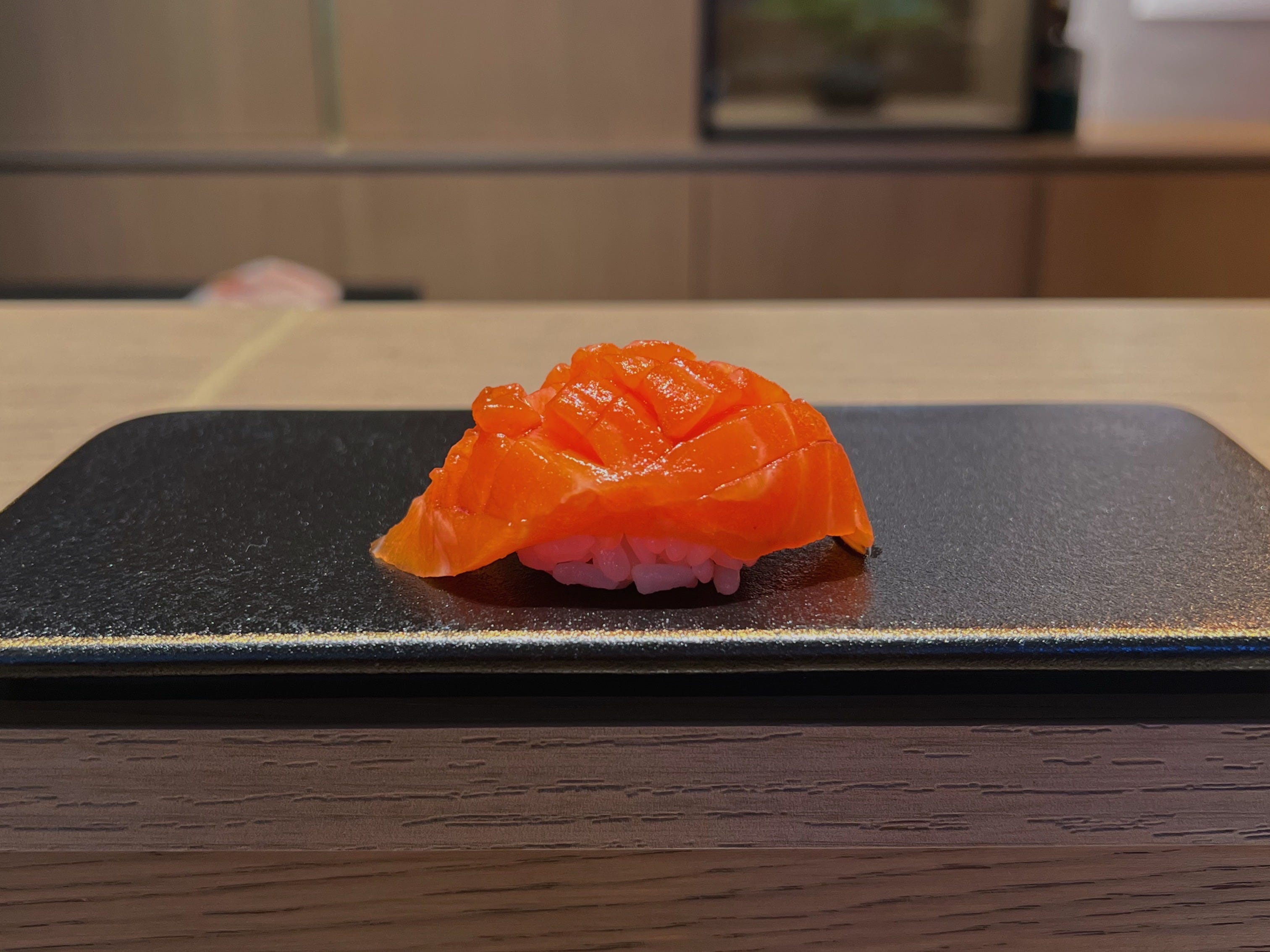
The meal begins with a buttery, smooth, and simple bite. Chef explains that the bites begin lighter and will get heavier as the meal progresses. They will switch to a darker rice, enriched with aged vinegar, about halfway through to accompany the heavier fish.
Ocean Trout/Masu (Australia) — 8/10
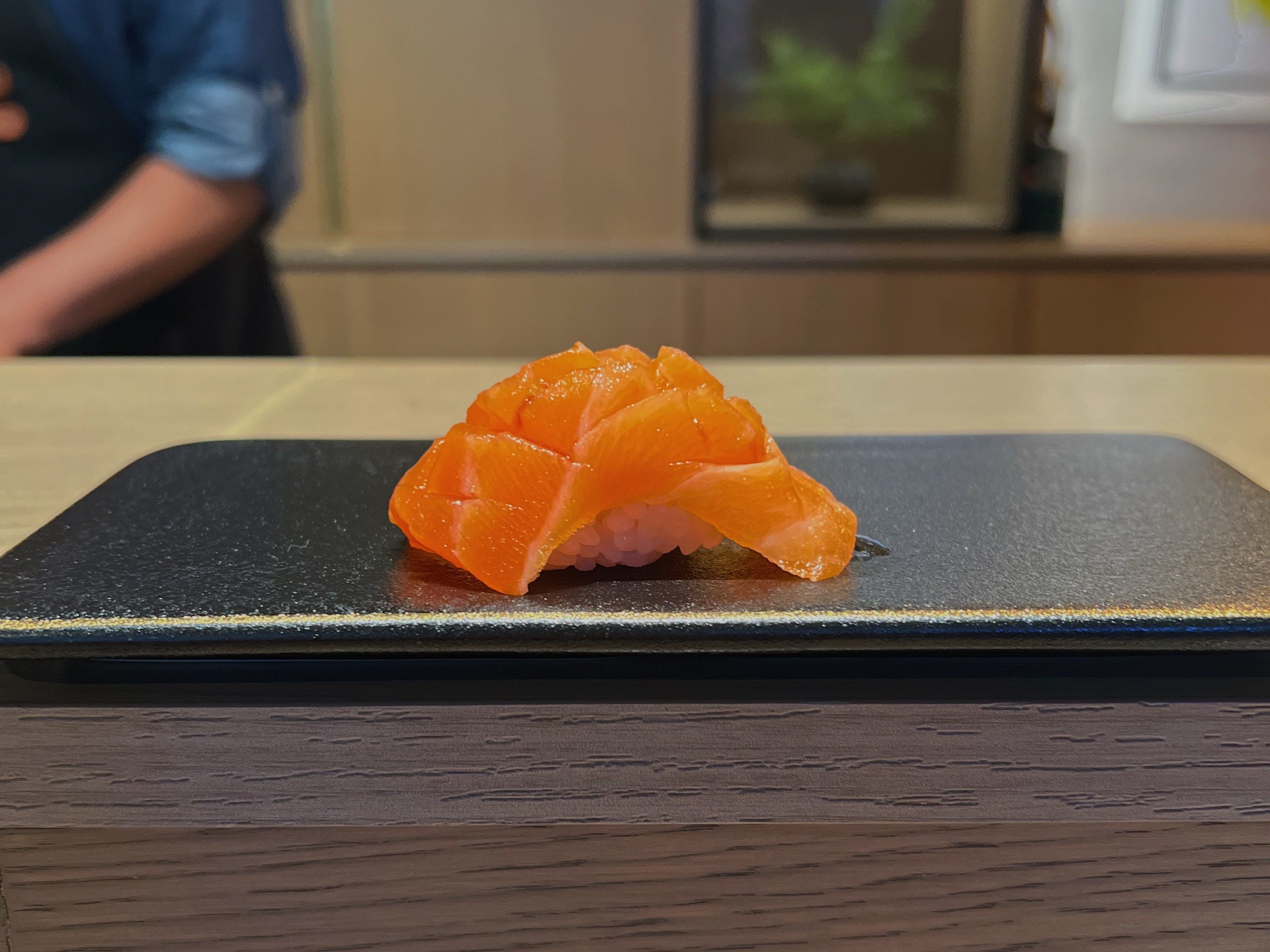
This bite is leaner, and cold-smoked. I’m not a smoked-anything person in general, but the wasabi beneath the fish paired exceptionally well. It was an impressive bite.
Red Snapper/Madai (Japan) — 11/10
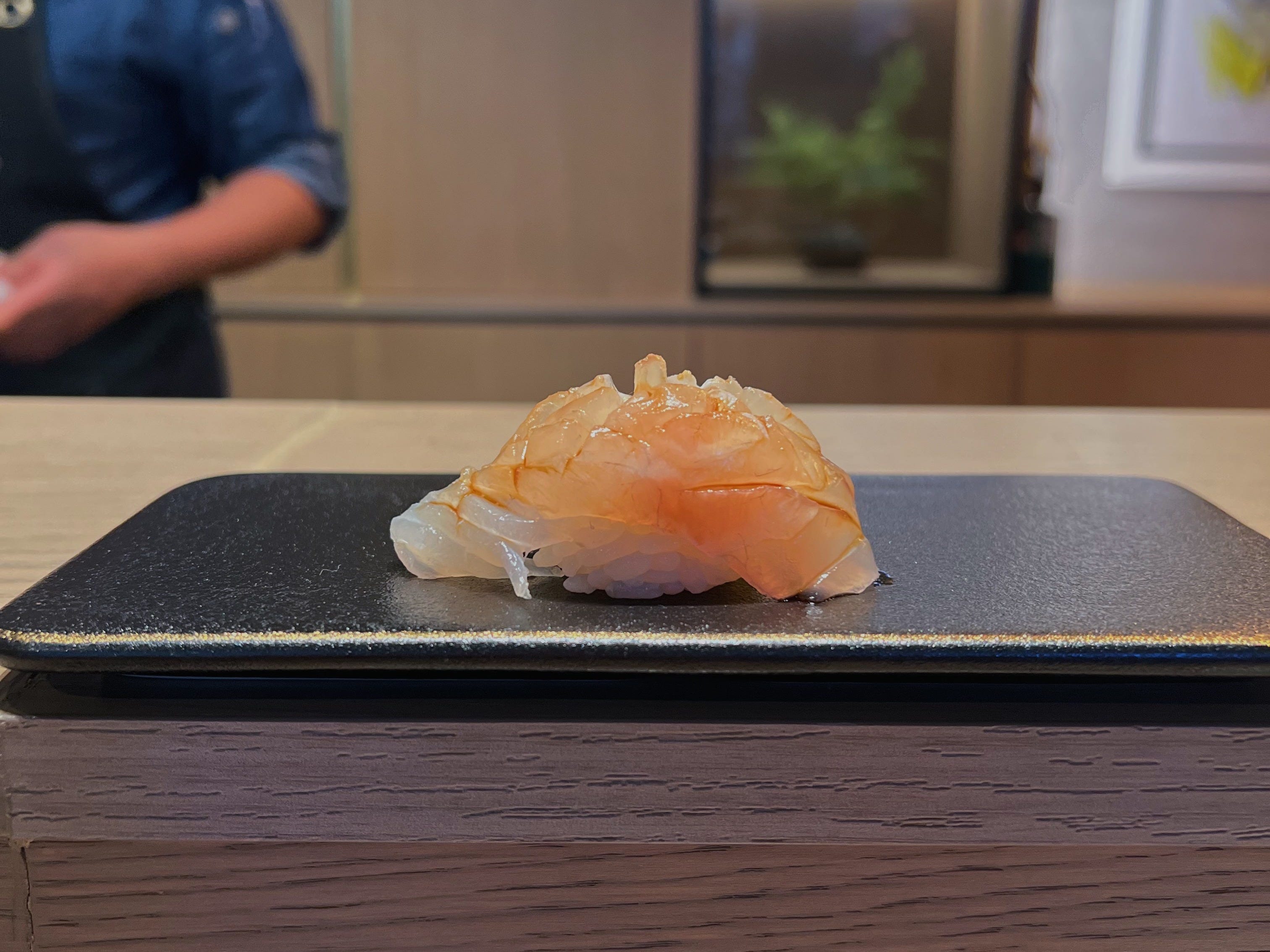
They tucked some lemon zest under the fish for this one, and wow. So simple and light! This cut was the leanest of the night, and the fish will get progressively fattier as the meal continues. All fish are sourced from Japan from here onwards.
Skipjack Mackerel/Shima Aji (Japan) — 10/10
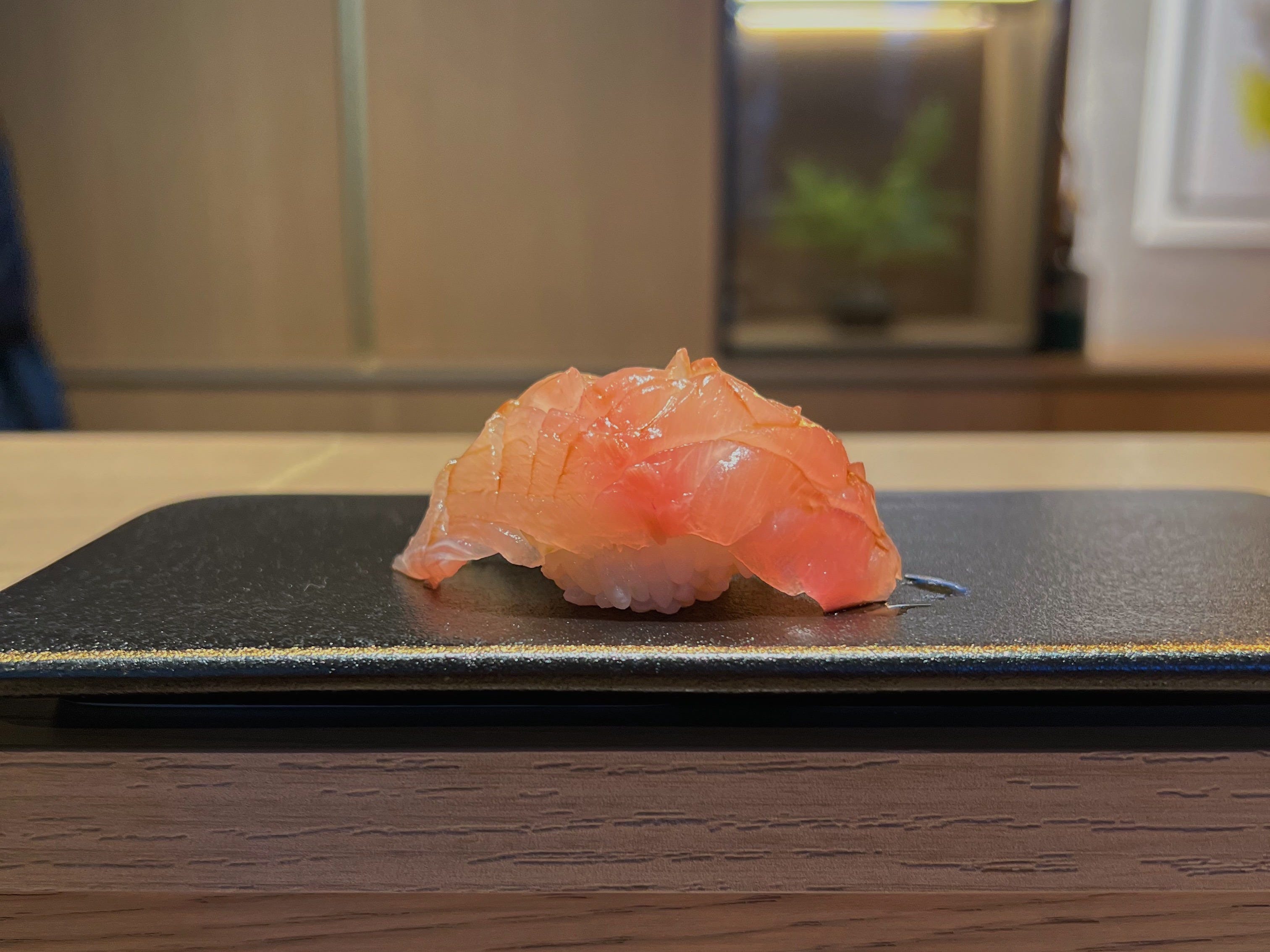
Very buttery. Melts in your mouth. Also utterly beautiful to look at.
Yellowtail Hamachi (Japan) — 10/10
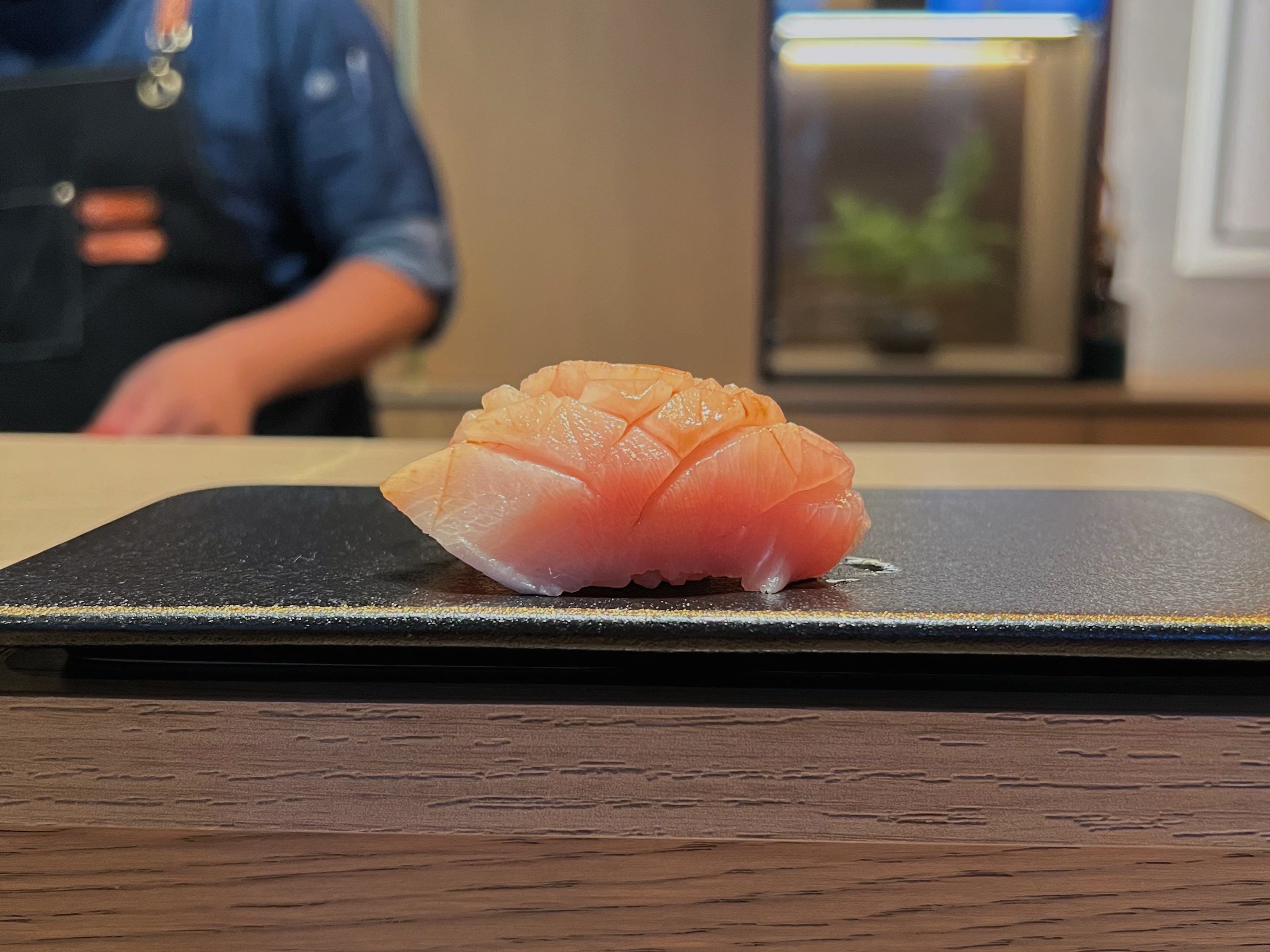
Another simple bite where the taste of the fish shines with no additions. I think it was around here that I began to realize how much I wanted bells and whistles — I liked the lemon zest and wasabi hidden inside of previous bites. They made for a more interesting taste experience. This simplicity is wonderful in its own right, of course, it just began to feel repetitive after a bit. I needed more variety, but again, I understand that isn’t a fault of the restaurant. It’s core to what differentiates it from Kyoten.
Akami Tuna (Japan) — 7/10
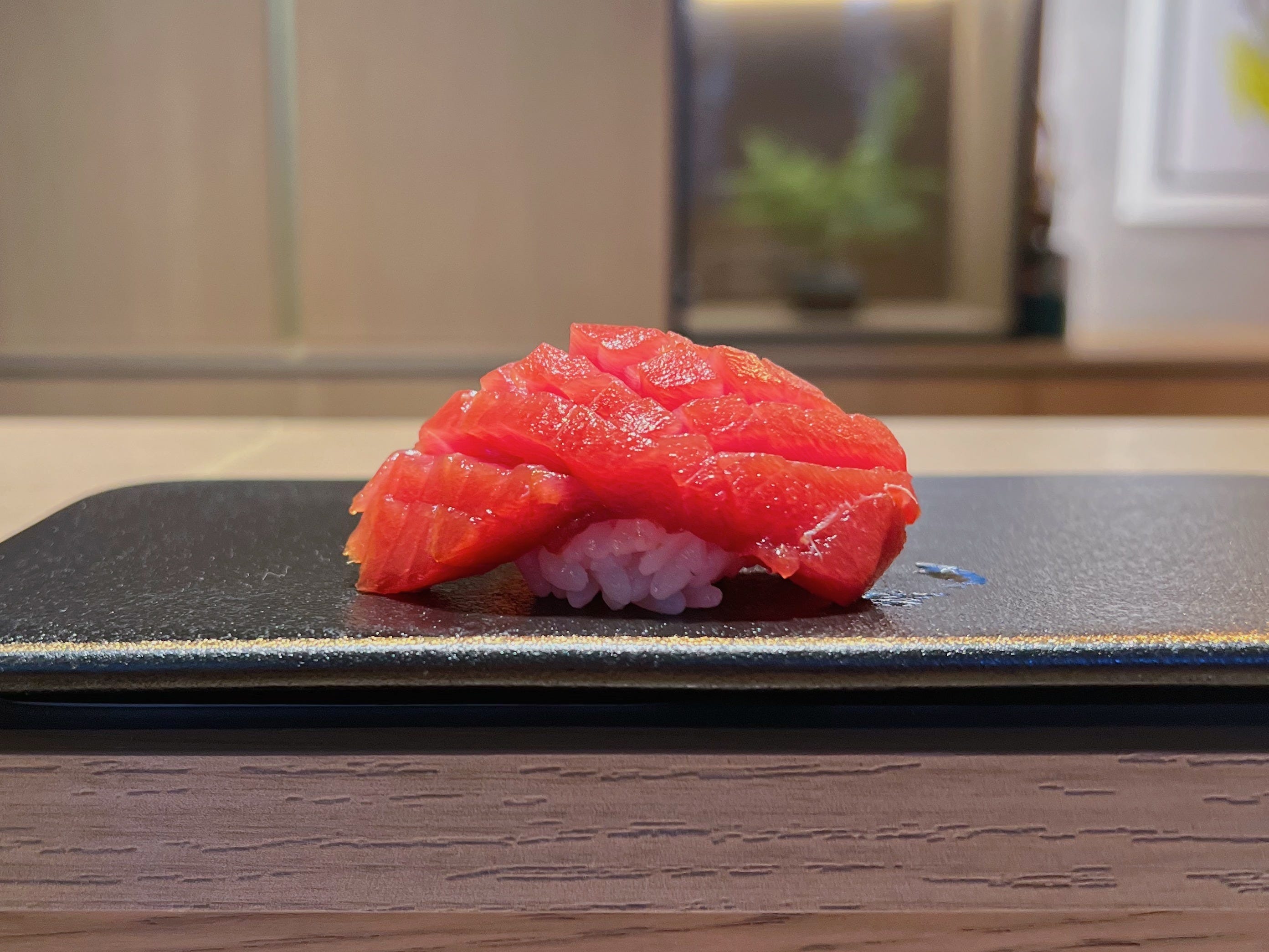
The leanest part of the tuna, which explains why this was one of the pieces where connective tissue was an issue. This bite was way less smooth compared to the previous courses.
Toro Tuna (Japan) — 6/10
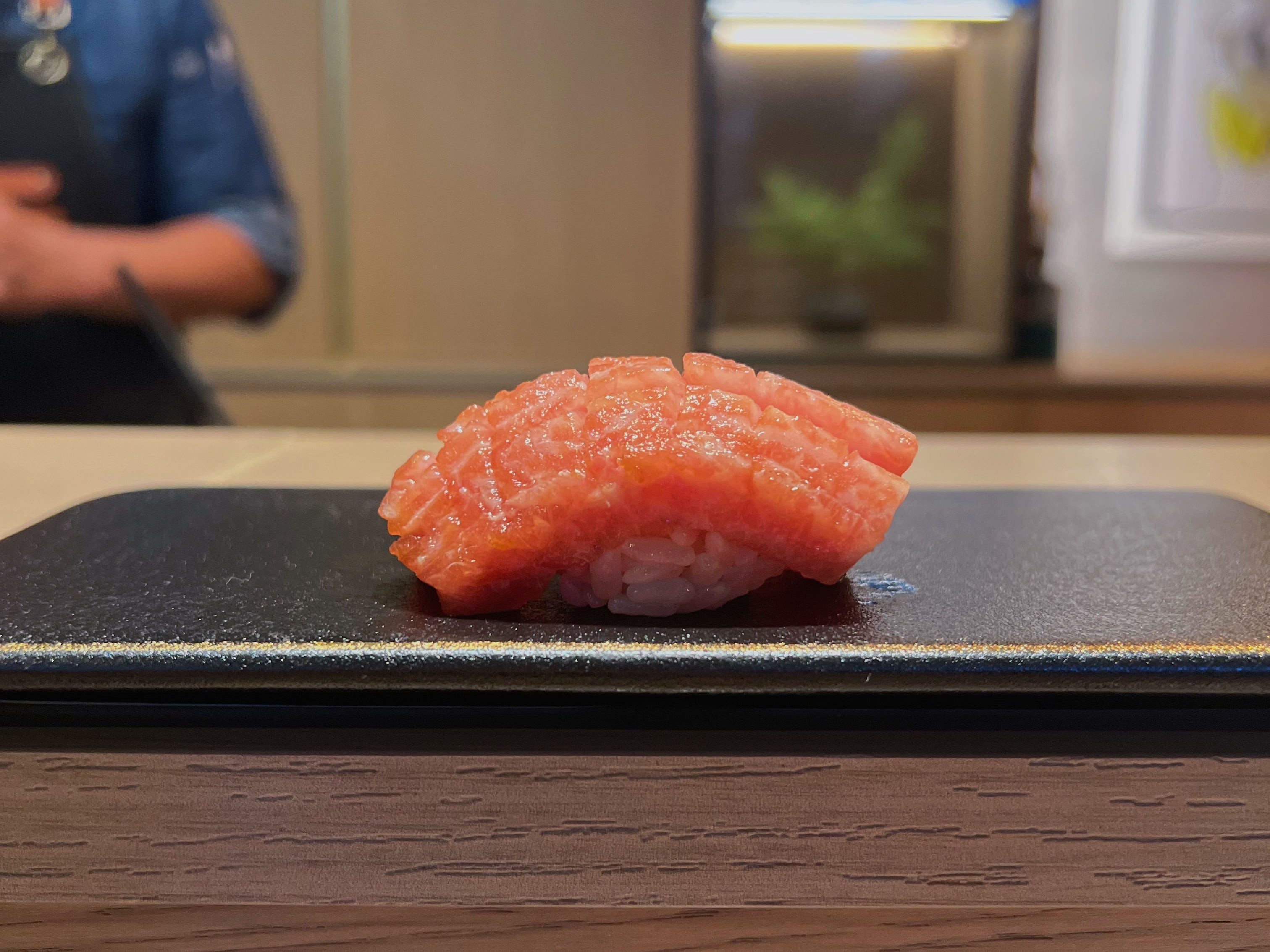
I’ve had toro many times before and loved it. So why was this so offensive to me?? Look at that marbling! It was at this bite that the chefs switched to the darker, vinegar-enriched rice. This one had issues with the connective tissue again, and tasted heavy and oily. It wasn’t pleasant at all. It was around here that I started feeling full.
Wagyu (Kyoto, Japan) — 10/10
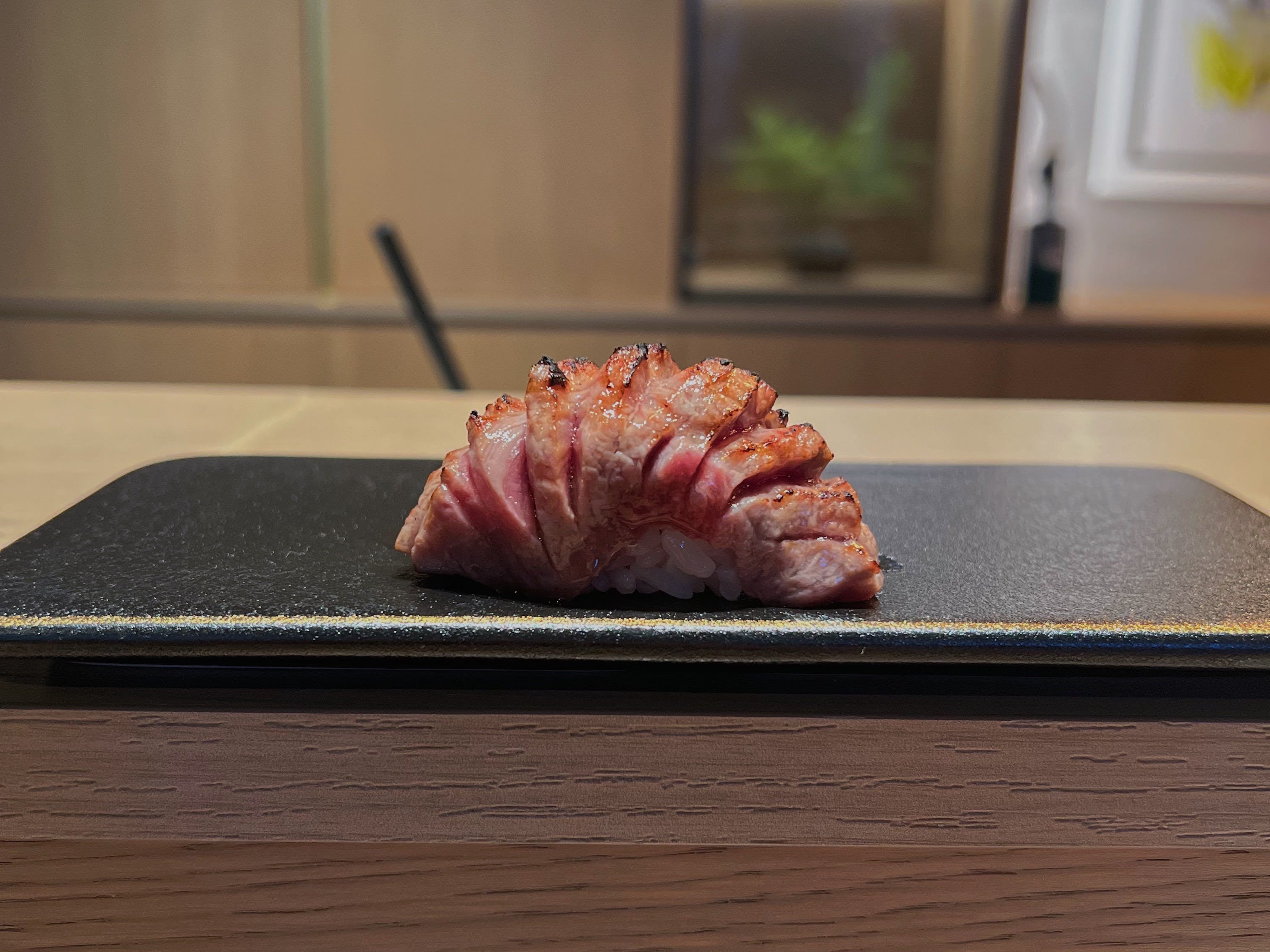
Dry-aged 10 days, which to my understanding isn’t very long in the world of dry aging, but I absolutely tasted a difference. It was richer, much more umami. Might have something to do with the fat content speeding up the aging process?
Scallop (Hokkaido, Japan) — 11/10
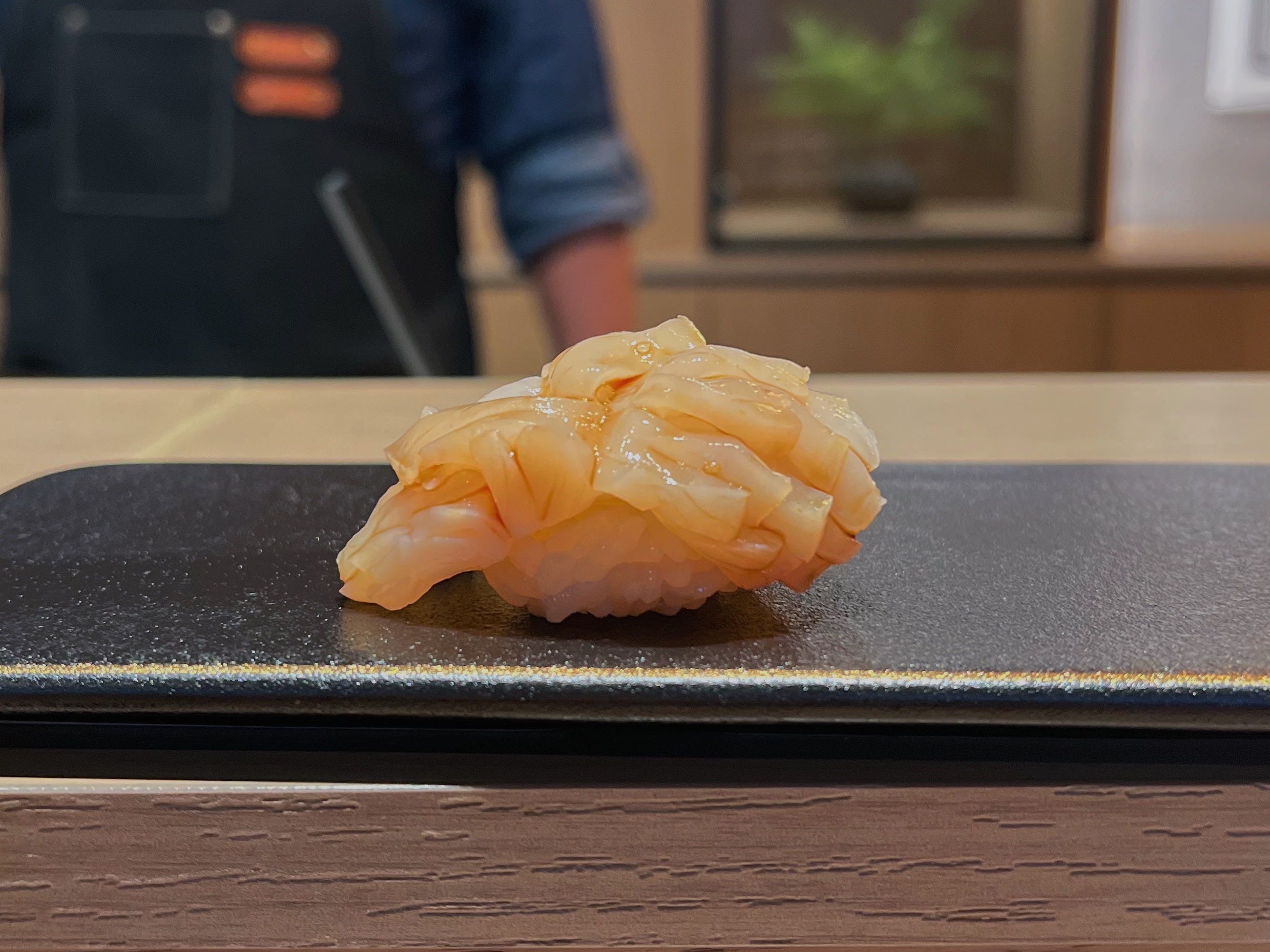
My favorite bite of the night. I wanted twenty of these. This scallop was marinated in lemon juice and dashi, and hiding beneath it is a dab of scallion oil and pepper. It was divine — the acidity of the lemon perfectly balanced out the spicy kick from the pepper.
Japanese Spanish Mackerel/Sawara (Japan) — 6/10
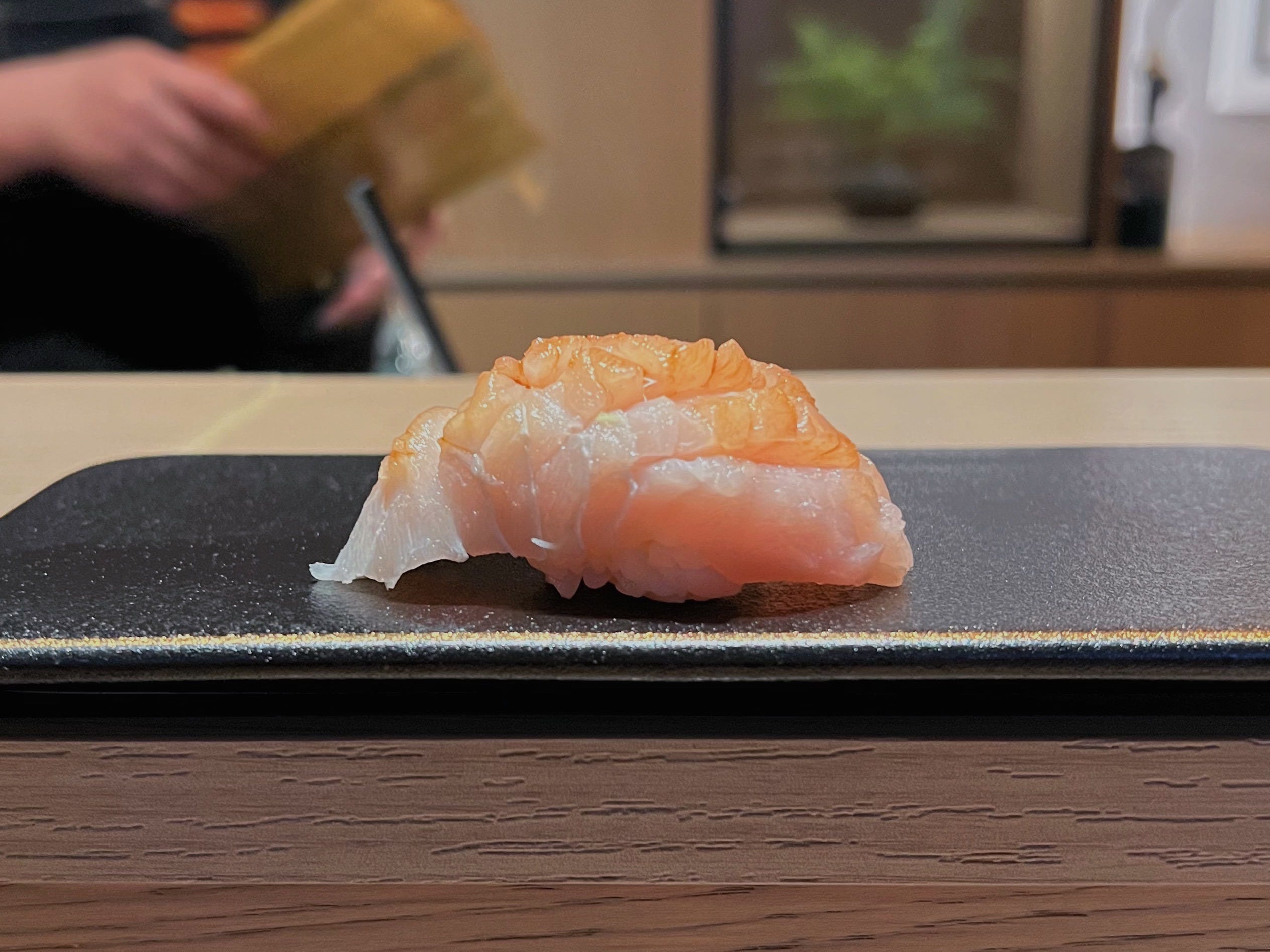
A slightly smoked mackerel with ginger paste tucked beneath. It tastes much more mild than what I expect out of mackerel, which isn’t necessarily a point in its favor because I like the fishy robustness of mackerel. Connective tissue being present makes this not the smoothest bite again.
Mackerel/Saba (Japan) — 7/10
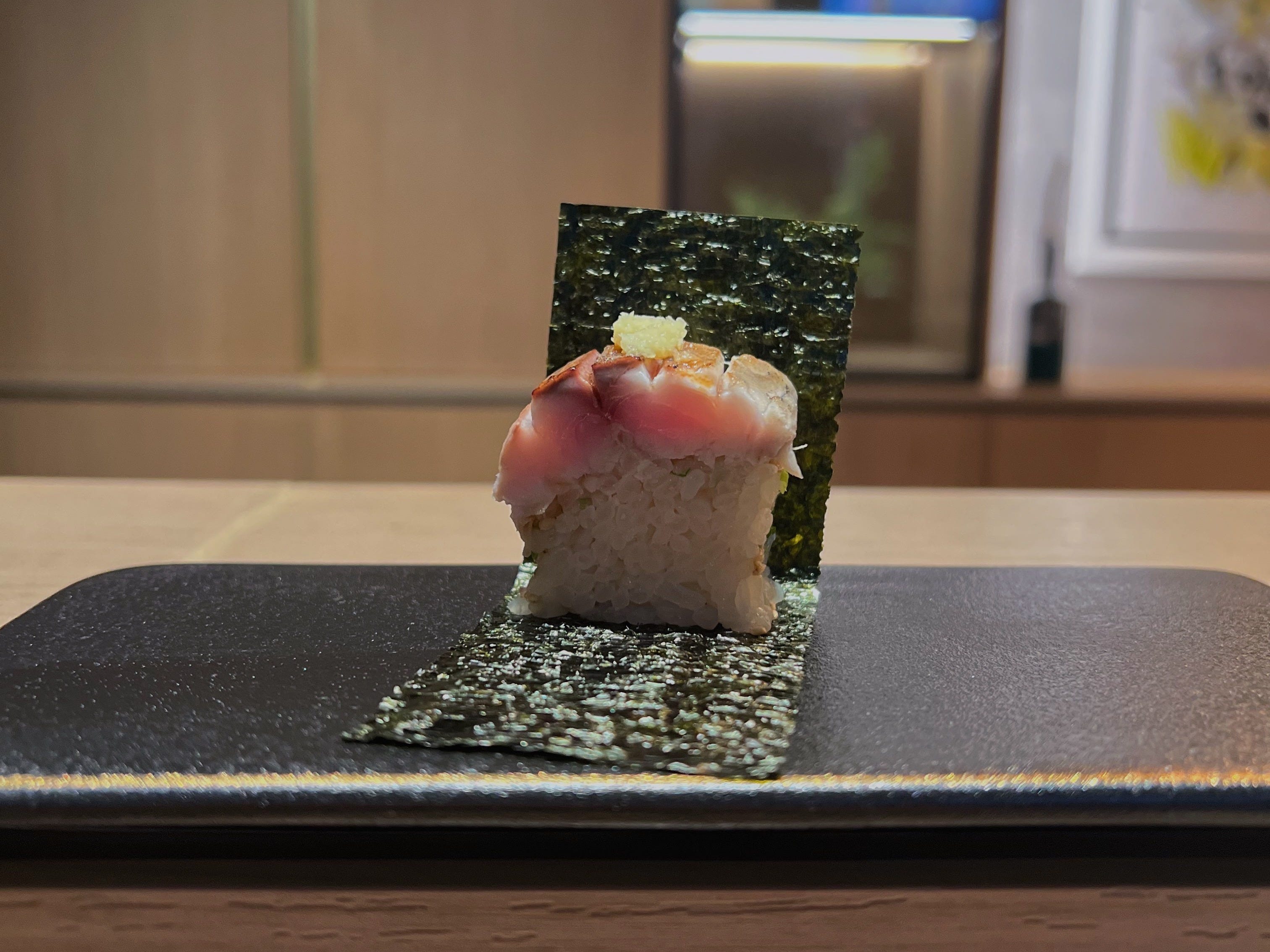
This is scallion rice, topped with a ginger paste. It seems that ginger and mackerel are meant to pair well together, but I’m not feeling it. It’s eaten like a taco…I liked this one more than the last bite, I guess?
Sea Urchin/Uni (Hokkaido, Japan) — 8/10
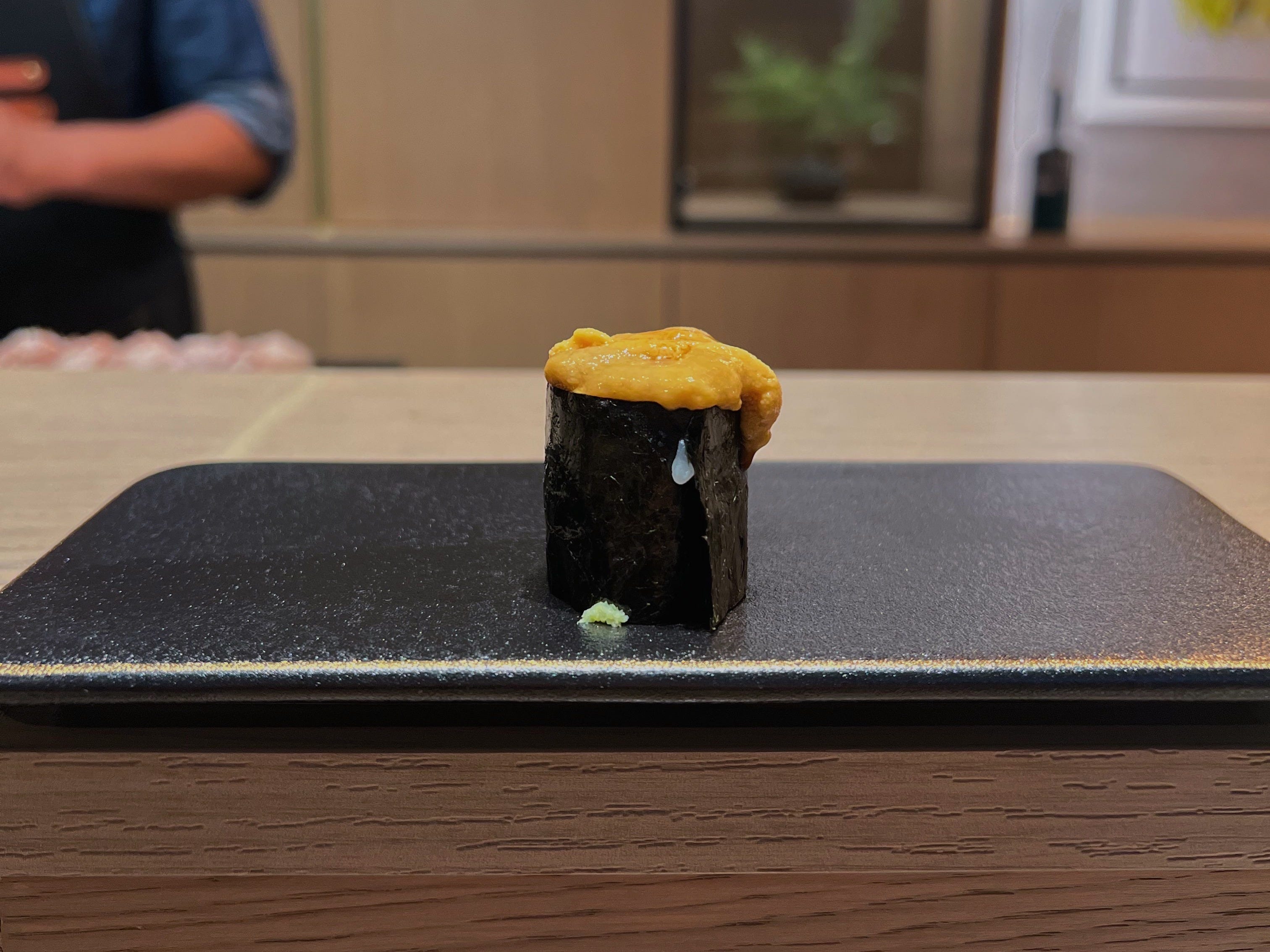
This is the freshest, highest grade of uni possible…and I learn that I actually prefer it at a lower quality. Because when it’s this fresh, it’s just mush. There’s no texture. It’s wet goo in your mouth. The uni I’ve had in the past has more of a body. I adore uni, but I’ll stick to my B-grade shit, thanks.

Sablefish/Gindara (Japan) — 11/10
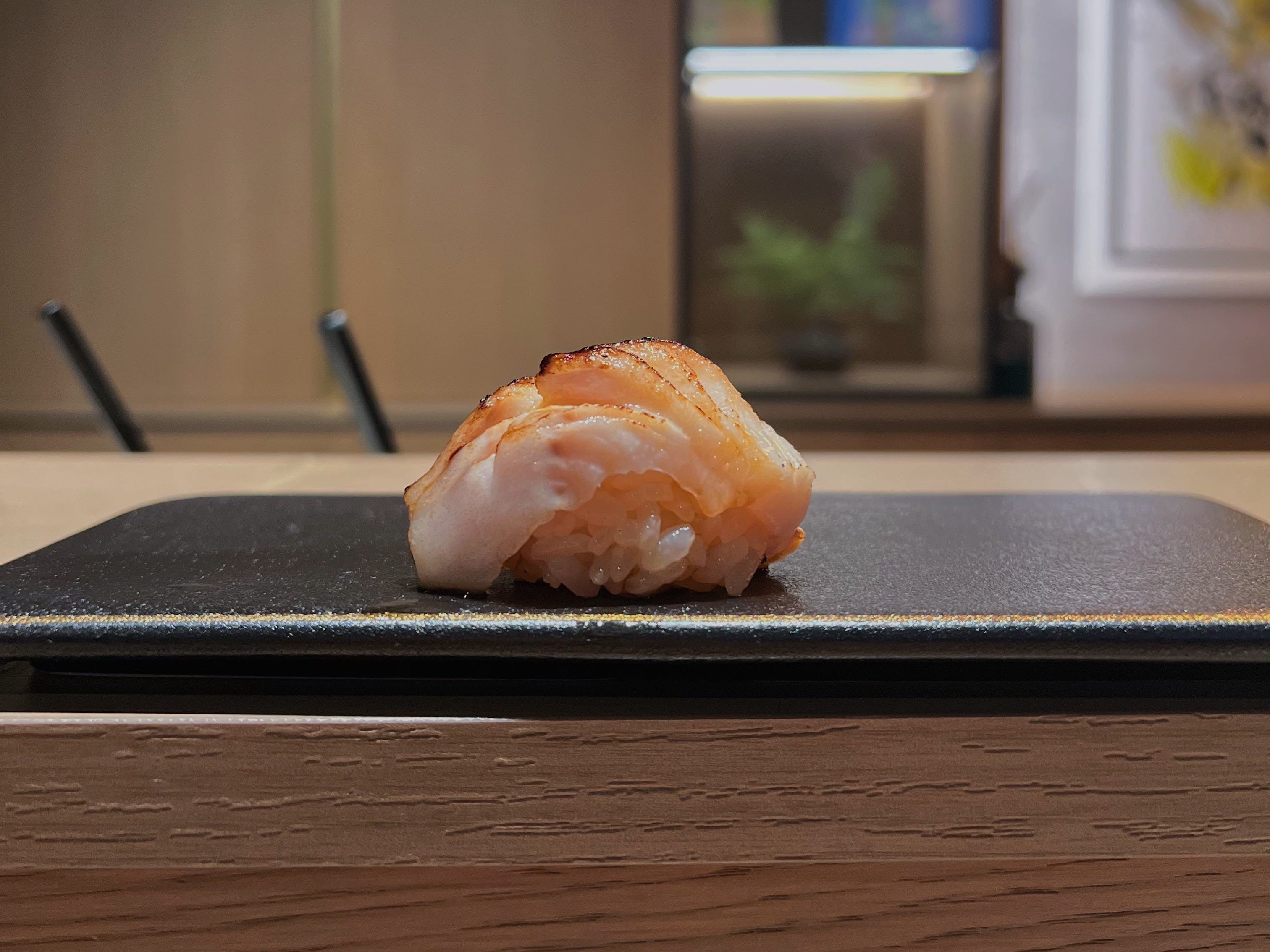
I just like Sablefish. It’s simple, it’s beautiful, it’s tender. What’s not to love?
Wagyu Kimbap/Futomaki (Japan) — 3/10
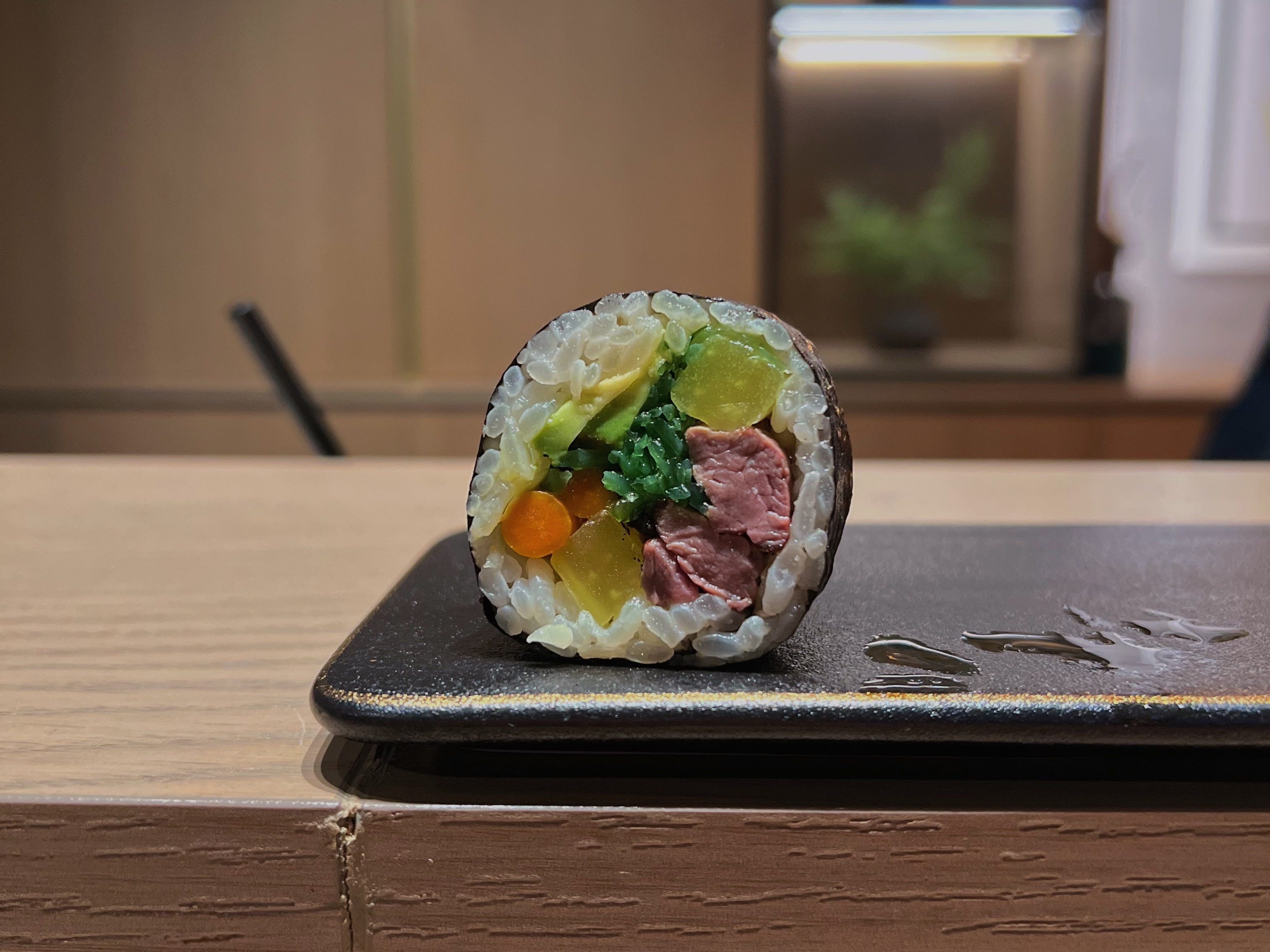
After having a very purist, almost entirely fish-focused meal this was super jarring and I did not enjoy it at all.
Salmon & Tuna Handroll/Temaki (Japan) — 8/10
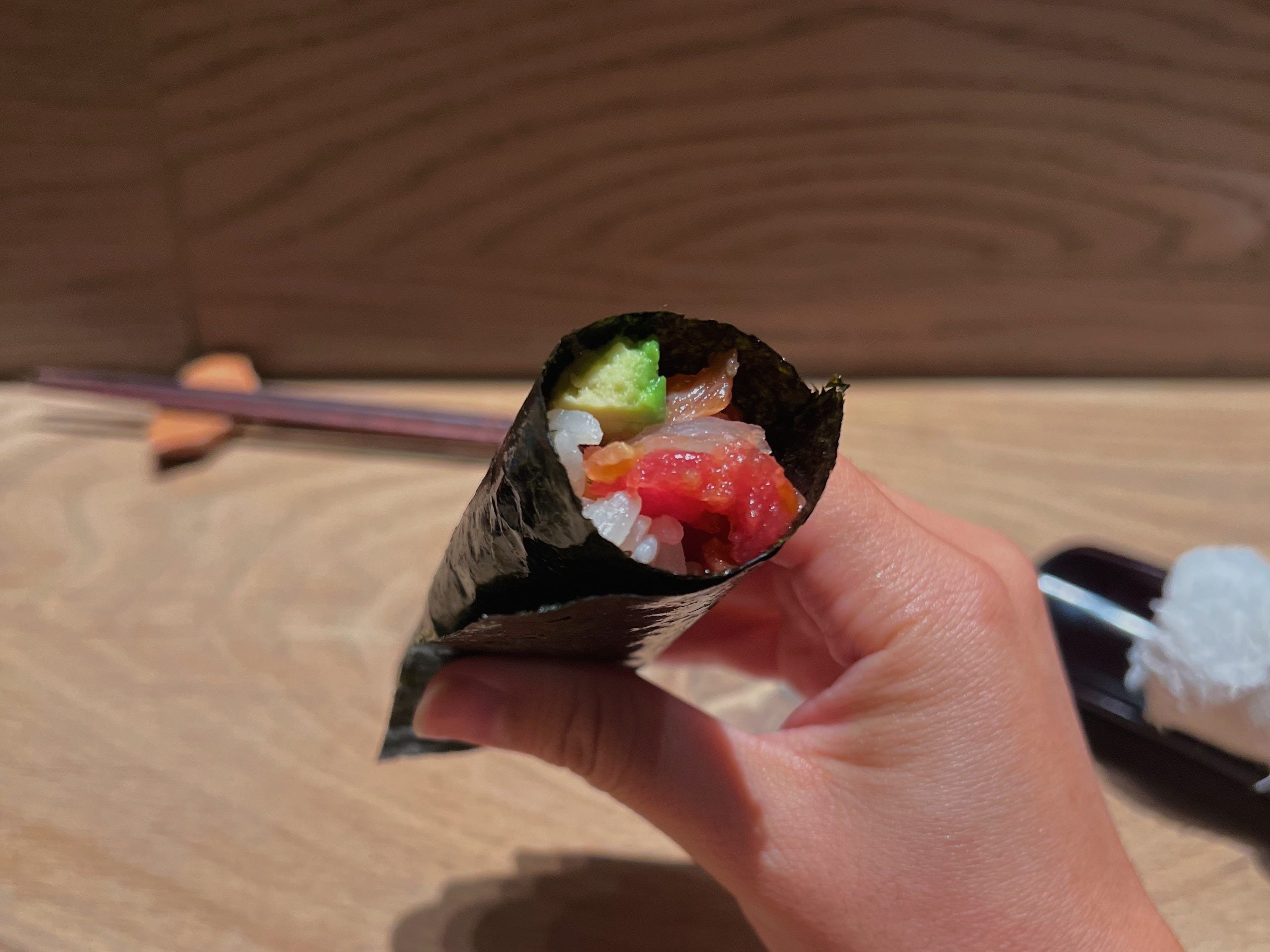
It’s good and the fish is fresh, but the simplicity of the meal is really getting to me now, and I’m positive that I don’t want to do another traditional omakase unless it’s in a seafood city (not the grocery store. love them though 🫰). The seaweed is so crispy and delicious, and the way they folded it was so satisfying.
Egg/Tamago (Japan) — 9/10
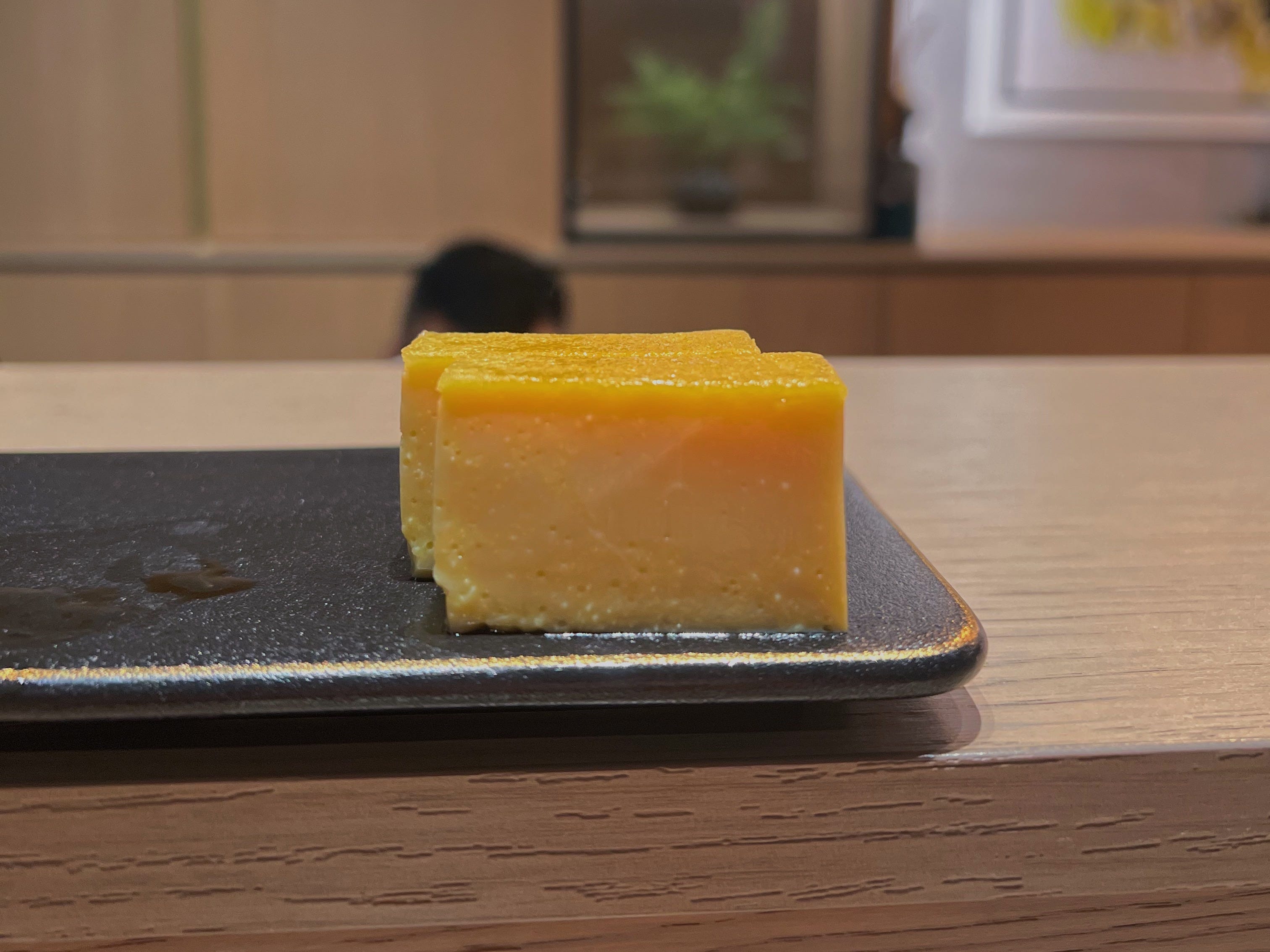
A sweet treat! Yes, it’s sweet! This was the perfect cap to the meal and I simply cannot eat another bite.
You can also find me @ayahokay on Beli, TikTok, and Instagram, or Sy1vie on Twitch.
Visit date October 7th, 2025.