
When in Japan, do as the Japanese do and drink some really quality tea.
Tokyo may be better known for its coffee culture, but in a city this large and culinarily serious, tea definitely still holds court. One of the most popular options among visitors is the Sakurai Tea Experience, located in Omotesando’s famous Spiral building. With English booking available and course offerings starting at roughly $40 USD, it’s not exactly hidden or inexpensive – so why’d I book it? Well, I had just arrived in Japan and was looking for a structured crash course into different varieties of Japanese green tea so I wouldn’t spend the rest of the trip gawking at menus. The value proposition for me was to see if I would actually learn anything from the experience.
The Setting
Tokyo has an abundance of beautiful architecture, and the Spiral was one of the buildings I was most excited to visit. A beautiful postmodern hall located within an arts complex that spirals up to the top level sounded like a beautiful venue to explore. It was beautiful, but unfortunately didn’t quite live up to my expectations. I’d fallen victim to clever tricks of perspective once again, having expected the actual spiral part to be, well…longer. Thankfully, a student art exhibition that happened to be on display that week softened the blow, and I got to kill the hour before my reservation time admiring their work.


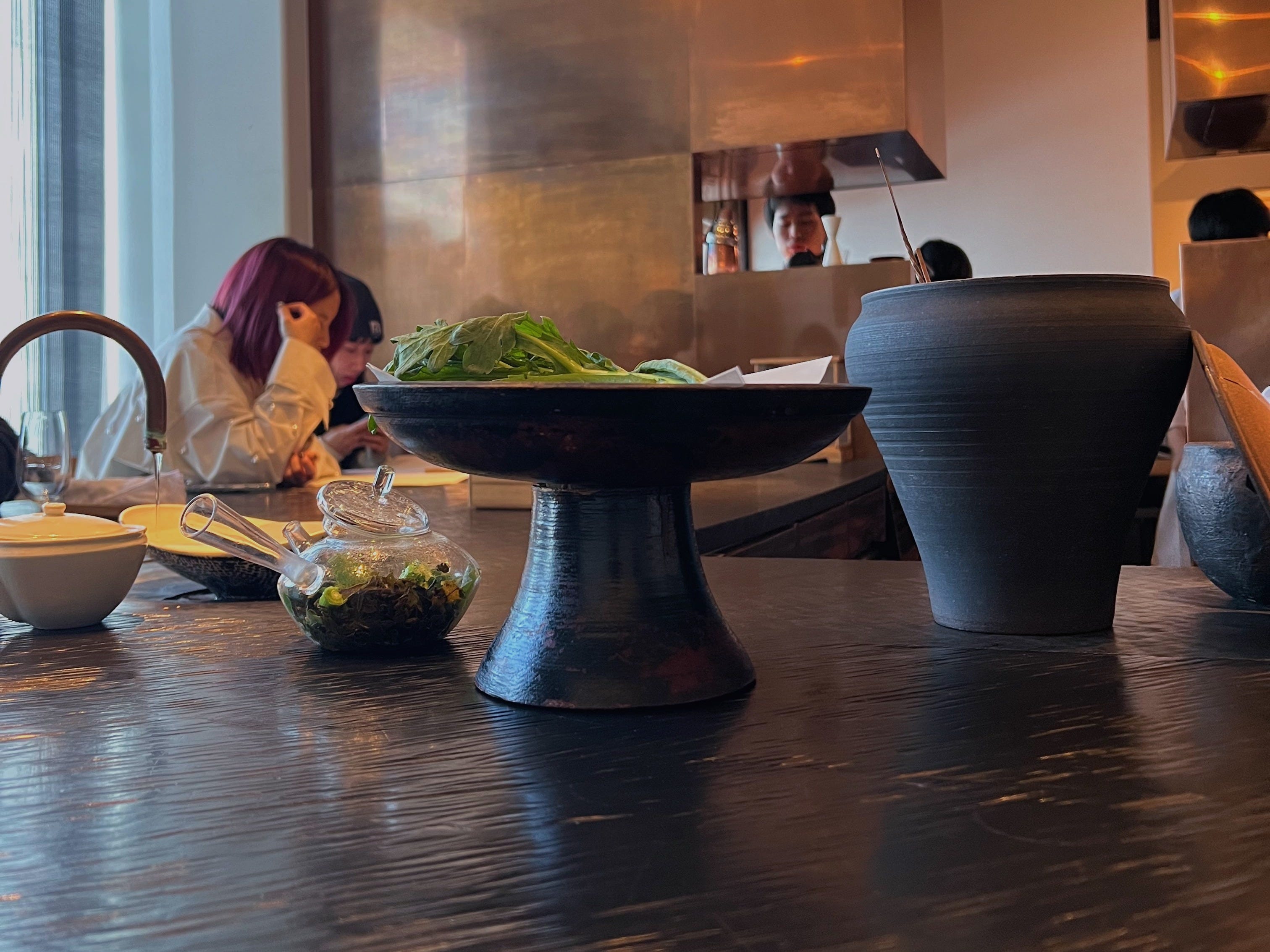
Up on the fifth and final floor, Sakurai’s venue offers a quiet respite away from the hustle and bustle of the concrete jungle surrounding. I walked in through a glass-paned entryway to a small room with a reception counter and merchandising setup neatly stocked with dozens of varieties of tea. After checking in, I was led to the tea-tasting room in the back – a small, but modern and sophisticated eight-seat setup flooded with natural light. Large windows overlooked the bustle below as patrons quietly enjoyed their tea, speaking together in hushed tones.
The Experience
I chose the Gyokuro-centered course, which is built around the Hoshun cultivar sourced from Uji, Kyoto’s most famous matcha-growing province. Gyokuro is a rare, premium Japanese green tea that differs from classical sencha by being grown in the shade rather than directly in the sun. Most Gyokuro is sourced from the Fukuoka, Kyoto, or Mie prefectures.
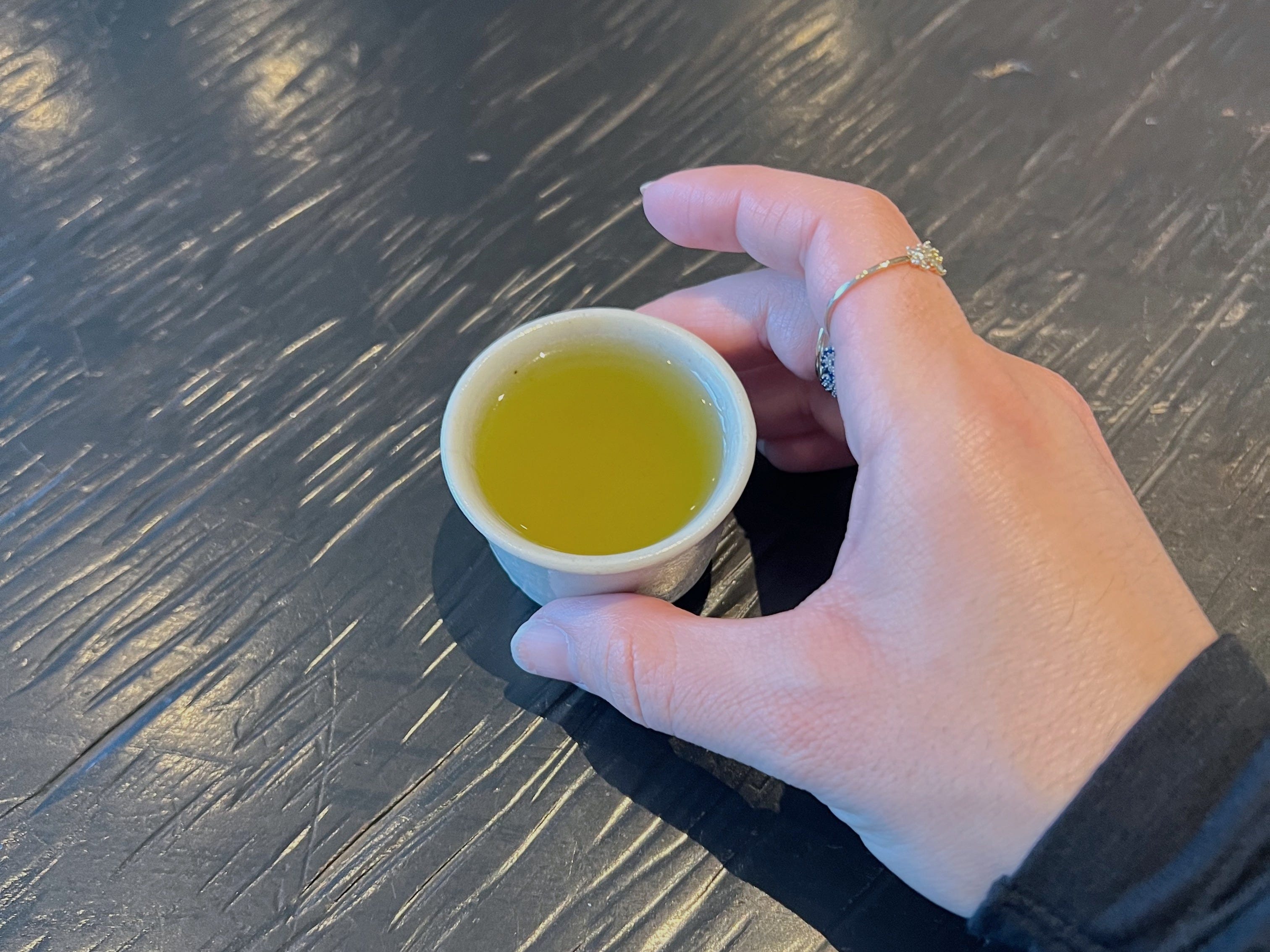
The first pour came in an adorable little ceramic cup barely larger than a shot glass. I took a tentative sip of the pale green tea and was shocked at the flavor – this is a total umami bomb. Honestly, it was one of the strongest umami flavors I’d ever tried, and I never would’ve guessed that the vehicle for that would be a tea. I could see it being incredible as the broth component of an ochazuke, which is a brothy rice dish made from dashi and green tea.
I was then served a second steep, which largely tasted the same – unsurprising given how strong the flavors in the first course were. My first round of traditional Japanese sweets (known as wagashi) followed. The dried, sweetened black soybeans known as kuromame were so good I could’ve eaten a bag of them, and the chestnuts in jelly were delicate and sweet.


Kuromame is prepared by simmering rehydrated black soybeans in sugar water for several hours. They can be eaten fresh in their syrup, or dried. It amazed me that such a delicious flavor arose from such simple preparation – they almost tasted like black milk tea.
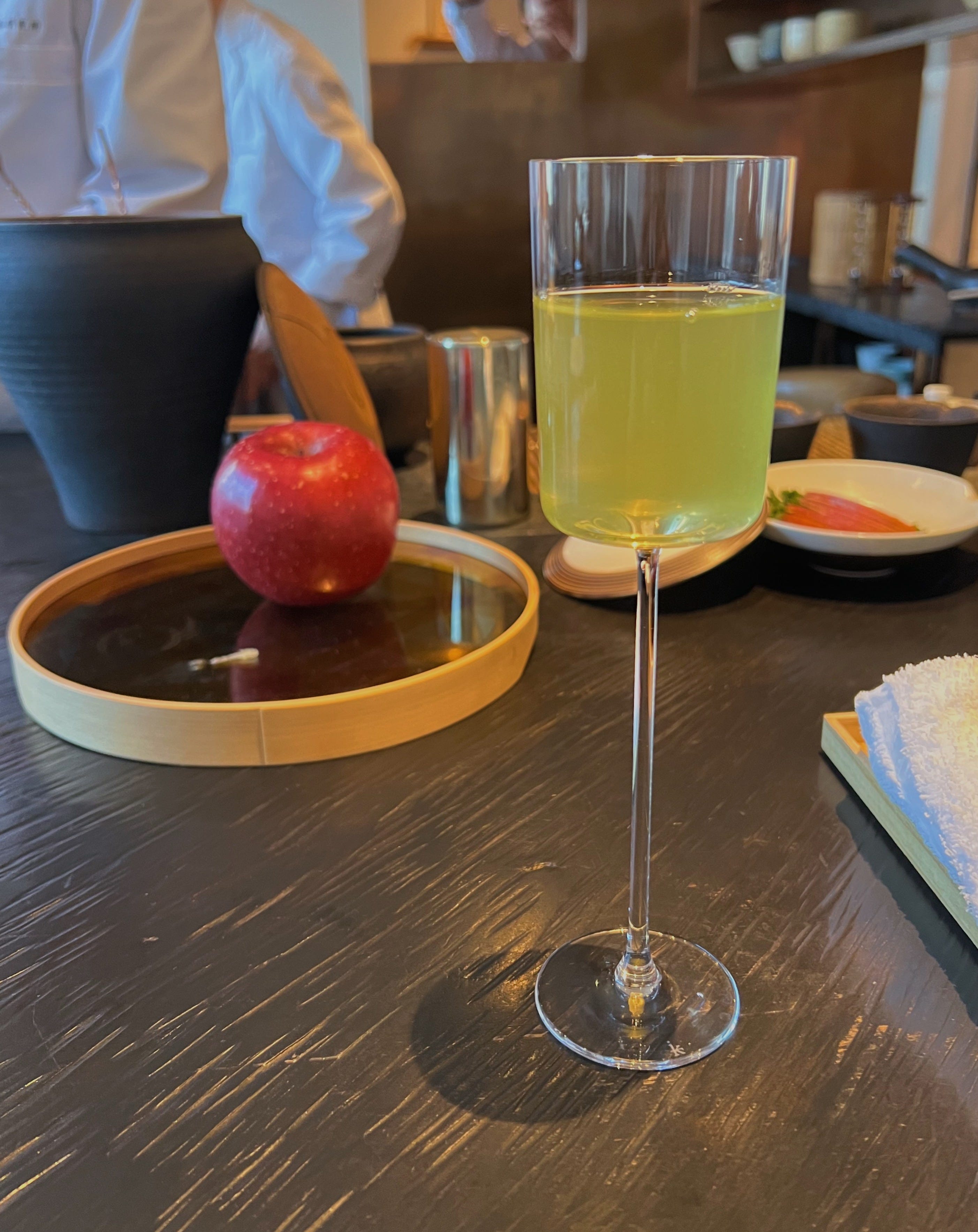
The next course introduced the third and final strain of the gyokuro, this time steeped with freshly-sliced apple. This course was the most complex and intriguing, as the tea harbored all of the brightness and notes of the apple without any of the sweetness. Being the third steep, that overwhelming umami flavor had mellowed out significantly, and the Gyukuro had muted into a normal tasting green tea, which paired beautifully with the apple.


Another snack course followed that I totally wasn’t expecting: the gyokuro leaves from my tea had been assembled into a small plate with a dashi broth poured over, then seasoned with a light ponzu sauce. I took the tiniest bite, expecting another flavor bomb. What it actually ended up being was the best savory bite of the course. The leaves were incredibly tender, and mild enough that they had basically become a vehicle for the ponzu at this point. It was almost like a milder form of spinach – textural, vegetal, and savory, brightened by the ponzu. I could’ve eaten a bowl of the stuff – which you shouldn’t do because I think you’d succumb to a caffeine-induced heart attack. But at least you’d die happy!
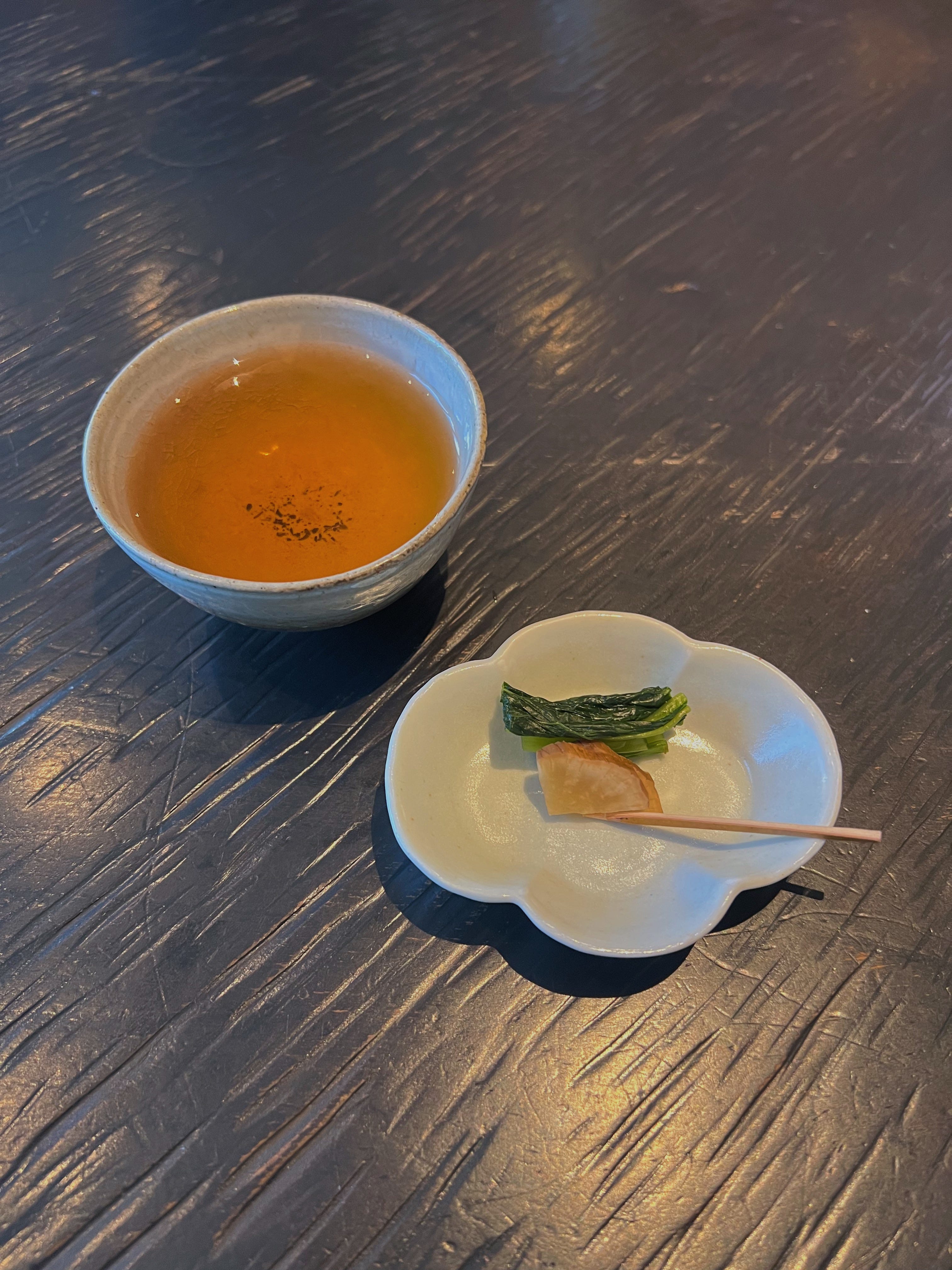
The next segment of the course shifted to hojicha, where I got to choose from a wide variety of strains. I selected Minamisayaka, described as one of the more aromatic options, and they weren’t kidding – I could smell the roasted leaves the moment they entered the room.
The flavor was warm and toasty, almost reminiscent of Earl Grey, though a bit gentler in structure. Despite the pronounced scent, the tea itself was mild and easy-drinking. A small savory plate of pickled spinach and radish accompanied it — these had a pungent, almost smoky flavor. They were incredibly unique, and I’d never tasted pickles, even here in Japan, quite like them before.
A second infusion of the Minamisayaka was served, which in my opinion was the weakest serving of the course. The roasted character had faded considerably, leaving a tea that felt a bit thin compared to the earlier gyokuro progression.


Then came the final course, where I was prompted to choose between three different wagashi. As a certified yuzu fan, I chose the yuzu jelly wagashi. It was served alongside the final tea course, a matcha sourced from the mountainous Kirishima province of Kagoshima.
The matcha was creamy and nutty, less aggressively grassy than many ceremonial matchas I’ve tried – the tea master explained that it was because these were first flush, the youngest and most tender leaves harvested in the early spring. The wagashi jelly was sweeter than I was expecting, with the yuzu appearing more as an aftertaste than a key note. I would have preferred a sharper citrus flavor, but as a closing bite, I guess a more delicate flavor was the intention.
Beyond tasting and learning about the different varieties of tea, witnessing the craftsmanship and attention to detail as each course was prepared was so cool. The staff seemed to float around the room, maneuvering instruments and pouring teas at sounds barely above a whisper, effortlessly switching between Japanese and English as they introduced different courses to locals and tourists alike. The pacing was relaxed, which gave me ample opportunity to observe both flavor and technique.
Even having ordered a smaller course menu, my experience took about 1 hour and 20 minutes. Set aside a bit of time for this, anywhere from 1-2 hours. Kick back, relax, and enjoy a beautiful tea tasting course. As you leave, the staff will offer to show you the teas you tried that day from their merchandising display in case you want to purchase some to take home with you.
The Verdict
Is the Sakurai Tea Experience touristy and expensive? Yes. Did it satisfy my desire for an in-depth crash course on Japanese teas, and function as a relaxing and enjoyable experience to boot? Also yes. The experience was idyllic and informative, and the staff are consummately professional and helpful. I’d absolutely return to try one of the larger course offerings or a tea cocktail, and converse with the staff a bit more on teas throughout Japan. It’s an excellent info-gathering opportunity.
If you are a fellow tea enthusiast who doesn’t know much beyond the basics on Japanese teas and is looking to learn, this experience is worth booking. If you’re already sourcing single-origin teas from Mie and understand the intricate nuances behind different steeping temperatures, I think you’ll find this ridiculously overpriced. But if you find yourself in the area, maybe stop by for an a la carte tea cocktail or wagashi treat, and use the opportunity to load off all your burning questions about tea to the English-speaking staff (within reason – they’re busy!)
This was refined, informative, and genuinely relaxing, an idyllic break from the chaos of Omotesando below. It’s a modern setting steeped in sophisticated tea cultivation and craftsmanship, and functions as a great introduction to Japanese green tea – just ask yourself whether you’re willing to drop +$40 USD on a course offering first.
Did the five daily servings of caffeine fail to stunt your appetite and leave you ravenous for actual food? Check out Hamburg YOSHI right next door. The hamburg sets are relatively affordable and absolutely delicious. Don’t skip the egg mixed in rice. (Also known as TKG — the Japanese love abbreviations, and I learned that one from my teacher Rei, which stands for tamago kake gohan)!

