
My father introduced me to Peruvian cuisine about five years ago, after one of his patients returned from a trip to Lima and spent his entire appointment raving about the food, insisting he try it as well. So he took me to Tanta Chicago, where we had pulpo anticuchero, yuquitas con huancaína, lomo saltado, and pollo a la brasa.
“I don’t see what the big deal is,” he said as we left the restaurant. “It’s just roast chicken and potatoes.”
I, however, had fallen in love.


Now I gatekeep the happy hour at Kayao because I don’t want it getting too packed. I crave their leche de tigre oysters regularly, and if I ask nicely enough the chef will send me a half-order so I’m not ringing up a $26 charge for six (Jesus, American pricing’s gonna kill me when I get back).
Akiro Handroll Bar recently opened its second location in Chicago after a successful run in Madrid (an anomalous choice of second city, but I’m certainly not complaining), which ended up being my favorite new Chicago restaurant in ‘25.


Naturally it follows that one of my strongest food opinions is that Peruvian cuisine is criminally underrated outside of the culinary world. That’s changed a lot in the past few years, but I still think it has a ways to go with the general public.
When I told people that Den and MAZ were my two Michelin hopefuls in Tokyo, they looked at me funny and asked why I wanted to try Peruvian food in Japan, which is a question that always made me laugh because I can’t imagine it having been posed if I’d said Sezanne or L’Effervescence, which are French, instead.
Yes, of course I wanted to try Peruvian food in Japan. Japan is literally encoded into their cuisine’s DNA. One subset of Peruvian cuisine is Nikkei — dishes influenced by the country’s modestly-sized Japanese population, who immigrated over for employment opportunities in the late 19th century. Nobu’s miso black cod is a world famous global export of that lineage. And Nikkei doesn’t just run parallel to Peruvian roots — the modern version of ceviche, their national dish, carries Japanese influence as well.
To be clear: MAZ isn’t doing Nikkei. It’s doing Peruvian cuisine while using Japanese produce. That distinction was what caught my attention. These two cuisines represent different extremes – Japanese food tends to be light and delicate while Peruvian food is most certainly not, so a marriage between the two should fall somewhere in the middle. And because both cultures care deeply about geography and seasonality, I felt that commitment to authenticity would be honored here.
The space and vibe


After hopping out of my Uber at 8:28 for an 8:30 reservation, I glance around the giant complex grateful I didn’t opt for taller heels and take off at a brusque speedwalk (☝️ not run) in some general direction that thankfully turns out to be the right one. When I get to the restaurant I see a sliding wood door recessed into a stone wall facade, the thin lettering of the restaurant’s name nearly vanishing into the rock. Don’t worry about missing it, because there are three Michelin plaques right next to the door.
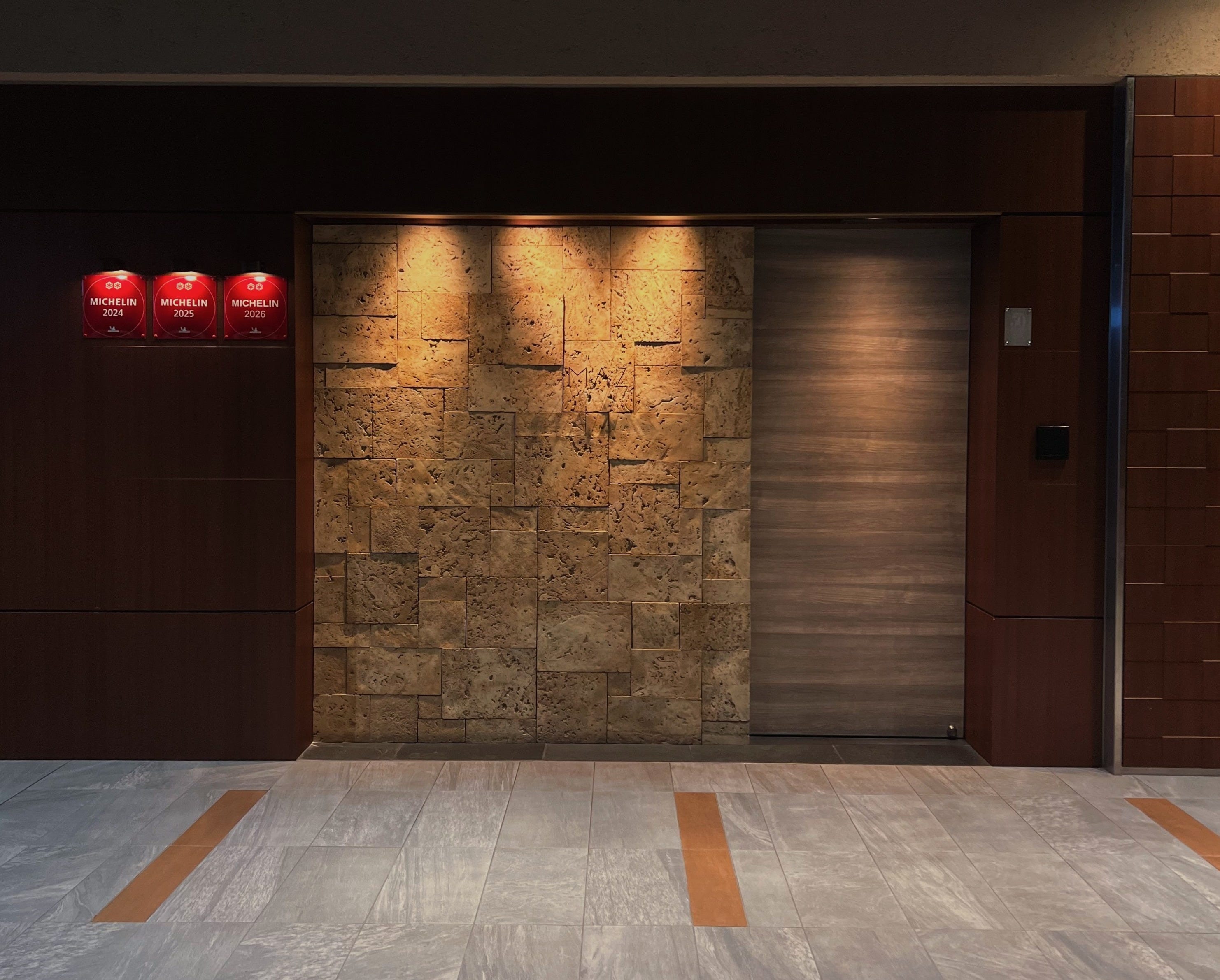
A member of the team is waiting for me there and enters the code to let us in, which kind of bums me out because I wanted to punch the code in, but they don’t let you do anything when you pay hundreds of dollars for a meal.
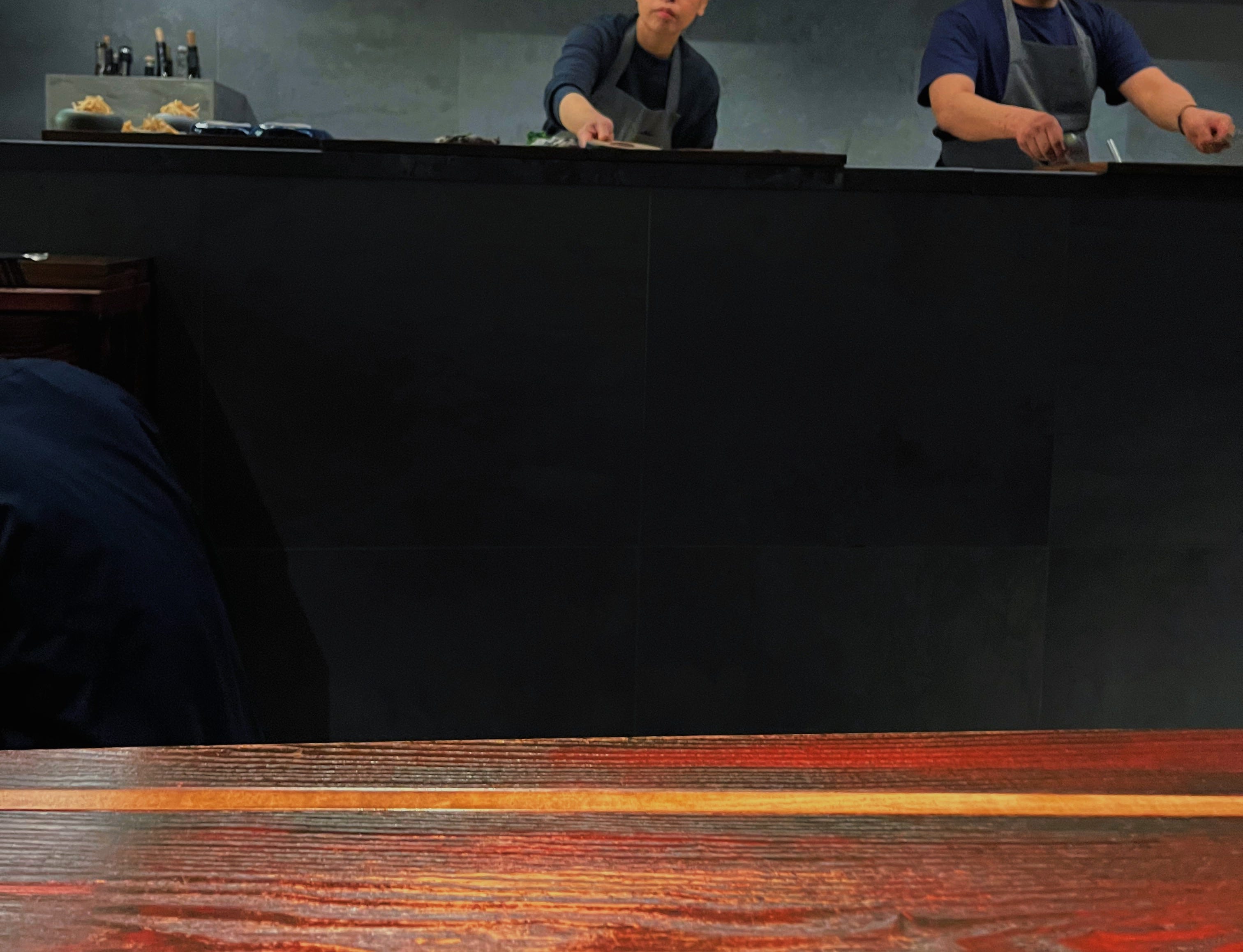
The space is tiny and dark. Chicago’s Cariño still holds the record for the smallest Michelin restaurant I’ve dined at, but MAZ isn’t much bigger with a total of seven tables in the space.


The vibe is also damn near the polar opposite of Den’s, where I dined the week before — stark slate grays and browns dominate an incredibly minimalist and impersonal space. There’s no vibrancy here at all, and I immediately wonder how it compares to older sibling Central. It’s cold and visually dark, completely lacking any windows – it almost feels like you’re in a manmade cave. It’s barren in a way I’m not a fan of.
And the atmosphere is classic fine dining. Rainforest sounds play over soft ambient music. Conversation is muted and formal. Service is very sharp and attentive as I hear the team switch effortlessly between Spanish, English, and Japanese with the other patrons around me. The vibe is luxe, and even the warm towels provided between courses are imbued with citrus. If you’re familiar with the Chicago fine dining scene, it reminded me a lot of Ever and Oriole. That means it’s firmly on the formal end of the spectrum — again, a sharp contrast from the atmosphere at Den, where chef Zaiyu was walking around showing us photos from his fishing trip (on the Amazon!!).
The meal and experience
My experience begins with a walkthrough of Peruvian ingredients at a counter you’re brought to when you first walk in. I love the impromptu lessons on geology and pre-Columbian Latin American food, and I’m told nearly everything presented will show up throughout the meal, at about an 80/20 balance of Japanese to Peruvian ingredients. The ingredients from Peru are sourced through their biodiversity research project back in Peru known as MATER. This became the first of many times that evening I wished I had the opportunity to dine at Central first – I kept getting the impression that I was experiencing the sequel before the original.


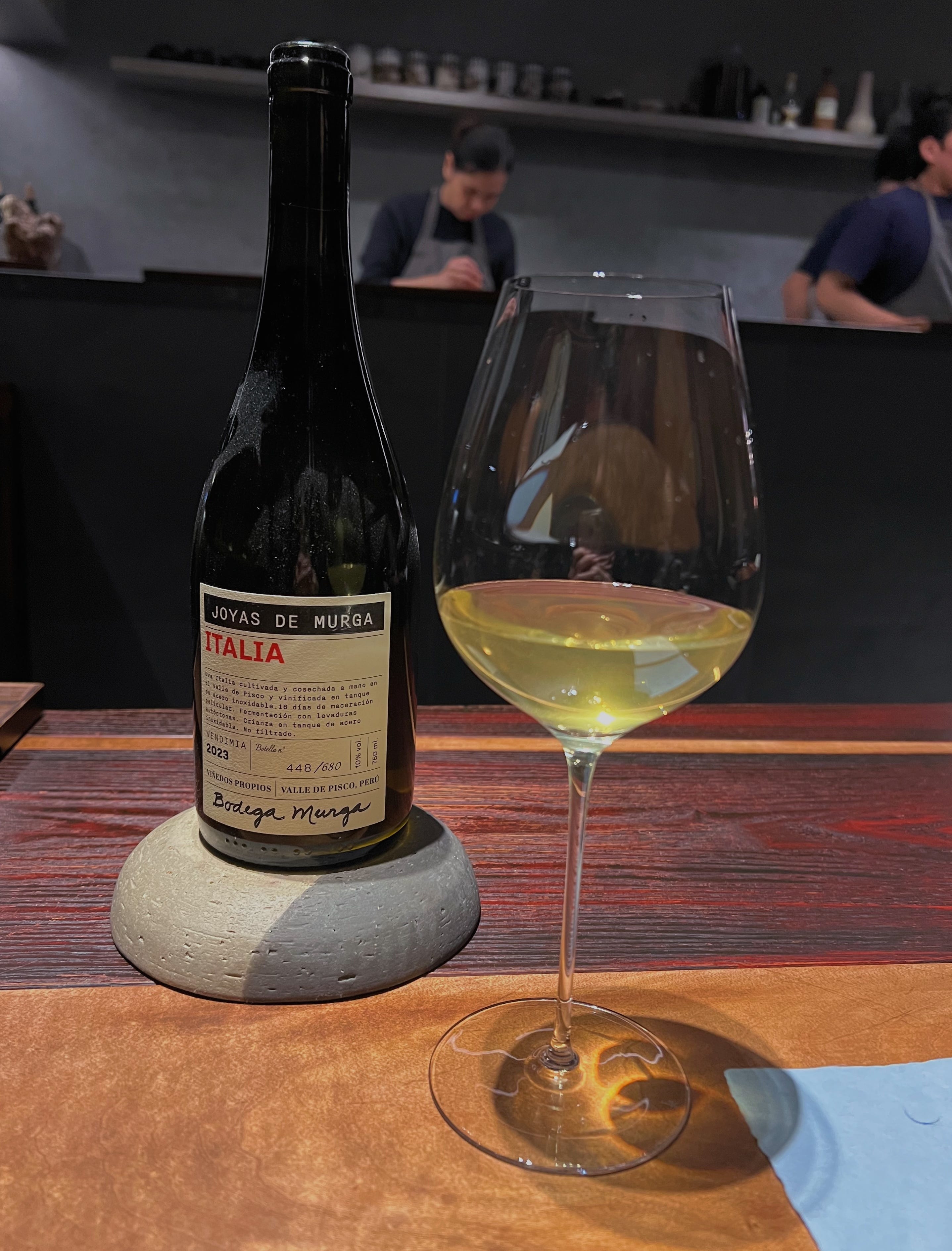
I’m seated and order my drink. I get one of the only Peruvian wines I see on the menu, an orange wine known as Italia (no, I don’t know why it’s called Italia). I only learned about orange wines recently when a friend ordered one at Lardon during my goodbye Chicago tour that was really just an excuse for me to hit up my favorite spots before I left. Sorry Chicago friends, I used you all for selfish reasons. But your exploitation at my hands was worth it, because Lardon has been one of my favorite finds from this year!


I tend to prefer white wines, so I figured I’d like this, and I was right: it’s slightly dry and not too sweet. Educating myself on alcohol has been burning a hole through my wallet in Tokyo, but damn if it hasn’t been worth it nearly every time. I thought the magic might have left in returning after almost four years away, but this city continues to enchant me.
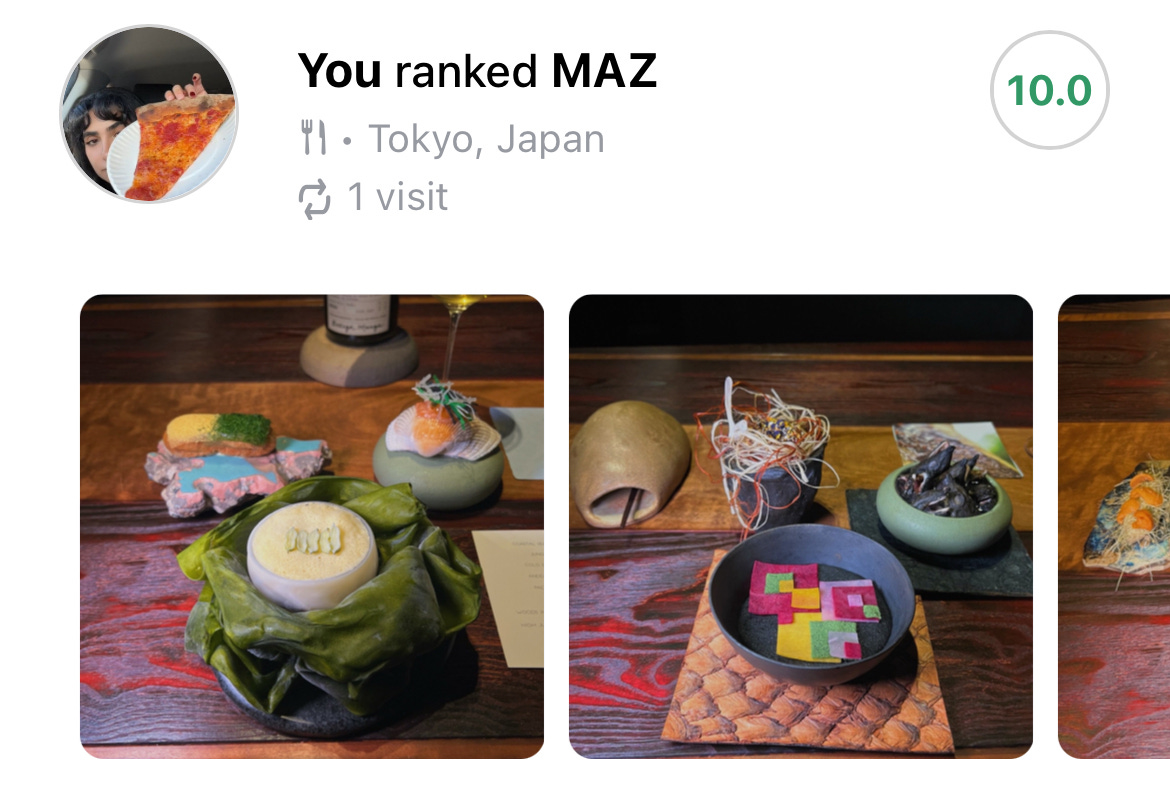
Then I’m introduced to the restaurant’s concept, which is presented as a journey through altitudes toward the Amazon rainforest. I believe it’s an exact mirror of Central’s concept. Each course is also paired with a texture or illustration that reflects it. I thought these accents were cute, if a bit gimmicky, until I learned that some are custom illustrations, and then they grew on me a little bit more. I also have to mention that I absolutely loved the tableware here. It was fun, unique, and very faithful to the restaurant’s identity.


However, I do think the concept could use a little more refinement. It’s meant to be a journey through elevation, but I felt it jumped around without enough narrative as to why. The sourcing is obviously incredibly meticulous and extremely well done, but the actual progression of it just didn’t feel as cohesive.
As for the main event, I knew that the food would be a winner from the very first course. To start, the meal is so visually striking. I’m not sure if I’ve ever had a more beautiful meal in my life, and the flavors and textures were meeting that visual beauty in spades. I feel like a part of the reason the space is so minimalist is to let the food shine, and shine it does.
Coastal Seafloor (-10 MBSL)
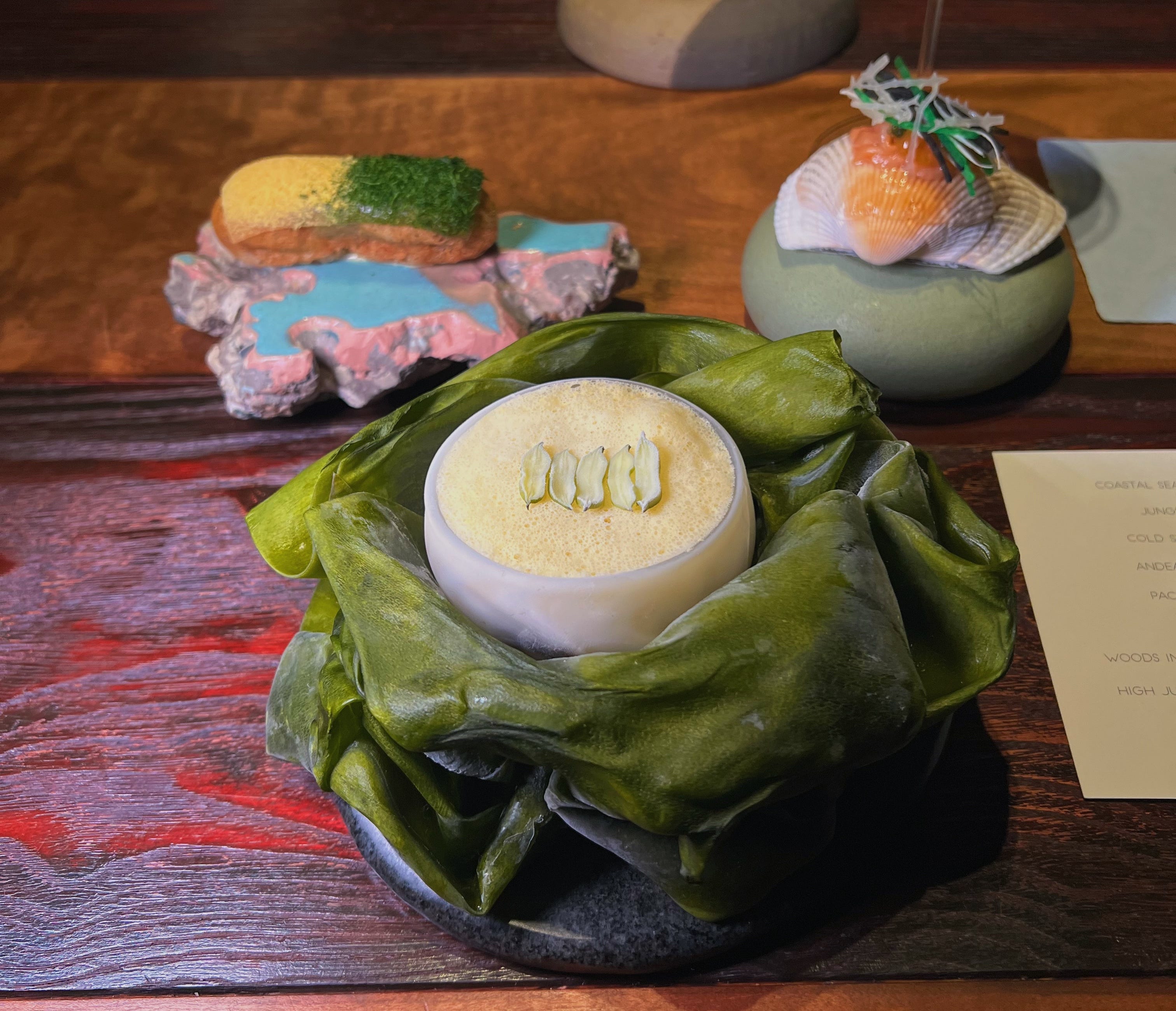
The clam three ways is a very strong start. I’m breaking open a citric ice cream to fish murugai clam out of the most delicious ceviche I’ve had in my life. Raw akagai clam is blanketed in a gelatin “dumpling skin” among Japanese seaweed and vegetables. The hokkigai and seaweed in gelatin ends up being one of my favorite bites of the meal, full stop. The flavors in that one are reminiscent of South Asian flavors to me for some reason, but I couldn’t exactly tell you why.
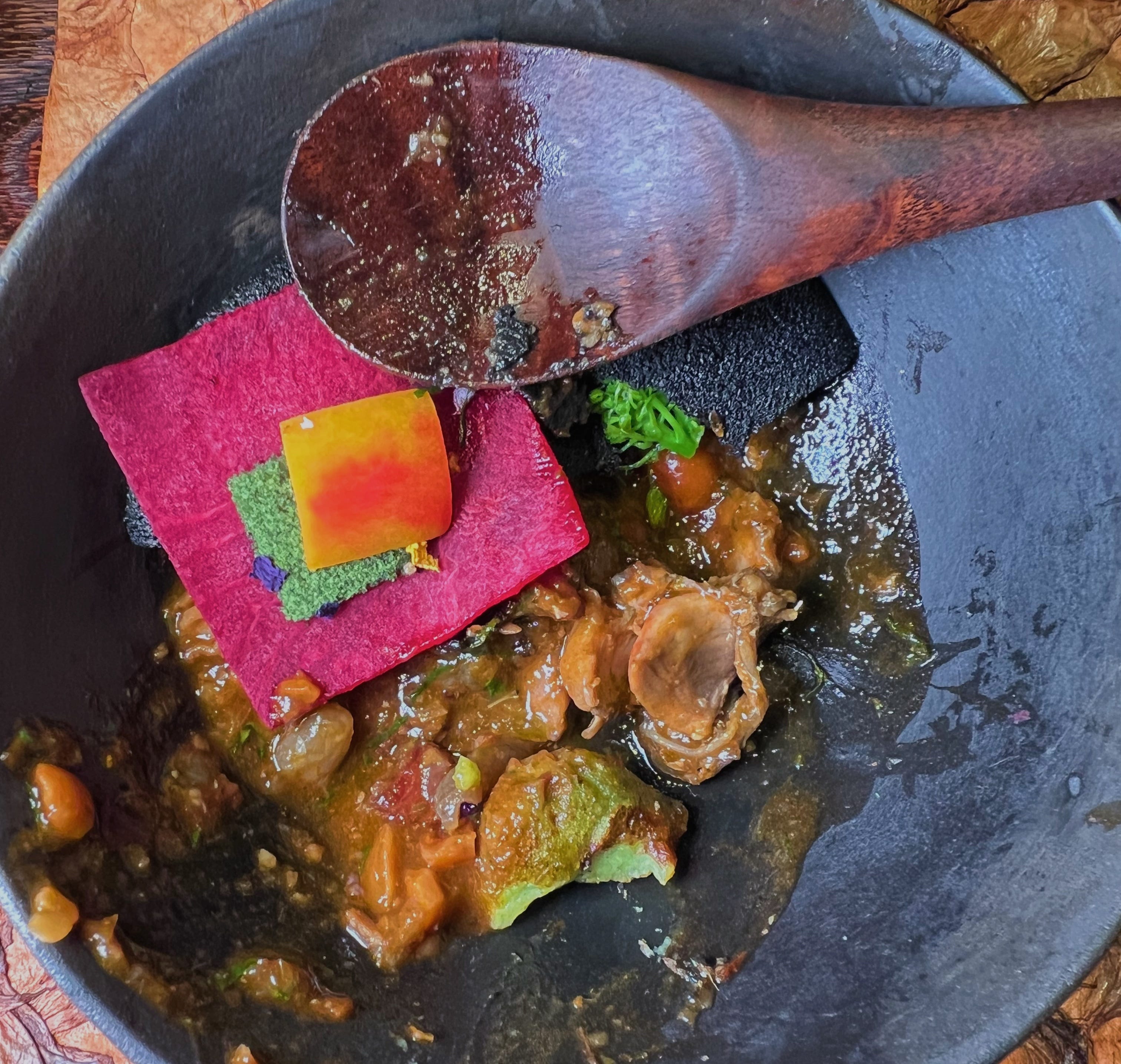
Jungle Pond (185 MASL)

The next course is my first time having turtle. This is what I love about Japan – I’ve tried raw horse, tongue, neck, gizzards, intestines, fish eyes, and now turtle here for the first time. The turtle is served two ways, as a sausage and stew. Both are delicious, and the stew has so much going on that I’m struggling to tell which part was the turtle meat. It almost tastes like a Peruvian peanut minestrone. The veggies on top (yes, those little squares everyone was asking about on Insta) were delicious and provided a nice contrast. Eating this felt like half the dishes I had at Oriole – a lot of “I have no idea what the hell I’m putting in my mouth, but it’s absolutely delicious”.
Cold Sea Water (-5 MBSL)
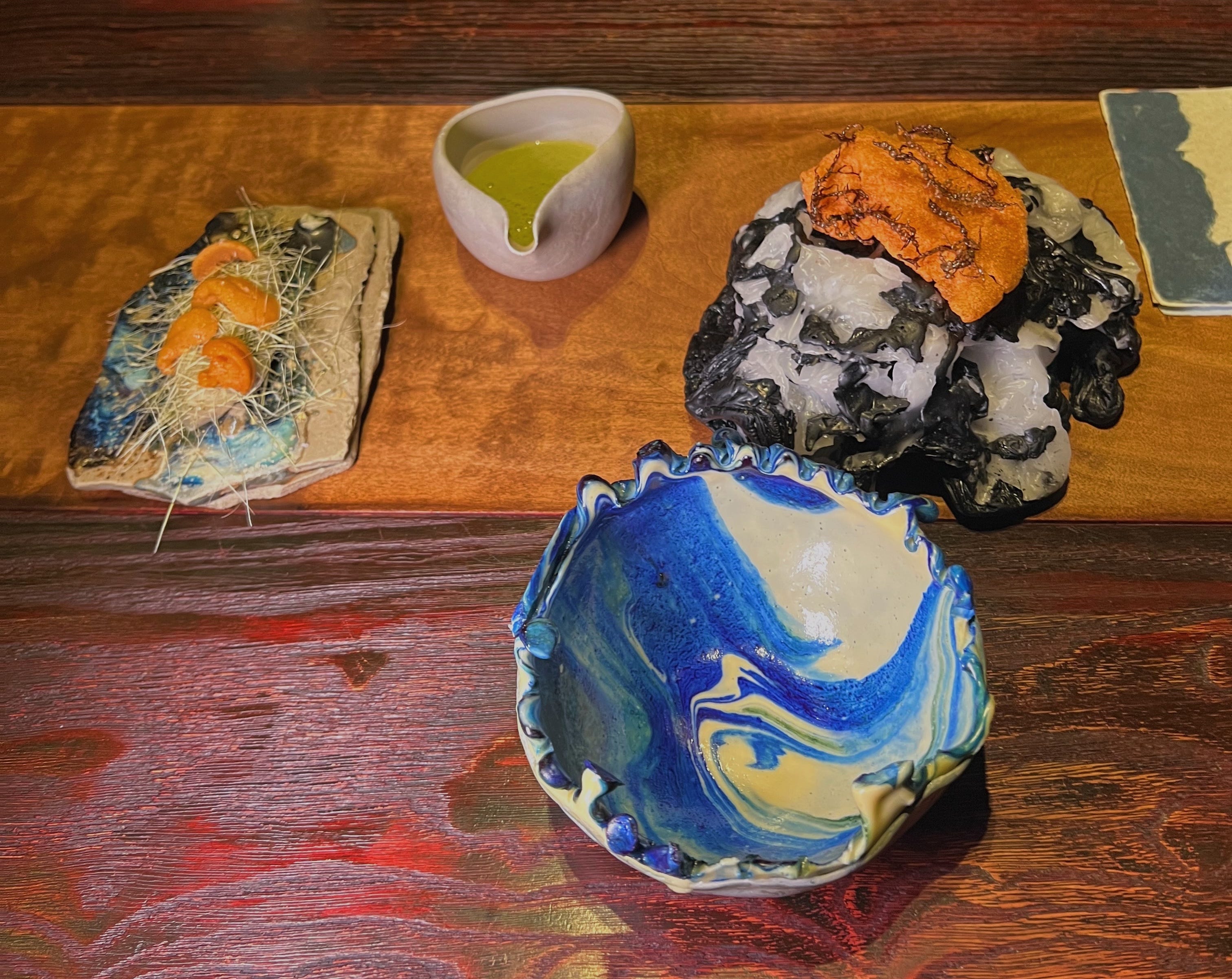
Next was the obligatory Hokkaido scallop course, and at this point I’ve had scallop so many times on tasting menus that I’m starting to feel a little insulted. Do chefs really think we’re that easy to impress just by adding scallop on the menu?


It turns out this is the most unique scallop dish I’ve ever had. As he presents it to me, the chef says I may have noticed that the gelatin-like scallop emulsion is meant to mimic the ceramic ware. I nod like I did (I didn’t). Thankfully, it’s not clever at the expense of being delicious. The leche de tigre, heavy on the cilantro, is just fantastic.


Andean Plateau (2820 MASL)


I try wagyu tongue for the first time and don’t like it, but that’s not really the fault of the dish. The flatbread is incredible. And since we’ve been talking so much about the intentionality behind the sourcing, this was one of the standout courses about how smart they are about it. This is the only time that beef is used on the menu, because the Andean plateau is the only place in Peru that cattle can be raised.
Pacific Current (-20 MBSL)
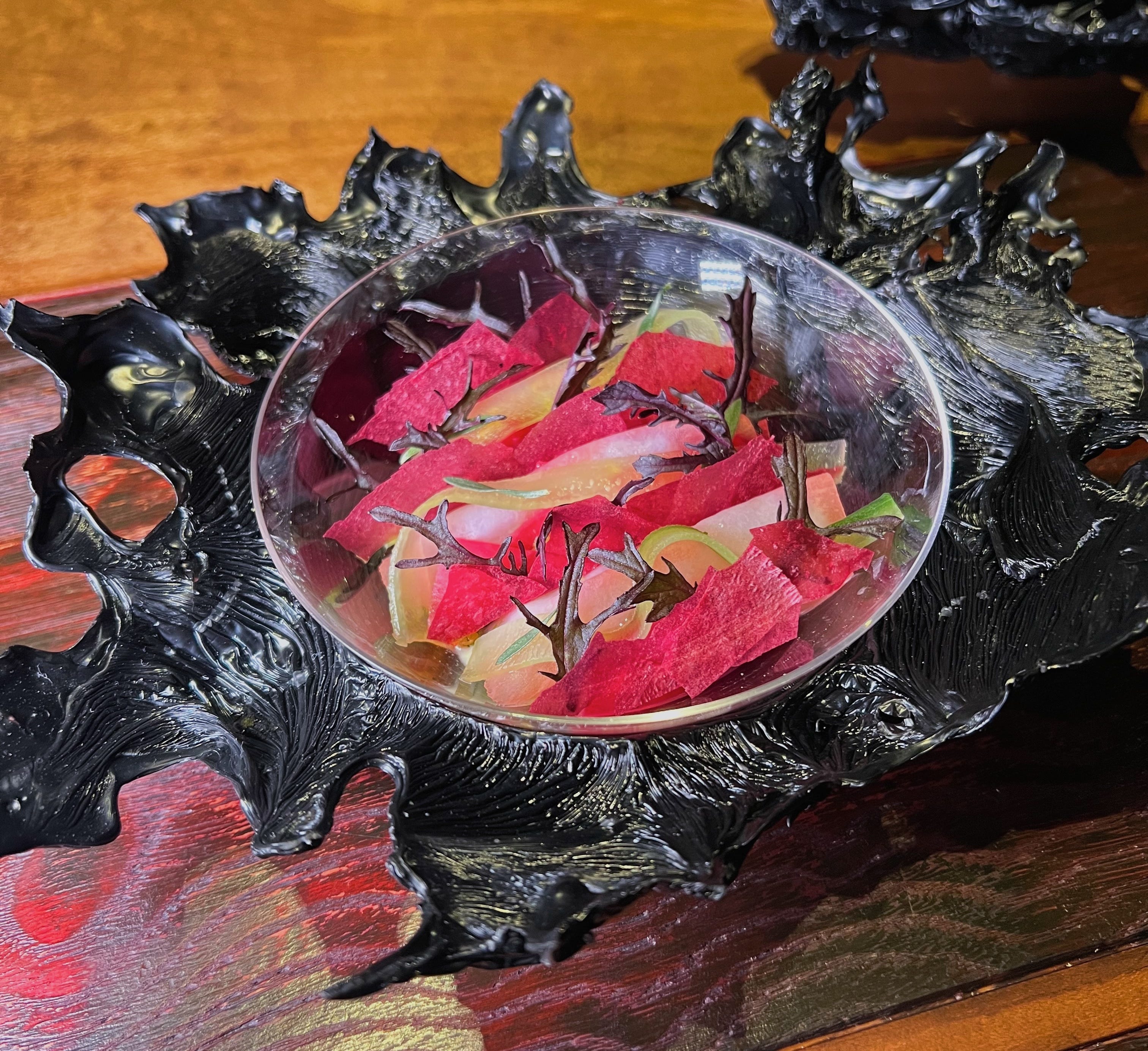
A great salad: sour, acrid, citrusy, weird in the best way. No notes.
Ocean Haze (-35 MBSL)
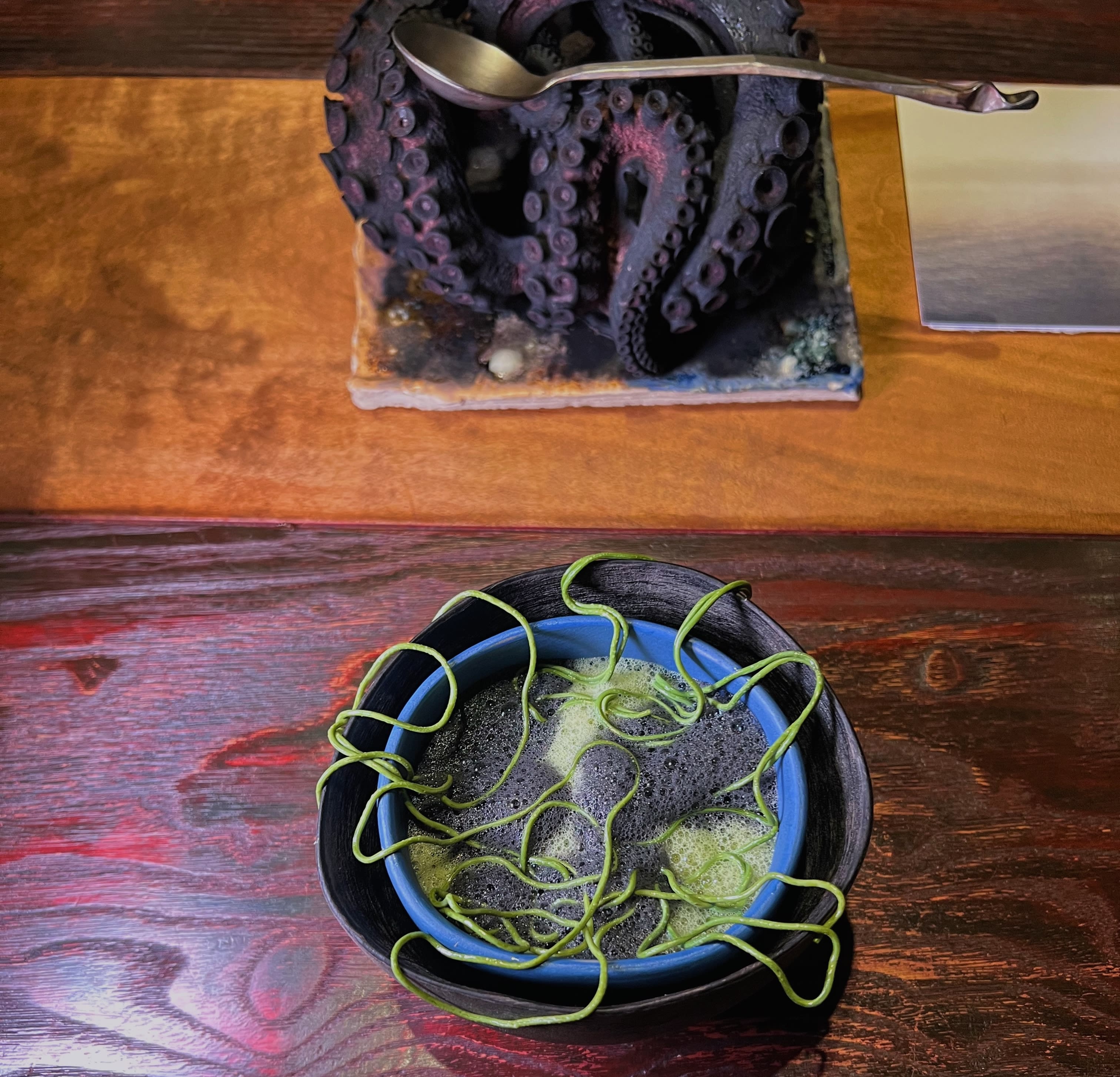
The ocean course features grilled octopus and cod roe? milt? I’m not sure. If it is milt, this is what I hate about Japan – I think I’ve just tried cod sperm sacs for the first time. I’m a little pissed to be eating them, but they taste fine.
I feel like now’s a good time to flag that gels and foams feature frequently in this meal, so if that isn’t your vibe, this may not be for you.
Woods in the Highland (3200 MASL)
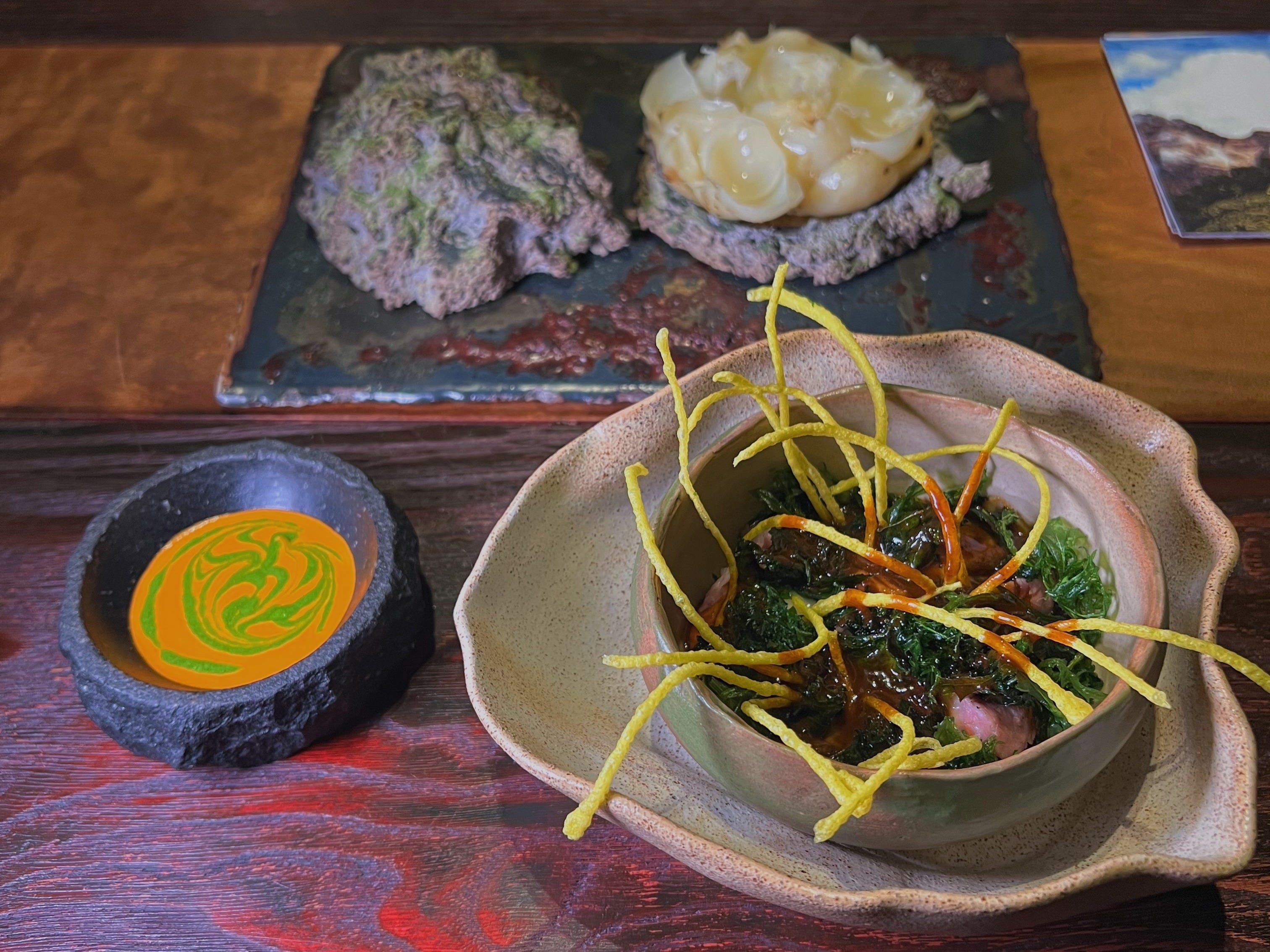
This was the only course of the meal that I explicitly didn’t like, especially because the pork (boar?) meat was a bit tough. I am a spoiled and pretentious woman — I can tell when what I’m eating has lived a rough life. The vegetable that resembled chestnut, however, was absolutely delicious with the dipping sauce. I also loved the way this was presented within the edible clay, which featured during the pre-dinner geology lesson.
High Jungle Rainforest (750 MASL)
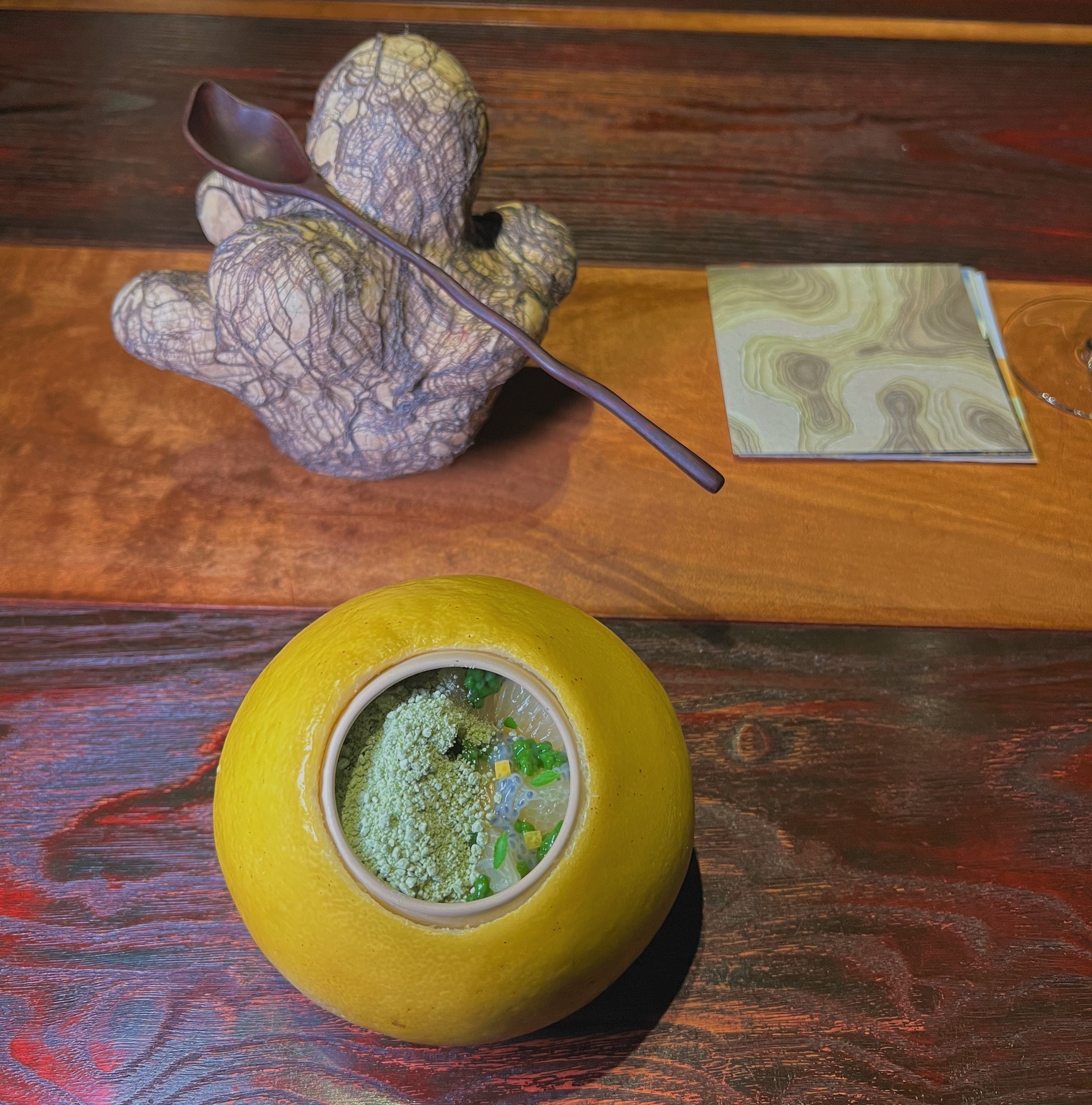
It’s delicious. This pomelo-based fruit assortment for dessert seems a bit simple on its own, but the lemon verbena and coconut really elevated it a lot, and the lightness of this dish made better sense in the context of the course that followed it. It’s meant to act as a palate cleanser before the heaviness of the chocolate.
Amazonia (840 MASL)


This chocolate course is sourced directly from their partners through MATER and, in my opinion, translated the most directly to the restaurant’s vision. I adored it – everything got rated a 10, at minimum. I’m so mad that I had to enjoy this after I was already full because it was so fucking good. It was fun, and playful, and holistic, using every single part of the cacao plant. For a project so focused on sustainability, this was a really impressive example of it.
Final thoughts
In short, MAZ met my incredibly high expectations. The menu concept is unique among the breadth of Japanese and French Michelin restaurants in Tokyo, and well worth it for that alone. The food is exceptionally beautiful and even more delicious, and the entire team was amazing— service is polished and deeply professional. I will say that it’s very classical and by the book, almost in a way that it doesn’t let itself breathe. And once again, I left with the distinct impression that I had experienced the sequel before the original. I don’t mean for this to come off as a criticism, but rather a desire to see more.
Part of me asks whether it’s a question of creative control: MAZ is clearly informed by its predecessor, and I have zero doubt that Central deserves those flowers, but its gravity can be limiting, too. And with the Tokyo food scene being as cutthroat as it is, I wonder if the restraint of the space is a deliberate choice by the folks running it as well.
I don’t ever do much research on high-end restaurants before visiting them — I glance at the menu or concept and let the rest surprise me — but I regret not doing that here. Sometimes context is unavoidable, like in Den’s instance: it was on my wishlist for over a decade, and the dog is Instagram famous, for Christ’s sake. But I wish I’d read up more on MAZ, because so much of its story is tied to MATER and Central. I would have enjoyed the meal even more with some foreknowledge on the ecosystem behind it.
Relatedly, I didn’t realize that the guy around my age bringing over half the food is a former apprentice of Virgilio Martinez, and the current head chef of the restaurant. Call it the dissociation of entering your late twenties and seeing your peers well-established in their careers when you’ve just committed proverbial suicide in yours, but it passed me by even after being explicitly mentioned by my waitress.
Her: The new head chef was actually in a few nights ago.
Me: Oh, and what about the current one?
Her: …He’s here tonight.
Me:
Her:
Me: Where?
Please don’t give me shit about my accidental ageism. I don’t look into these things on purpose!! But yes, this was when I learned who Santiago Fernandez is, and that he’s leaving MAZ at the end of March. I’m wondering how much things will change after he’s gone.
Being Venezuelan himself, I’m also curious as to whether he will embark on a more personal project next. I guess all these questions of identity are top of mind after visiting Den less than a week before. I really wasn’t expecting to get there first, but I’m happy it worked out that way, because I don’t think I would have had the perspective to ask them otherwise.
But if you care enough about a restaurant’s identity standing on its own and you don’t plan on exploring the rest of Central’s ecosystem, I can see you being disappointed by this aspect of it. If it’s going to be so integrated into Virgilio Martinez’s larger ecosystem, they could even lean into that research group and larger restaurant network more. Intrigue me enough that I’ll want to visit Lima or wherever else you decide to branch off next!
This may be an odd comparison, but I can connect it to how I felt visiting bw cave (after getting banished from an attempted walk-in at The Bellwood), then The Bellwood (after showing up a half hour before open to avoid repeat exile), then the SG Club (by this point I’d done my homework—they accept basement walk-ins starting at 9pm. This isn’t advertised anywhere. You’re welcome.)
These Tokyo sister bars have incredibly distinct identities, but experiencing all of them separately gave me so many a-ha moments where I was like “Oh! Okay! I see how this all connects now!”. I found the running theme of the creators’ visions, and that’s a very satisfying thing to do. It felt like I was on a treasure hunt. I’d like to feel the same when I eventually visit the other projects in this group. I don’t want to get the vibe that I’m experiencing the same concept in Lima, or Tokyo, or wherever else Martinez decides to branch off next.
But at the end of the day, this is about the food, and the food was really incredible — this ranks pretty far up there among my favorite fine dining meals. I would happily visit MAZ under its new leadership again, I’m looking forward to seeing what kind of project Fernandez takes on next, and I’m very excited to see what Central has in store for me when I make it to Lima one day.
Visit date: February 19th, 2026.