
Just like Tokyo had done to me four years earlier, Taiwan became the electric shock of my 2026 – a new face to the violent reminder that I knew nothing.
At first, I struggled to put why I felt this way into words. Taiwan is an incredibly advanced, financially powerful country. Nothing about the experience of it should’ve rattled me that drastically.
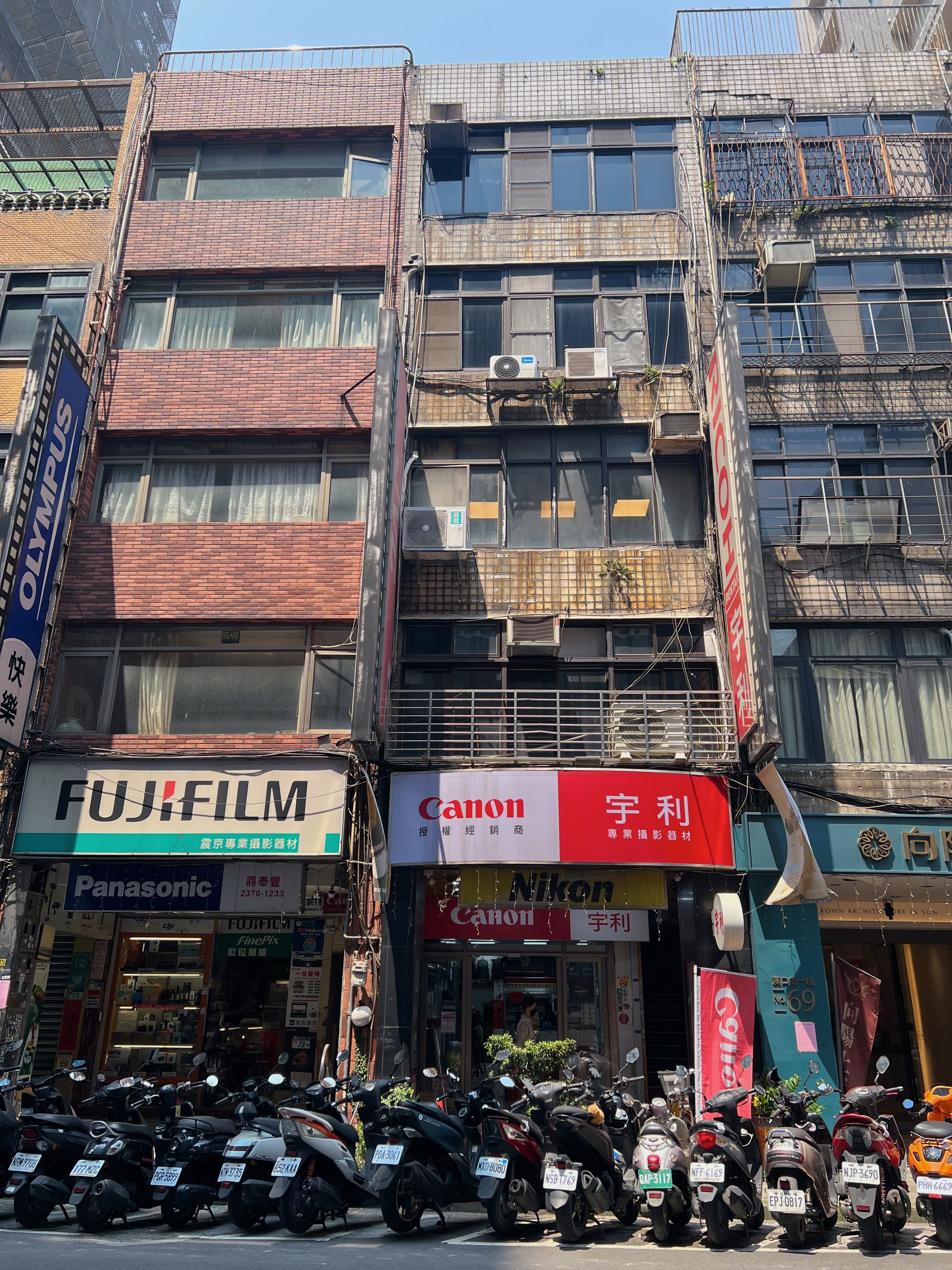
I think this was partially because it was the first culturally Chinese country I’d ever visited, and partially because I didn’t realize how comfortable I’d gotten with Japanese customs over the span of three months. Which isn’t a super long time! Even so, it led to my first few days in Taipei becoming a travel-induced uncanny valley. So, I narrated my general state of shock on my Instagram story.
Taiwan was so loud, I observed. The replies came in: “It isn’t really…? Wait till you see China!”.
When I posted my delight (and continued shock) at the gentle racketeering in Taiwanese Buddhist temples contrasted with the zen tranquility I’d experienced in their Japanese counterparts, a friend who’d also been to both countries shot me a DM that summarized it pretty accurately:
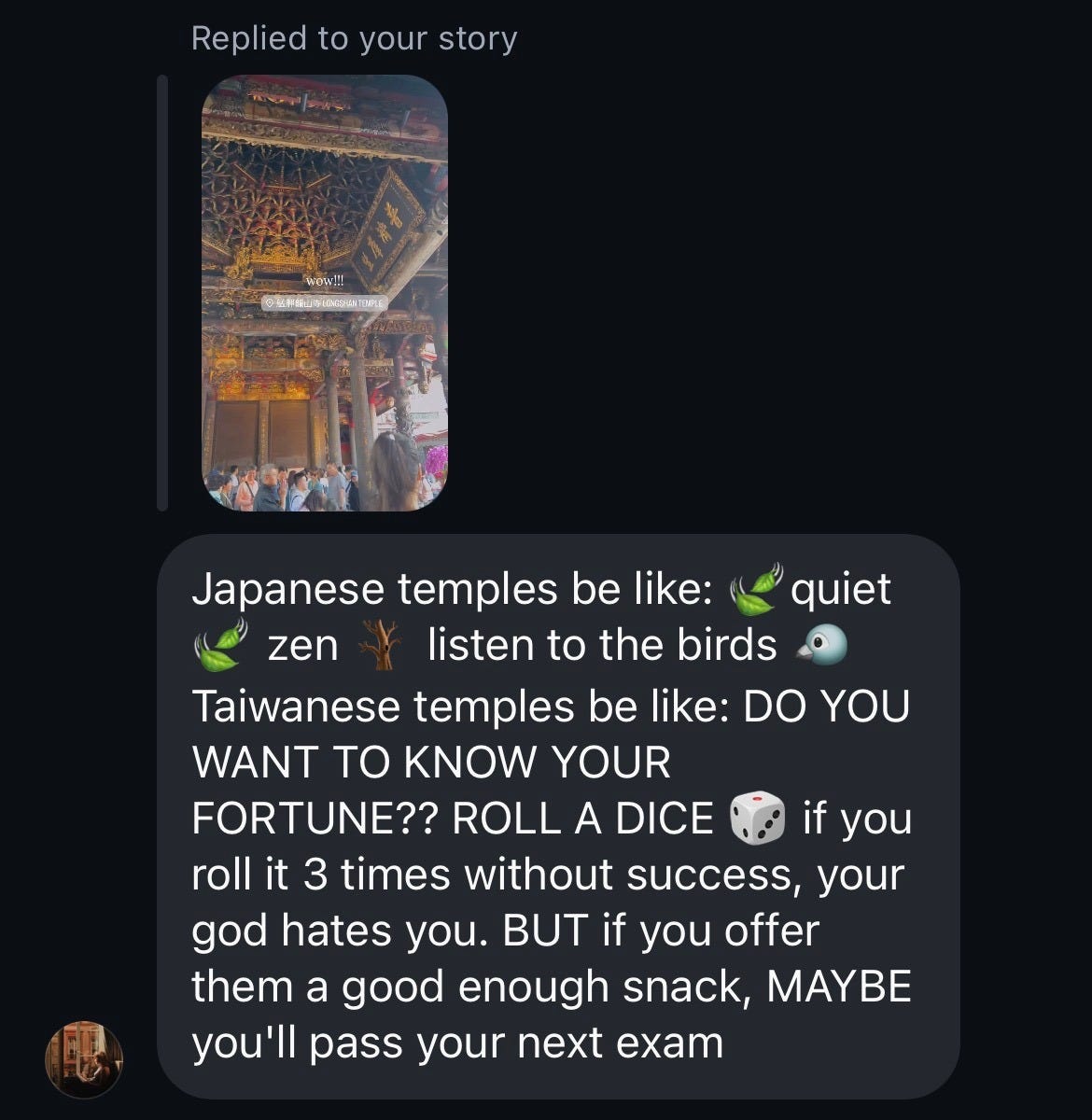
I think what happened was kind of unique to my case in that I’d been a foreigner in one country for a long enough time to have started comfortably integrating into its customs. Then I uprooted myself from that country and went somewhere else that was culturally adjacent to it, but still overall foreign to me. In case you don’t know, Taiwan inherited Japanese infrastructure along with a handful of customs after half a century of colonization, while still predominantly remaining culturally Chinese. I think that simultaneous familiarity and alienness really threw me for a day or two – I was used to this, but not quite. As I put earlier: I had thrown myself into a travel-induced uncanny valley. What was I recognizing? Japan? China? Both? Neither??? I couldn’t slot it in neatly.
But what I remember most vividly about Taiwan is the friendliness of its people, which I got to experience before I even set foot in the country.
I was eating at my favorite steak bowl spot in Tokyo in March when two Taiwanese guys walked in and sat by me. After some mutual gesturing and general confusion between them and the waitress, I ended up helping them place their orders (it was incredibly minimal — I think I translated a sentence or two). This led to us introducing ourselves and talking. They were in Japan on a ski trip, and offered to take me out for dinner once I arrived in Taipei – a promise they held to. Innocuous enough, right? But I’d interacted with strangers at the table so infrequently in Japan that their friendliness stood out to me.
The other instance was an older Taiwanese woman who singled me out while I was wandering Chidorigafuchi and taking photos during the nighttime cherry blossom illumination. She asked me to take pictures of her, and I accepted.
Her: Now I take some of you.
Me: Thank you!
…
Her: Now, we take some together.
Me: Eh?
Her: Take a photo with me!!
Me: Oh! Okay!!
We hung out for a bit after that, and exchanged numbers. “When you come to Taipei,” she said as we parted ways with a hug, “you live with me.”
As for when I actually arrived in the country? I think I’ve said multiple times at this point that it wasn’t that I didn’t have a single negative social experience in Taiwan. I didn’t have a single neutral one either.
Everyone was just a fucking delight — and I don’t mean to naively imply that the entire social fabric of the country is sunshine and rainbows, but having been to around 15 countries this year, I can say that kind of consistent warmth towards a tourist who doesn’t even know the local language is a fucking anomaly. And I spent most of my time in Taipei — everywhere else in the world, the largest metropolitan area in a country tends to be its least friendly pool of people. This is what inspired the subtitle for this entry — Taiwanese kindness reminded me of my own people’s aggressive hospitality.
A week was honestly the perfect amount of time in Taipei, including a day trip to Jiufen. I felt like I got to experience the city’s highlights and enjoy a good range of Taiwanese food without getting sick of it, while leaving prepared for a deeper dive on a future trip, which is definitely happening.
Hell, maybe I’ll even come back this year.
My brief time in Taiwan was destabilizing, delicious, and absolutely wonderful. I’ve put all my recommendations into a 🌏Google Maps list for easier planning. Best viewed on mobile, where everything’s tagged by category.
Eat & Drink
If you want a comprehensive list of everywhere I ate in five months across East and Southeast Asia, here’s my 🍴Beli profile. (Need an invite?)
tei by OBOND: ($$$, Bar, Tea Cocktails) All cocktails here are based on Taiwanese teas, a concept that drew my pretentious ass in immediately. I got to learn a lot! Which made my nearly $50 USD spent feel worth it (why else do you think I write essays on every Michelin star restaurant I visit. For fun??? No. To justify my poor spending habits.)
This spot is also ranked on 50 Best Discovery. 50 Best tends to be a little more pay-to-play, so I’m warier when it comes to their recommendations than I am with a Michelin star, but, again — sexy concept.


The vibe and space are really gorgeous – the bar is situated like a speakeasy, tucked away behind their daytime tea shop, and both interiors are immaculately designed.
I wouldn’t say any of the drinks blew me away, but I’d gladly come back for more. I love the way they structured the menu into separate courses, all of the drinks were distinct from each other, and getting to sample some tea spirits was really cool. An additional heads-up that some of the drinks were batched in advance, which I guess may be necessary when working with tea infusions.
A common complaint I read about this spot was that service can be hit or miss – and I could see where that comes from. Introductions did feel a bit scripted at first, but then warmed up as the night went on, and I had no complaints by the end. I think the best approach is to not be afraid to ask your bartender questions – I feel like I got what I gave. It only took a little prodding about yellow tea for him to light up, and it was smooth sailing from there.
Even as a walk-in, I had to DM them on Instagram to be let in (they’re also on Facebook), and then someone fetched me from the front. They were quick to respond – I got a reply within a minute posted outside the building like this 🧍🏻♀️ (after having accidentally wandered down a dark alleyway next door. This would become a recurring theme the further I went into SEA.)
You know what’s weird about Taiwan? Food is way cheaper over here, but alcohol costs around the same as the US. I paid $45 total for three drinks, with a welcome drink included. They also have a minimum spend, which seemed odd to me, but maybe these things are standard practice here.
路易士早餐吧 (Lùyì Breakfast Bar): ($, Breakfast) The first place I ate in Taiwan was a cute breakfast spot near my hotel that held biblical discoveries within. Just like how that Chinese noodle shop in Tokyo taught me how scallion oil noodles are supposed to taste, this spot taught me how scallion pancakes are supposed to taste. I don’t know if this is the best of the best, but I was shocked at how good they really could be.
It was my first time trying soy milk too, and I ended up liking it way more than I expected to. Perfect sweetness level!!


A very sweet older man who worked here sat across from me at the table when he saw me translating the menu with my phone and helped me order. The walls are also lined with cute drawings from visitors around the world.
妙口四神湯 . 肉包專賣店: ($, Street Food) Walked past this street stall on my way to the wharf and saw people queueing, so naturally I joined the queue. I don’t even like bao buns very much, but this was delicious. $0.70 USD a piece with a nice, peppery flavor to the meat. There’s chili sauce on the tables but honestly, they didn’t need anything added to them.
Xing Fu Tang: ($, Bubble Tea & XLB) I found all of the bubble tea spots that I tried in Taipei before this one incredibly…normal, which was kind of disappointing for the birthplace of bubble tea.
Then I came here and finally got what I was expecting. This was so, so, so yummy!!!
The tapioca pearls are handmade in front of you, and are so soft to chew. They hand-torch the roasted brown sugar for every drink which adds a delicious, toasty complexity to the flavor. Even the soup dumplings were pretty good!
If you can make only one boba stop in Taipei, I’d recommend this one. (Based on my expert opinion of three total places visited).
味県西門with peace (Weiding): ($, Breakfast) This incredibly cute walk-up breakfast spot with additional seating upstairs was just steps away from my hotel. I have no baseline for what makes “great” Taiwanese food, but this was just great. Crispy omelette crepes with gooey cheese, filling and delicious, paired with sweet soy milk and fragrant assam black tea. God, I miss scallion pancakes…


臨洋港生猛活海鮮長安店 (Linyang Port Fresh Seafood): ($$, Taiwanese stir-fry) The guys I met in Tokyo took me here! They recommended a Taiwanese stir-fry place because the dishes are made for sharing — exactly the kind of meal that’s harder to properly experience as a solo diner. It had a really local feel, and everything we ate was delicious. Got to try Taiwanese beer here too.


Raohe Night Market: (Night Market, Street Food) Probably the most touristic of all the night markets I visited, but also my favorite. It’s big, boisterous, incredibly overstimulating, and delicious. If you can only stop at one, make it this one, though if you’re particularly sensitive to crowds, Ningxia might be more your speed.


Ningxia Night Market: (Night Market, Street Food) Jeff mentioned that this particular night market is very popular with Japanese and Korean tourists, likely due to the presence of only 1 (one) stinky tofu stall. And it’s definitely more lowkey than a few of the bigger ones. I appreciated that it was very food-focused and based so close to Dihua street, which is Taipei’s oldest area with spice markets, specialties, nuts, and candy (another point for Taiwan = Middle Eastern East Asia). It’s also based near the wharf, so it’s overall a really lovely area to make a day out of all around.
Michelin Guide distinguished Yuen Huan Pien is based here, famous for their oyster egg omelette. You’ll find it quickly, as there’s always an incredibly long line out its doors. I went off-hours to check it out, and decided it wasn’t worth the wait. It’s not bad, necessarily, it just isn’t worth a queue. And I think I actually enjoyed the clam soup more than the iconic omelette.
Tonghua Market: (Night Market, Street Food) My last and smallest market stop, with probably about a 50/50 mix of shops to food vendors. I tried Taiwanese peanut rolled ice cream here, and it tasted exactly how you would expect cilantro and peanuts and ice cream in a crepe to taste, which is to say, not bad.
I liked the vibe at the other markets more. This one isn’t bad, just very local in a way that won’t be enticing to short-term visitors. Be the short-term visitor that you are and go to Raohe.
福州世祖胡椒餅(饒河街観光夜市) (Fuzhou Shizu Pepper Bun): ($, Street Food) My second pork bun stop – and this one is a very famous Michelin Bib Gourmand recommendation located right in Raohe Night Market. The buns here are famous for being cooked in cylindrical charcoal ovens, and by cylindrical oven I want you to picture an upright rain barrel situation, where the cooks SLAP the buns onto the inner walls of the barrel to bake them. And then I don’t actually know how they take them out. Centrifuge them. Pick up the barrel and shake it. Peel them off with their bare hands. Use tongs. Idk. I was so overwhelmed by the line and payment system and delicious pepper smell that I didn’t pay attention. Sorry. If you really want me to report this for you you can pay for my plane ticket back.


Comparing this one to the wharf: the thin, crispy texture of the bread with their buns is way better when paired with the meat, though I usually prefer crispier buns to bao anyway. The filling at the wharf stand, however, was way more flavorful and peppery than this one. Wish I could marry the two together for the ultimate pork bun.
God Guo Hot Pot: ($$, Hot Pot) I don’t think it’s the best of the best, but it was cool to see what differentiated Taiwanese-style from other kinds of hot pot. Individual portions offered, and everything is super customizable. I was so sad that they don’t do sesame sauce here, but I believe in the concept of self-determination, even when it is morally abhorrent and devoid of God.
Sihai Soy Milk: ($, Restaurant) All I got here was a cold cup of soy milk and a deep fried bread stick. It was delicious. Open through the evening if when you’re ever craving Taiwanese breakfast items at that time (you will be).
如邑堂 台北開封店 (Ruyi Sunny Cake): ($$, Bakery) This bakery held me hostage and forced me to sample the entire menu for free. My imprisonment was a wonderful opportunity to try a lot of treats I wasn’t familiar with.
I bought pineapple cakes and yolk buns here. They were some of the best I’d ever had, though I don’t think they’re necessarily the best you can find in Taipei. I didn’t have enough time to do this kind of culinary research, so it’s on you to pick where I left off. For one final FYI, this spot is definitely on the pricier side.
Din Tai Fung Xinsheng Branch: ($$$, Restaurant) Of course, I had to visit the original DTF dine-in branch. I am a HUUUUUUGE Din Tai Fung fan. I think I saw God the first time I tried their chocolate dumplings with sea salt foam…so, imagine my disappointment when I learned the sea salt foam wasn’t available here.
The food was, of course, absolutely amazing. Wait times were unfortunately some of the worst I encountered on this whole trip, even as a solo diner, but their queueing system is efficient and there’s a website where you can track your spot online.
To be honest, I think DTF standards are so good globally that if you’ve eaten at one anywhere else, you’ve gotten about 85% of the way there quality-wise compared to this one. The quality and variety is better here, but IMO not enough to justify an hour-long wait.
I saved my second DTF visit for the branch that Google AI results promised me at Taoyuan International Terminal 2…learn from my incredibly humiliating mistake and don’t repeat it. It does not exist. I left Taiwan DTF-less. 😔 My first, most egregious, and least forgivable case of getting duped by confidently incorrect AI results.
Miscellaneous Foodstuffs
Nougat!: Not a restaurant, but a recommendation. Nougat is further proof that Taiwan is the Middle East of East Asia (???). They love nougat here. I was so confused when I first saw it! I love their take on it too – the cracker sandwiches are bizarre to me, but delicious.
Cod Roe: This is so popular in Taiwan that they sell little keychains and stickers of it, which is both grotesque and adorable. I never partook in the cod egg sacs, but they kind of seemed like giftable souvenirs you could buy. I saw them being sold all over Ningxia Market and the surrounding bazaars.
Pig’s Blood Cakes: Tasted like nothing. It really picks up the flavor of whatever you put on it.
Stinky Tofu: I was not brave enough to try this time…I am sorry. I will have to come back because I missed it. If any other generous and hospitable Taiwanese want to host a random woman in their house, hmu.
Explore
Wanhua District
I explored this neighborhood during my first full day in the city, and it definitely contributed to my electric shock. It’s Taipei’s oldest neighborhood, buzzing and old and winding and chaotic. Just show up here and walk around – though there is one really pretty temple I can point you directly to!
Longshan Temple (艋舺龍山寺)


Located in Wanhua District. It’s absolutely beautiful, with an atmosphere totally opposite the relative tranquility of corresponding Japanese Buddhist temples. In a true contradictory yet distinctly Taiwanese fashion, a gentle amount of racketeering is encouraged here – draw fortune sticks and throw divination blocks (jiaobei) on the ground to see what the gods have to say about your problems, and circle the temple grounds to find increasingly elaborate offerings laid before deities associated with everything from health to education to romance. Longshan was founded as a Buddhist temple and Guanyin is its principal deity, but today the temple is famously syncretic; you can worship a whole roster of Buddhist, Daoist, and folk deities here under the same roof.
National Palace Museum
For starters, look at that view – this country is gorgeous, and very subtropical. My Japanese winter wardrobe wasn’t cutting it here.
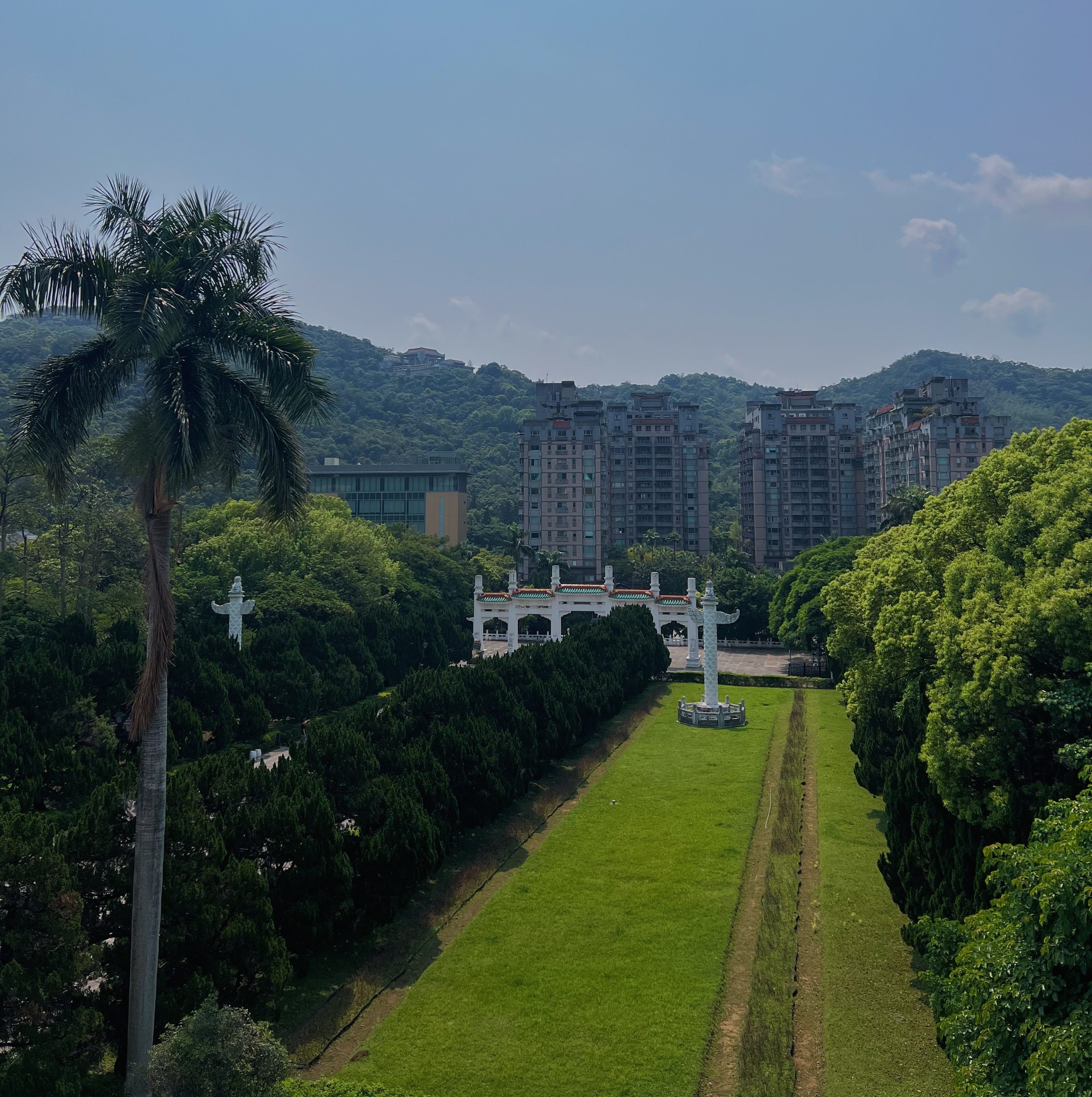
As the KMT watched the slow-motion trainwreck of their losing battle against the communists, their leaders valiantly rescued/cowardly stole many historical artifacts from Beijing in order to preserve cultural pieces/manufacture a false sense of national legitimacy by removing an extraordinary chunk of Chinese national patrimony from the mainland.


Look, we’re not going to tackle this at length here. Full opinions on Taiwanese national identity below.


Two of this museum’s most famous pieces resemble food — the Meat Stone and the Jadeite Cabbage, respectively — which is further proof that the Taiwanese and I are on the same page.


Dadaocheng Wharf and Riverwalk
If you read my Japan Guide you know that I yearn always for ayu, which I only later put a name to from Umineko. I got to see them leaping from the water here.
I don’t know if this is a great use of your time if you’re short on it — I really enjoyed it, but you should focus on the nearby Dihua street and Ningxia Market if you want something more distinctly Taiwanese. This is just what it is — a riverwalk.
Beimen Post Office
By the time I reached Taiwan, I had accumulated approximately one suitcase’s worth of very sexy, luxurious, and adorable winter clothing from Japan that I absolutely could not justify dragging through Southeast Asia. They needed to go home.
Unfortunately, shipping things out of Japan had already introduced me to the nightmare house of horrors that is Japanese bureaucracy and international postal regulation (no doubt aided by Trump’s new tariff rules). I’d started genuinely worrying that I wouldn’t be able to ship the clothes back at all, and would have to get rid of them.
Considering I had to embark on this postal quest anyway, I figured I’d walk the extra ten minutes from my hotel to the 1930’s historic Beimen Post Office, which was built during the Japanese colonial era and doubles as a small museum. Despite being a historic spot, it was quite busy, with a mechanized queueing system reminiscent of the one I experienced in Japan.
Once my number was called, I walked up to the counter and handed the postal worker my bag of clothes. He inspected it thoughtfully.
“You will not be allowed to ship this.”
My shoulders sagged. Figures.
“Give me one moment.”
He disappeared behind stacks of paperwork and started rummaging around. I stood there waiting for directions to a private postal service, or maybe a donation bin.
Instead, he reappeared with a form.
“Here’s how we’ll fill this out to get it through.”
This is where my love for your country bloomed. The Middle East of East Asia.
Chiang Kai-Shek Memorial Hall
Woof. Okay. Let’s get into this.
Chiang Kai-Shek was the leader of the Republic of China when its government fled the mainland for Taiwan after losing the Chinese Civil War to the CCP. He had already been elected president under the ROC Constitution in 1948, and after the government relocated to Taipei in 1949, he resumed the presidency there in 1950 and remained in power until his death in 1975. He is, as far as I can tell, the only ROC president to have held the office both while the government was based on mainland China and after its relocation to Taiwan.
He was a terribly repressive authoritarian, responsible for the deaths of thousands of Taiwanese people during The White Terror and general authoritarianism when he presided over China as well. Understand this context when you go to visit the memorial. I think the government is making efforts to include this nuance too – there was a temporary exhibit on democracy and human rights on the ground-floor level of the hall during my visit.


The memorial — as an architectural work — is truly worth a visit, grand and imposing in stature. While the enormous sweeping promenade that is frankly a ridiculous distance to walk in the blazing spring heat is distinctly Chinese in its vibe, the actual interior hall reminded me a lot of the Lincoln Memorial in DC, to the point that I wondered whether the parallel was intentional.
The changing of the guard that happens on the hour just outside of the hall is probably one of the coolest guard changes I’ve ever watched too. Catch it if you can.
228 Peace Memorial Park
A park commemorating the 228 Incident, wherein an anti-government uprising in Taiwan led to the brutal massacre of thousands of Taiwanese at the hands of Chiang Kai-Shek and the ruling Kuomintang nationalist government. A 38-year period of repressive martial law known as the “White Terror” followed, wherein the KMT persecuted suspected political dissidents, communist sympathizers, intellectuals, anyone who vaguely resembled a leftist, and the like.
It seems to me that the Taiwanese people have a very long history of resisting imperialism, authoritarianism, and generally being treated as pawns by greater powers, and I imagine they’re really, frankly, quite fucking sick of it.
Elephant Mountain
The Taiwanese love a good mountain hike, and Louis recommended this one to me. It’s located right in Taipei, which shares an amusing trait with Seoul: big mountains encircle the city. Now that I think about it, Kyoto is surrounded by mountains too, though I don’t remember encountering nearly as robust a hiking culture there. Maybe I just didn’t notice it.
Regardless, I think this hike is 100% worth doing. You don’t need to travel for it, it’s relatively accessible, and the city-sweeping views are gorgeous.
I scrambled up a very large rock near the peak and sat up there reading from my Kindle for hours. It was really, really pretty — Taiwan is rife with butterflies, and I’d look up every now and then to see one flying past me. Another traveler who wanted pics on top of the rock also told me he saw snakes at its base, but I had enough trust in the Taiwanese medical system and my travel insurance that this didn’t really bother me. And I had the sneaking suspicion that he was just trying to scare me off my rock.
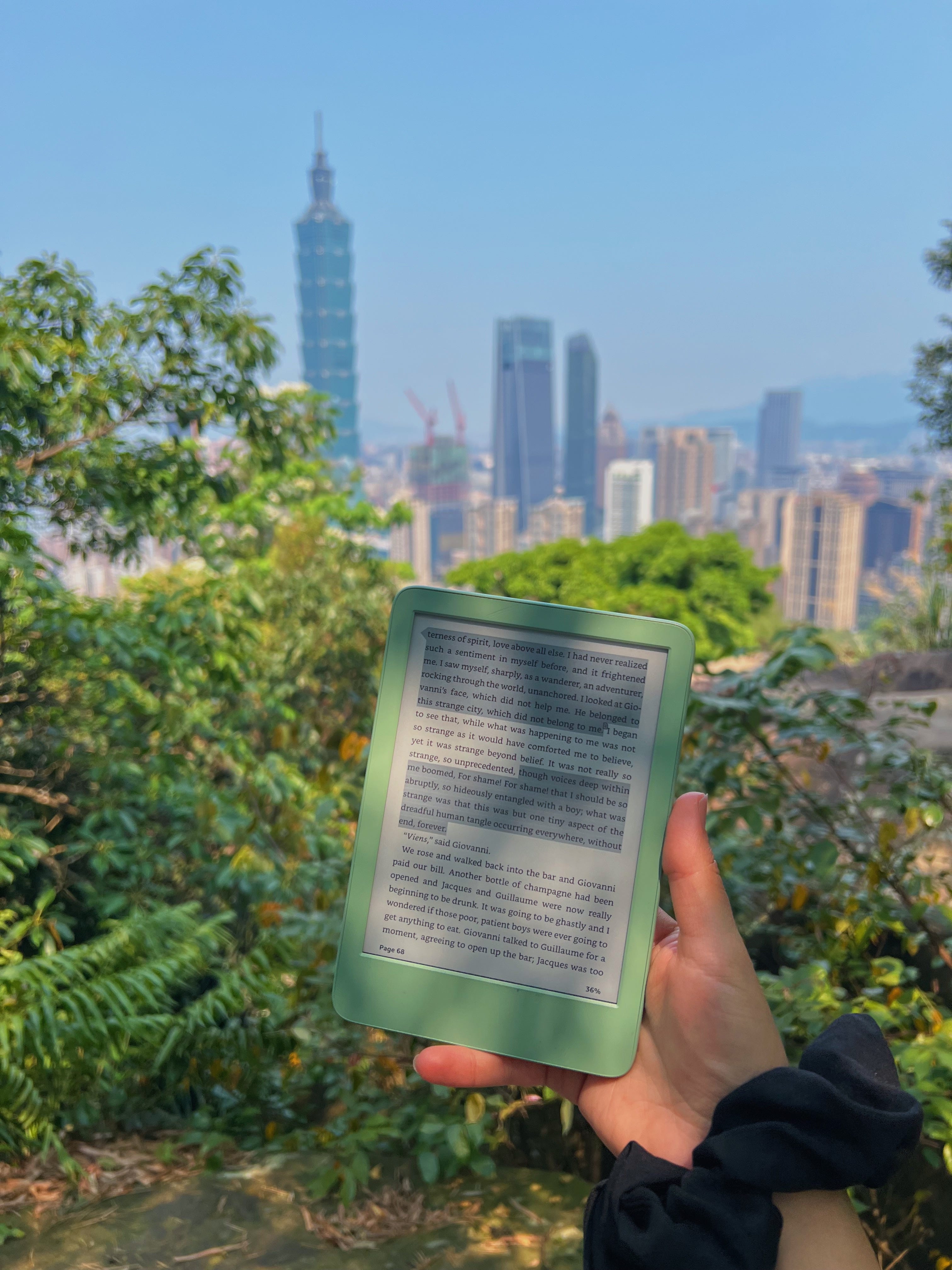
A very well-meaning older man kept leading me further up the mountain, showing me hidden-away viewpoints and photo opportunities. I kept trying to politely excuse myself, and he kept breadcrumbing me, going “okay okay now one more spot. Two minutes away!!”, before eventually offering to lead me around the rest of the circuit and back down to the base.
Knowing stranger danger, I hit him with the classic excuse: “I’m sorry, but I have to go and meet my friends for dinner at Taipei 101. Which is back where I came from. Goodbye.”
Usually, when a stranger is actually danger, you meet some resistance, but this guy immediately relented.
“Are you sure?? It goes back down the same way!”
“It’s okay! I really have to get going…”
“:( Okay. But let me give you a full Google Maps list of all of the spots you missed this time!! And if you go to this cafe, tell the owner you know me! He is my friend. He’ll give you a discount.”
I am once again humbled by Taiwanese kindness. If you ever end up reading this, thank you again!!
Taipei 101
The mall is quite nice. As for the observatory…Look. I’ve done a billion skyscraper observatories at this point. (Damn, what a blessing to say.) Do I necessarily think this one is worth it? Not if you do Elephant Mountain – I think the view from there is cooler, and a little more rewarding given that you’re hiking up to it instead of taking an elevator.
The standalone Cremia counter outside the ticketing area is worth a stop, though – the pistachio ice cream and strawberry cone combo was delicious. If you aren’t familiar with Cremia, it’s a decadently creamy, full-fat Japanese ice cream made with Hokkaido milk and an iconic cookie cone reminiscent of a Milano cookie.


I never saw a single standalone Cremia in my three months in Japan, but stumbled upon one during a week in Taipei?! A perplexing, and advanced country…And that’s for fifty years of colonization, bitch.
Sulfuric Fire Fishing
Jinshan District on Taiwan’s northern coast has a centuries-old tradition of fire fishing, originally using bamboo torches to lure light-sensitive fish out of the water. During Japanese rule, fishermen began using a slightly more modern combustion method to create the explosive bursts of flame used in the present day sulfuric fire-fishing method. Once practiced by hundreds of vessels, this dying practice is now kept alive by only a couple of active historic boats. I excitedly shared this with the guys I got dinner with.
Jeff: …You said that this was called fire fishing?
Me: Yeah!!
Jeff: We have never heard of this.
Louis: It might be something they created for tourists.1
Jiufen
Oh, man. I loved this daytrip. It’s a pretty doable one, only about an hour out of Taipei by bus. Jiufen is a beautiful little mountain town that’s famously rumored to have inspired Spirited Away. (Hayao Miyazaki vehemently denies this).
I spent the first part of the day exploring the town, wandering the lantern-strewn alleyways and squeezing past hawking tourist shops. I stumbled upon and fell in love with Jiufen Teahouse, an idyllic two-story haunt and tea shop tucked away from the main tourist thoroughfare. They’re generous with sampling, the seating area is beautiful and surrounded by pools of water filled with koi, and the selection of teapots and accessories is huge.
I then left the livelier district of town to find the trailhead for Teapot Mountain, doing my best to navigate the winding streets of Jiufen and stopping every now and then to pet the occasional friendly cat.


Give yourself ample time, as it took me longer than I would’ve liked to find the trailhead. I reached the peak with a little over an hour before sunset, which was technically enough time to get back down before dark, but only just about. It would have been completely fine, actually, if not for the chatty old man at the top, who trapped me in a twenty-minute conversation and then subsequently kidnapped me.
The hike itself is beautiful and idyllic, less crowded and more lush than Taipei’s Elephant Mountain hike. You never realize how verdant the world can be until you leave the Midwest — the nature around us is unfortunately pretty underwhelming.
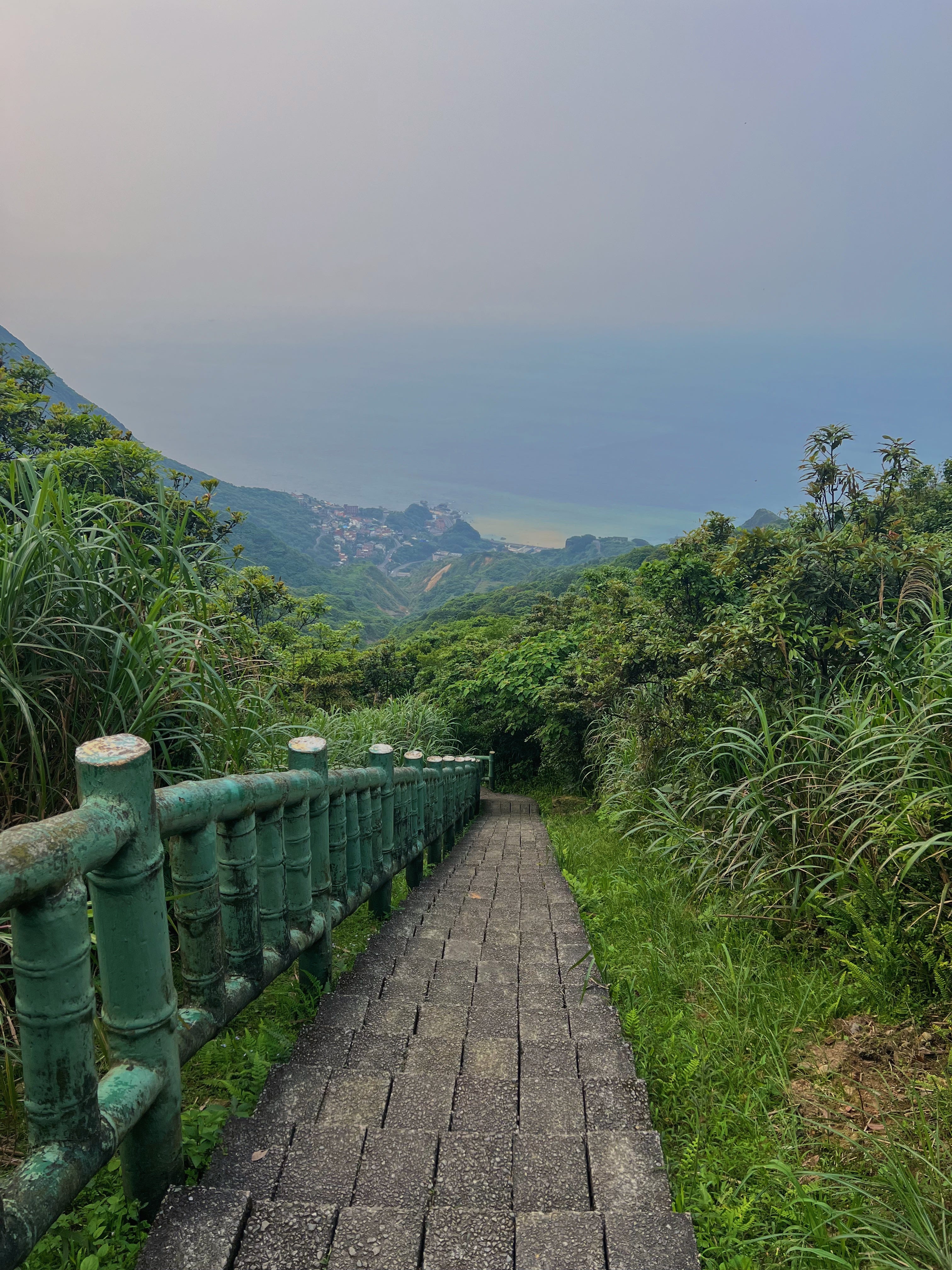
For most of the ascent, I’d been hearing some weird man — or possibly a goat — yodeling every fifteen minutes somewhere above me. By the time I reached the top, I was standing beneath this enormous orange-and-copper rock outcropping, debating whether I was actually supposed to climb it.
Then I heard the yodel again. Much closer this time.
An old man suddenly appeared over the ledge, waving both arms enthusiastically. “Hello!!!”
Me: Hi!!
Him: Come Up!
Me: I’m deciding if I should…I haven’t scrambled before!
Him: Come Up! Come Up!
Okay, so he doesn’t speak much English.
I basically crawled up and then into the rocky outcropping before trying to squeeze myself up this stone…birth canal, is the best way I can put it. Just as I was wondering how the hell I was going to get my backpack through, a hand appeared from above, ringed by daylight, and snatched it away from me.
“Come up!”
I emerged on the other side to find him standing with another Taiwanese guy around my age. They introduced themselves and, as far as I could tell, had also just met — meaning this old man had apparently appointed himself receptionist of the teapot.
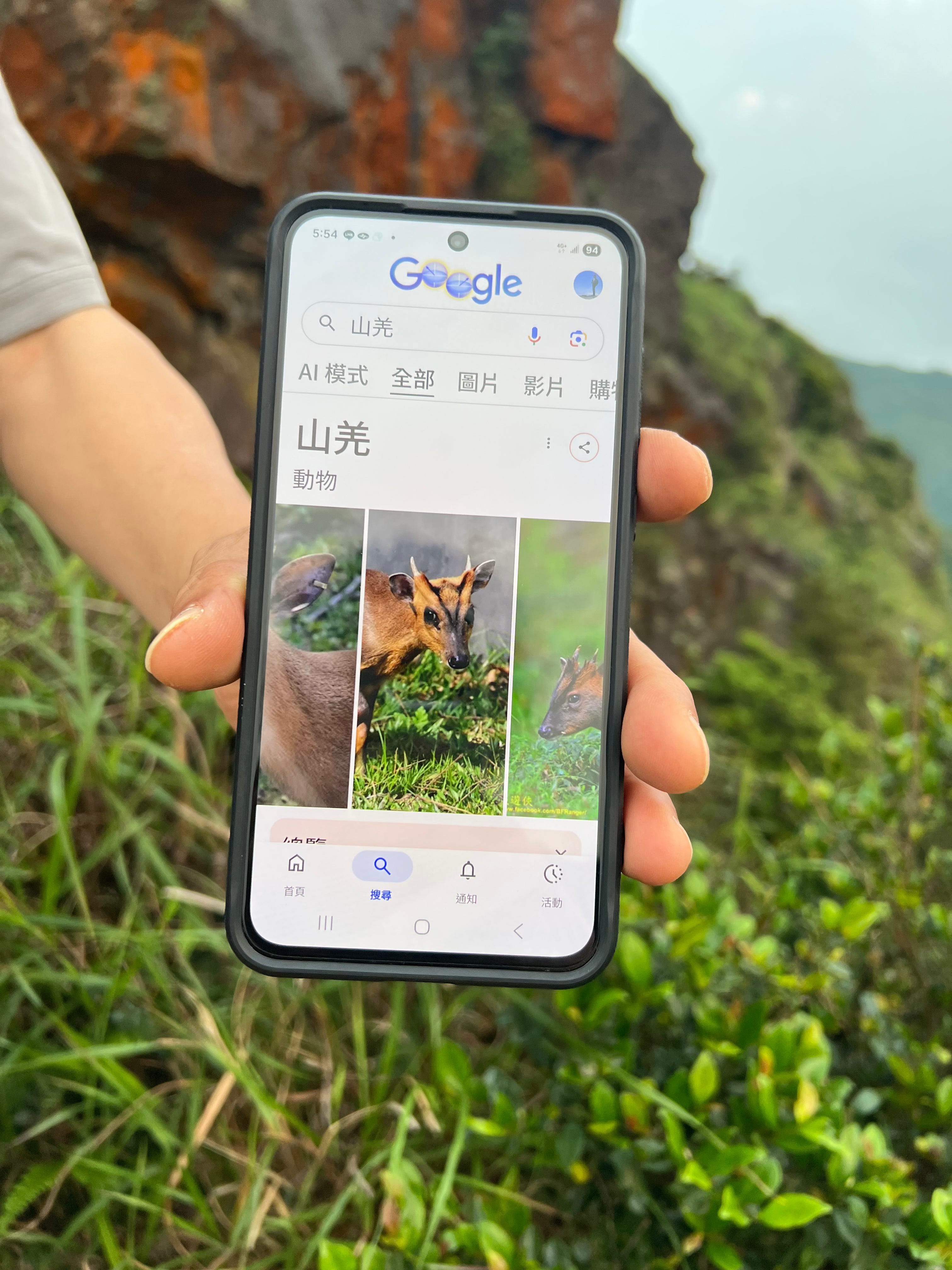
The three of us exchanged introductions and chatted as we lounged on the large rock, watching an auspiciously red sun descend into Jiufen valley. It was a really gorgeous sight, one of my favorites from the trip. We took pictures. We lounged. The old man offered us fruit.


With daylight slowly ebbing, the three of us eventually scrambled back down from the rocks. The younger guy continued on. I lingered for a few minutes because the old man had settled himself into a nearby gazebo to eat dinner and, unfortunately for my rapidly shrinking window of daylight, was still being extremely chatty – sharing how he’d scaled this very mountain nearly fifty times, and loved meeting all of the international travelers who came to hike it as well.
It was really very sweet, and if we were having the same conversation at midday, I would’ve gladly let him yap my ear off for another hour.
I kept glancing at the sky. He kept talking. I kept glancing up. Alas, I was being held conversationally hostage by a 祖父.
Eventually he held up his phone. A translated message filled the screen:
Have dinner with me! I brought enough food.
“Thank you so much, but I can’t. I have to start going down before it gets too dark.”
Just like the very friendly man on Elephant Mountain, he relented immediately. “Okay! Bye bye!! Good luck!”
He gave me the same enormous, silly wave he’d greeted me with, and I hurried off down the mountain.
I’d been descending for maybe fifteen minutes when a scream tore through the trees behind me, nearly making me jump out of my skin.
“AYAAAAAAAAAAAAAAAAH!”
Against my better judgement, I turned around to see this seventy-something-year-old man booking it down the mountain after me.
“WAIT FOR ME!!!!! NOT SAFE FOR GIRL ALONE!!!!!!”
😀
For one, I was positive that this man wasn’t any danger to me. But for two, I was a girl alone on a mountain after sunset, and I didn’t want to be stuck on a mountaintop after dark with anybody. I had a phone with full charge and cell service, a power bank, water, and a clear route back — I wasn’t exactly stranded up there, and trusted myself to get back safely.
“HOLD ON!!! HOLD ON!!!!”
“I’m fine!!” I called back. “I can’t wait, I don’t have a strong light like you!”
God dammit, old man, YOU’RE the reason I’m descending after sunset!!!
Unfortunately, it was getting dark astonishingly fast, especially considering we were on the side of the mountain opposite the valley. I kept walking, then speed-walking. Eventually, I jogged, then ran at full tilt, because now it was properly dusk, and the last stretch of the hike was in a fully wooded area. For your entertainment pleasure, please picture me fucking booking it down a mountain while some crazy old geezer sprints after me hollering to wait for him, because that’s exactly what was happening.
I made it to about half a mile from the bottom before he somehow caught up to me (how???!!), scolded me for running off, and, despite my protests, slammed his spare headlamp onto my head.
“Not safe for girl after dark!!!” He repeated with a huff. “I have daughter your age!!”
Then, in true Chinese grandfather fashion, he stopped us in the middle of this pitch dark, wooded path to show me pictures of said daughter — who was, in fact, also 28, and studying law at UC Berkeley. (He was very proud).
We made it back to the parking lot, and I handed him back his headlamp, thanking him profusely for his kindness – given how dark it had gotten, the last stretch of my descent actually could have turned out dangerous without the strong light of the headlamp. Now certain that we were going to part ways, I made the mistake of sharing that I was now going to walk to the bus stop.
“The bus stop is no good!! Too many tourists!!”
“I don’t mind! I took the bus here—”
“I drive you.”
So in the true spirit of Taiwanese hospitality, the old man did actually end up kidnapping me. It was about a twenty minute car ride to the train station. We continued our conversation by dictating into his translation app.
📱: Your country is very big and beautiful. I like Trump.
I read it, looked at him, and went “??!! Why????”
Him: *looks back down at phone* 😨 Hold on hold on!!
*speaks into phone again*
📱: I don’t like Trump.
Interestingly enough, this guy was pro-unification with China. More specifically, he was pro-unification with PRC-led China, citing its leadership as “strong, capable, and much more progressive than before!”. Which, as I understand, is an opinion shared by an incredibly small portion of the Taiwanese population.
I wondered whether he was a member of some nationalist fringe party, but decided against asking. Not particularly because I thought he was going to hurt me – the man had just chased me down a mountain out of concern for my own safety, after all – but because I was now trapped in the car with someone who had already demonstrated an extraordinary capacity for conversation, and I had a train back to Taipei to catch.
Now removed from the exhaustion and fatigue of the situation, I do kind of wish I’d asked anyway. Because one of my favorite things about traveling is stumbling into encounters like this: meeting someone for twenty minutes and then finding yourself dropped into the middle of a history that existed long before, and will exist long after, your brief arrival and departure.
With all that being said…let’s learn more about Taiwan! Together. Take my hand 🫴🏼.
Want to learn more about Taiwan?


Standard disclaimer before we begin: this is a trip diary. You are watching me explore and form opinions around my own first impressions and introductory research on a very complex country. I am not attempting to establish any authority. I’m only learning out loud. If you know more than me, I’m happy to be corrected if I got something wrong. If you know less, don’t treat me as a source!
With that out of the way, if you aren’t familiar with Taiwan at all, let me give you a brief overview of its current situation.
Taiwan is located just about a hundred miles off of China’s southeastern coast. China sees it as a breakaway province that will eventually be folded back under Beijing’s control. But Taiwan has long established itself as a distinct entity from China, with its own national identity, constitution, and government.
The island has been settled for much, much longer than most people assume. It did not begin with the KMT government’s arrival on the heels of a civil war in 1949.
The older Taiwanese woman I met in Japan spoke fluent Japanese, Mandarin, and a bit of English. The Taiwanese guys around my age who took me to dinner spoke Mandarin and English. My Taiwanese-American friend’s great grandmother only spoke Hokkien Chinese, a Fujian language that arrived with the first Han settlers in the country. I hope this paints a picture of the history I’m trying to show you — that Taiwan has a record stretching much further back than most people assume.
Taiwan’s first taste of Han Chinese rule came by way of European colonial mud wrestling, and has tumultuously changed hands many times since then. In the early 17th century, it was briefly carved up by the Spanish and the Dutch East India Company (yes, same one). The Europeans squabbled over Formosa for forty-some years before our favorite roving hypercapitalist colonizer pushed the Spanish out…only to be booted twenty years later by a Ming dynasty loyalist who wanted to use Taiwan as a base of resistance against the new Qing dynasty on the mainland. (This will become a recurring theme in Taiwanese history).
Taiwan was briefly independent of China during this time before getting snatched up by the Qing dynasty. The dynasty waffled on whether to declare it a full province of China for about 200 years, and once they finally settled on doing so, the Japanese invaded and ruled the island for fifty years. Following Japan’s defeat in WWII, we may naturally assume that China retook control of the island.
Well, it depends on your definition of “China”.
China had put a bloody civil war on pause to fight off foreign invaders during WWII, which very quickly resumed after the Japanese surrender in 1945. The Republic of China (ROC) was given back control of Taiwan that year, and ruled for four years before facing defeat by Mao’s Communist forces, who took Beijing and established the modern-day nation state of the People’s Republic of China.
The defeated ROC government fled to Taiwan, and established rule there – therefore, the PRC, the single government that has ruled the modern state of China since its inception, has never ruled Taiwan.
Deep in the throes of the Red Scare in western countries, Taiwan’s government was originally recognized as the “true” government of China. It was the ROC, not the PRC, which was one of the founding members of the UN. But today, Taiwan is only officially recognized by 12 countries, including the Vatican. This seismic shift in global perception began when ROC Taiwan lost its seat at the UN in 1971 under Resolution 2758, as China’s booming population, growing geopolitical influence, and nuclear armament made it impossible for the international community to ignore.
It’s an incredibly delicate situation. China remains Taiwan’s greatest trading partner, while America remains Taiwan’s greatest de facto military ally. Both great powers have a very vested interest in the country’s independence, or absorption into China.
But even this does not cover the whole story, because Taiwan was inhabited far before the waves of Han Chinese settlers who constitute the majority of the population today arrived.
Taiwan’s Original Inhabitants
Taiwan’s history did not begin in 1895 or 1949, because the island has been inhabited for at least 30,000 years. It was not some pristine, remote paradise that the Spanish, Dutch, Portuguese, or Chinese discovered. It was home to nearly 6,000 years of human history of the Austronesian peoples. If you need a modern association for who they are, the largest concentrations of the 400 million Austronesian people alive today are in Indonesia, The Philippines, Madagascar, and Malaysia – and they are likely descended from the original Taiwanese population. Yes, really!
And this group isn’t some remote, distant part of the country’s history – they’re still around today, with nearly a million of them on the island, comprising around 3% of the population. This indigenous population faced forced displacement and economic coercion by greater waves of Han Chinese settlers over the centuries, which is why the demographics are so skewed in favor of the Han population now. Taiwan’s government officially recognizes 17 distinct tribes, though there are more that are only locally recognized or not officially recognized at all, such as the plains Pingpu tribes. This is gradually shifting, with the Siraya plains people gaining official recognition as of July 2026, and more plains groups now campaigning for official status as well.
The original wave of Han Chinese settlers predominantly came from Fujian, and have some admixture with the original indigenous populations after generations of intermarriage. The accepted extent of this admixture varies wildly, with estimates ranging from 13–85%.
I made the distinction of “waves” of settlers and which regions of China they originated from, because after the ROC government fled China for Taiwan in 1949, waves of Han Chinese migration from all over the country followed.
Before the demographic shifts from Austronesian tribes to a Han Chinese ethnic majority, dozens of languages were spoken on the Island. Before the ROC government-enforced cultural assimilation, the dominant language spoken in Taiwan was Hokkien Chinese. Harkening back to my friend’s great-grandmother — this is why Hokkien-speaking elders can find themselves hard to understand by younger generations, who’ve grown up in a Mandarin-dominant education system and often speak Hokkien, if at all, as a waning second language.
I’m gonna pivot real quick, because this next part needs context.
The internet recently lost its mind over a famous novelist’s inclusion of a minor Israeli character in her latest book. Somewhere in this clusterfuck of discourse, people started drawing a line between Israel and Taiwan as fellow settler-colonial projects, often referring to the latter as “the Israel of East Asia”.
As someone who had just visited the country — and really loved it! — I read those takes and thought to myself, damn, what an insane and incendiary claim to make. So I went digging into the parallels to figure out what the hell everyone was talking about.
After some reading, I’ve concluded that the internet is, once again, being incredibly reductive. Given this history of mass migration and indigenous displacement that we’ve talked about already, I understand now why people feel drawn to make the parallel — I’m just loath to see it getting parroted in Tiktok comment sections without any nuance.
Yes, waves of Han Chinese settler-colonialism drove Indigenous tribes from their homelands and financially and forcibly displaced them. In turn, Han populations also resisted repression from foreign invaders (Dutch, Spanish, Japanese) alongside their Indigenous countrymen. Settler-colonialism in Taiwan occurred in multiple waves, from internal and external sources, and often wasn’t part of any coordinated state campaign.
Yes, the modern state of Taiwan was founded by the fleeing, right-wing authoritarian party of China’s splintered government after a civil war, which then enforced a country-wide campaign of cultural assimilation and shift to Mandarin — suppressing both Indigenous and Han populations that had been inhabiting the island for generations.
Yes, Taiwan has been heavily invested in by western powers that wanted to crush left-wing ideologies at any cost during the Cold War, and to form a military buffer zone around a perceived Eastern threat – similarly to US presence in Israel as a buffer against the Arab world. Essentially, both countries can be argued to act as proxy states for Western (American) interests.
Yes, Taiwan today collaborates with Israel in order to learn more from their air defense systems. Their proposed air defense system, known as the T-Dome, would be directly modeled after Israel’s Iron Dome.
But the Taiwan of today is not an active apartheid state. It is not actively committing genocide. And it is no longer a repressive, authoritarian regime — it’s a self-governing, pluralistic democracy.
This isn’t to claim that economic inequality or cultural repression no longer exists on the island — and given the fuzzy distinctions I noted earlier around which Indigenous tribes get official government recognition, I suspect that inequality very much persists to this day. The distinction is that Palestinians today are currently living under an active apartheid state and ongoing genocide.
The Indigenous peoples of Taiwan, conversely, faced multiple waves of Han Chinese settlement and subsequent displacement on the island. However, this occurred over hundreds of years, and there was never a sustained state campaign to physically eradicate them as there is in Palestine. The boundaries grow fuzzy here as to which instances in Taiwan’s history qualify as settler-colonialism versus which instances were simply gradual demographic shifts due to immigration. That’s an examination for a scholar or academic to make, not a blogger with a ballooning page count.
Taiwan has been inhabited for a very, very long time, and migration to the island has a layered history that was built in waves. But you can now see why both Chinese and Taiwanese insistence that Taiwan has always been distinctly Chinese is, well…a little reductive.
A very large, China-shaped question
I believe that Taiwan’s future should rest in the hands of the Taiwanese people. If that means remaining autonomous and working towards full independence, it should be so. If they want eventual integration with China, it should be so. If they want to maintain the status quo and let Xi Jinny P posture at their country every few years, I…guess they can keep doing that too?
Though I will give my opinion on what I’d like to happen for Taiwan, because everyone was holding their breath for another American take on global affairs. I would like for it to remain independent, not only necessarily from a political axis, but a cultural-anthropological one as well. Taiwan has a unique identity, and does not harm anyone with its existence. Therefore, it should be able to exist freely if it so chooses to. I’m an American Kurd. I’ve also faced the complexity of having your right to autonomy become a hot-button debate issue, often by outsiders who are bringing their own desires and biases into their arguments. So goes my wish for Taiwan: life, liberty, and the pursuit of new ways to manipulate tapioca.


To dive more into my “cultural-anthropological” point: I hate seeing cultures flattened out as a result of assimilation. I’ve seen the grief permeating Hong Kong in the aftermath of the 2019 protests and crackdowns, even with the understanding that China was always technically entitled to get Hong Kong and Macau back (far more than it has a right to annex Taiwan, imo). That assimilation still makes me sad, because it signifies the erosion of a unique identity.
Though I suppose that when I say I want Taiwan to remain as it is, there isn’t some perfect stasis state that I can even refer to. I can’t point to one specific snapshot of Taiwan and say that this is its ideal. Which Taiwan? Pre- or post- Japanese colonization? Pre- or post- KMT rule? Pre-Han Chinese migration? Which wave of Han Chinese migration? Was the Taiwan I encountered in April not also a result of the flattening and assimilation of multiple distinct cultures into a dominant majority?
I think this is the trap that a lot of people fall into. The stories and traditions we assign to our nations as entrenched and unchangeable are more often than not much younger and more arbitrary than we assume. A national identity is always morphing and shifting. Which is why I stress that the root of what I wish for the Taiwanese people is self-determination, and for the country to stop being used as a pawn by greater powers. Not necessarily to preserve some pristine “Taiwan” that has always existed. That doesn’t exist for any country. France was once a monarchy. Okinawa was once independent. And the United States was once a land of thousands of Indigenous tribes.
I don’t want them beholden to any greater power – Eastern or Western. Wishful thinking, I know — keep dreaming, Ayah. But I share it all because I believe that distinction — self-determination versus some frozen national identity that we must adhere to — is incredibly important, especially as right-wing ideologies continue encroaching worldwide. Don’t confuse the two.
The White Terror
Taiwan may be considered a relatively peaceful democracy with high human rights now, but its founding was much bloodier than that. The modern nation-state today was created on the heels of civil war, and was governed that way for quite some time afterwards. The White Terror saw the torture, killing, or disappearance of any civilians suspected of harboring leftist sympathies or ties – numbering anywhere from 20- to 30,000 killed, and at least 140,000 imprisoned.
The fact that the Taiwanese people managed to crawl out of this period and build a functional democracy is incredibly admirable to me.
Strategic Ambiguity
Perhaps one of the most hilarious current living cases of tactical IR bullshit. Imagine situationship, but geopolitical. We can’t put a name on it, because if we put a name on it, a whole lot of responsibilities and paperwork and potentially world war is gonna come up.
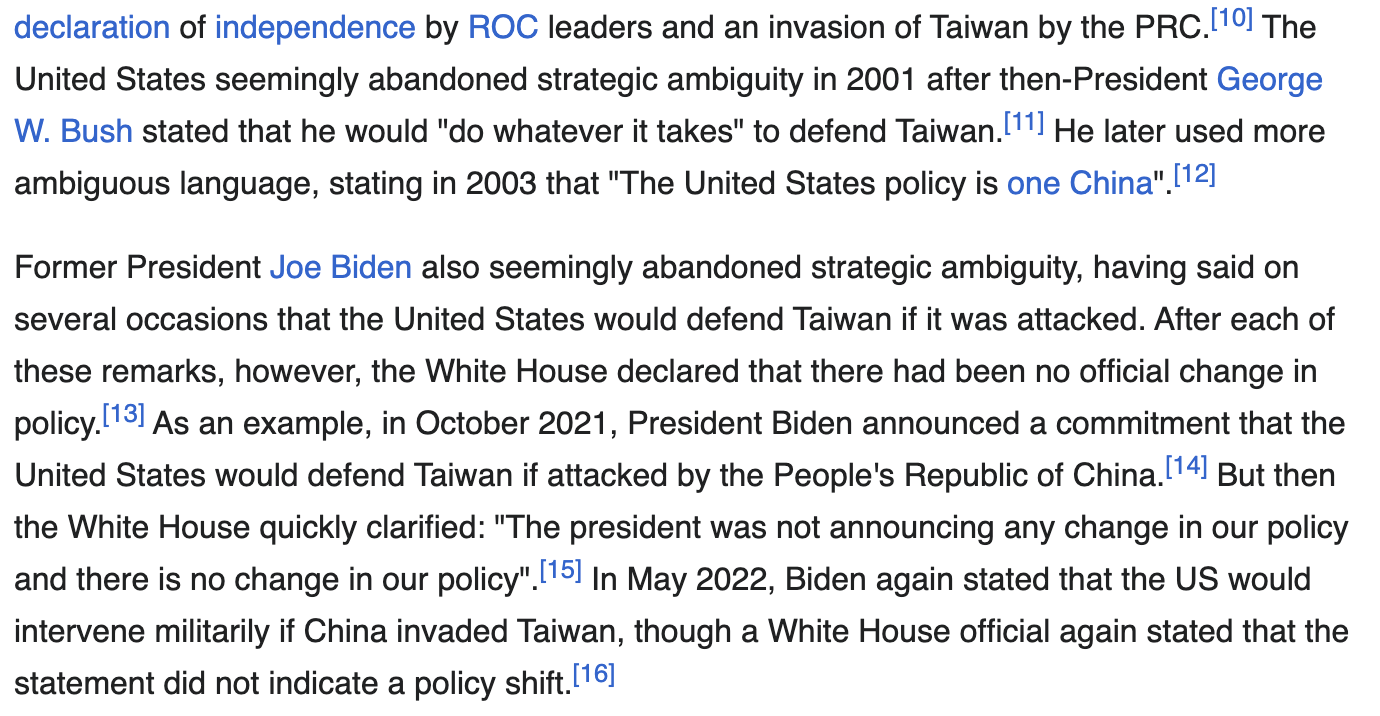
Because nations want to maintain positive relations with the growing superpower of China, they walk a delicate Taiwanese tightrope. My country 美国, for instance, repeatedly waffles on whether it would defend Taiwan in case of a direct attack by China – often saying that it would defend Taiwan, and that it aligns with the One China Policy, in the same breath.
There are only a handful of Taiwanese embassies worldwide for this reason, because nations really don’t want to piss off China — in lieu of official diplomatic relations, Taiwanese “cultural offices” are set up in embassy districts instead.
A list of things the Taiwanese invented that you probably assumed were Japanese or Korean:
Bubble tea: May as well be another one of Taiwan’s numerous mascots. Pearl tea was deliciously invented in the 80’s, though I think there’s some dispute as to who’s the official claimant. Honestly, it’s probably some guy’s mom, because women are usually home cooks and men are the prestige chefs who take mom’s recipes and legitimize them to the world by virtue of being men and framing her resourcefulness as his own genius – SORRY, SORRY, SORRY, STOPPING NOW
Cat cafés: The world’s first one opened in Taipei in 1998. The concept exploded in popularity later on in Japan.
Pineapple cakes: May definitively be my favorite East Asian pastry. They are soooo good, and originate from here.
Popcorn chicken: Another Taiwanese invention, originating as one of their many delicious and popular street snacks. I see people mistakenly attribute this to South Korea, likely due to the popularity of Korean fried chicken, whose own history was shaped by American military presence during and after the Korean War.
General Tso’s chicken: Chef Peng Chang-kuei, a Hunanese chef who fled to Taiwan after the Chinese Civil War, created the original dish in the 50s. It later traveled to New York and evolved into the Chinese-American takeout staple we know now.
Mongolian barbecue: Neither Mongolian, nor actually barbecue. More closely related to Japanese teppanyaki, actually. It was developed in Taipei in the 1950s by Wu Zhaonan, a Beijing-born restaurateur who had moved to Taiwan. He reportedly wanted to call it “Beijing barbecue” but chose “Mongolian” instead because of the political climate – Beijing had recently become the capital of the newly-established PRC.
Professor Explains History of China, Taiwan, and Hong Kong, Pre-2010
A good differentiator between why Taiwan and Hong Kong’s (and even Macau’s!) situations are so different, if you aren’t familiar. Note that it seems this was recorded about a decade ago, and a lot about the situation has changed since then. Treat it as more of a historical sparknotes than an accurate summation of current events.
TL;DW: Essentially, Hong Kong was an imperial power grab by the British over a century and a half ago, then existed under their custodianship as a lease until 1997, when it was officially handed back over to China.
The Chinese have had presence in Taiwan since the 1600’s, but it was a Chinese splinter government and swathes of refugees fleeing the newly established PRC that properly established Taiwan as the modern nation-state it is today. No foreign powers involved — it was the direct consequence of a civil war.
Taiwan Travelogue by Yáng Shuāng-zǐ
I stumbled upon this book three separate times during a London bookstore crawl a few weeks back. Haven’t read it yet myself, but considering I was writing this Taiwan travelogue as I stumbled upon a book titled Taiwan Travelogue multiple times, it definitely piqued my interest – and clearly has a lot of buzz going around it right now. I’ll update this entry if and when I ever get to it.
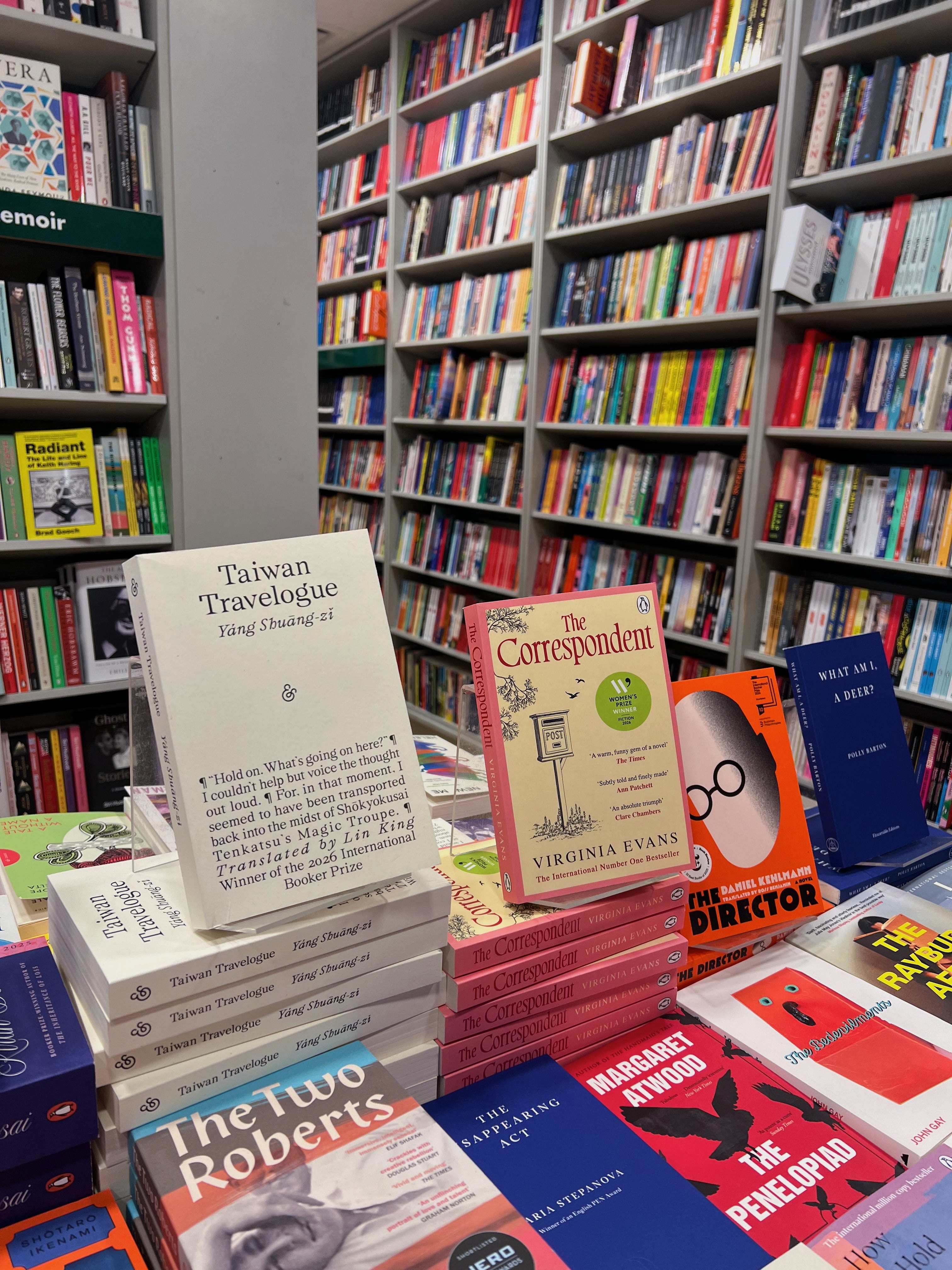
The premise is really interesting: it’s about a Japanese novelist touring the country with a local interpreter during the Japanese colonial era, written and formatted as — you guessed it — a travelogue.
Update: I ended up pushing the publication of this piece back a week so that I could start this book. I finished it in three days, and it’s now up there as one of my favorite books of all time.
At its core, it’s a story about how the power dynamics that emerge from colonization render true intimacy impossible. This is communicated through a lens of food and travel — who feeds who, who consumes the other’s culture, and who gets to share or pass judgement on it. It’s also between two women, so there are queer and gendered themes entangled in it as well.
Fans of Giovanni’s Room, Revolutionary Girl Utena, and (to a lesser extent) In The Mood For Love will love this book.
And if you want to connect more with me on books, follow me on Storygraph.
I want to learn more!!!
I wish I had more sources from actual Taiwanese sources – please supply them if you have any recommendations.
Any Chinese for me? 🙂↔️
Were you looking for a language guide as thorough as the one in my Japan guides? Tough luck, bitch! I was here a week, and Japan three months!!! It would be disingenuous for me to attempt a guide at a language I know very, very little of, so I won’t do it.
I will say that their use of traditional characters made it very easy to form 1:1 connections with kanji, and I had fun identifying characters I recognized and translating names in my head.
I actually wouldn’t see any simplified Chinese out in the wild during my trip until Singapore, and it was a huge jumpscare when I finally encountered it in the city-state. After over three months of traditional characters across kanji and hanzi in Taiwan and Hong Kong, it looked…boneless.
This is why, despite being months out from Asia, I still drill kanji. I think a lot of people still don’t know that it’s directly derived from Chinese characters – to the point that kanji has two systems of pronunciation — kunyomi, the Japanese pronunciation, and onyomi…the Middle Chinese pronunciation, from when the writing system was imported over 1500 years ago. If you know how to count to ten in Japanese — ichi, ni, san — you’re speaking an approximation of how the original Chinese numbers sounded a millennium ago, and reading those same characters too.
I’m not particularly rushed towards improving my Japanese or Chinese, but I feel like learning one character a day will help lighten my workload in the future. Plus, it truly is immediately useful whenever I visit again. Knowing how to read kana and a handful of kanji went miles in Japan and the wider Sinosphere.
Bye bye!!!
After multiple kidnappings, some very delicious food, and a newfound appreciation for soy milk, I packed my bags and shipped myself off to Hong Kong.
Taiwan really, really pleasantly surprised me. It’s a beautiful country, with a textured history, delicious food, fantastic nature, and incredibly friendly people.
Sometimes I wonder if the Taiwanese people are so friendly because they’re used to being the geopolitical underdogs – in a way, it cultivates empathy. Or perhaps more cynically, it’s an attempt at positive PR – “please, we’re cool, don’t let China annex us!!”. Who’s to say? I like their bubble tea.
That pervasive friendliness also made me realize just how unwelcome I felt in Japan. Not constantly, of course — but being freed from that underlying tension exposed me to it. The contrast was stark.
To fully lean into the egomaniacal narrativizing of my own life, I’m going to spoil a future revelation I had, when leaving Hanoi to return to Tokyo. It felt like I was going home. Landing, it felt like I was home. My entire week there before my return to Chicago felt like being home, though it was also accompanied by this dull and encroaching sadness of knowing that I wasn’t really welcome there.
This led me to the conclusion that I could have made Tokyo permanent, if I had people around me. What do I make of that?
Have a specific question, or want a more directed rec? Reach out on Instagram, I’d love to help. And if this was useful, throw me a sub. Thanks!!
The Tokyo Recommendations I’d Send You

In many ways, Tokyo was my first love. When I first touched down in 2022, I knew I had arrived somewhere that would become a place of frequent return in my life — I’d never experienced instant recognition like that before. I’ve had the honeymoon phase, felt my doubts, and fallen in and out of love with it, but somehow...


Sulfuric fire fishing: Louis and I were both right. It is, in fact, a real tradition — that has only been kept alive via very aggressive Taiwanese tourism board campaigning.